I discovered the brainrots and worried but also amused
While I pushed my three -year -old daughter on the swing, the other day at the park, my almost hypnotic relaxation was interrupted by a series of strange verses, noises but perhaps words that were emitted by two children of nine or at most ten years, clinging to the swing alongside.
“That’s not a brainrot”
There were such new sounds for my ears that my brain could not make them mean and an order that would allow me to replicate them or even just memorize them in a more or less precise way, until at a certain point a child responded to the verse of his friend saying: “No, that is not a brainrot”.
That word, brainrot, was vaguely familiar but I could not remember where I felt it, so, in the grip of curiosity, I interrupted the blow and response between the two and asked: “Sorry, what is a brainrot?”
“Eeeeh, it is difficult to explain, they are the type of characters that …”.
To the word “characters” my brain as a TV series consumer led me to think of stories like The Last of Us, with zombies and non -dead whose brain is now burned due to the infections that made them such, and I tried to ask children if the brainrots were video games with the rotten brain. “Eeeeeh, more or less yes, not exactly or more or less” they replied to me before leaving, rightly, from my question as an old man.
Fiero I have understood a new term in the slang of the new young people, I promised myself to report the episode to my wife as soon as possible. But on my return home, before sharing the discovery, I happened to read an interesting and in -depth analysis on Tyler Robinson, the Groypers and all that universe of young American whites who find themselves fighting loneliness and frustration with video games, humor and funny images, a sort of consequence in the long term of the communities created by Steve Bannon twenty years ago to collect young white young people uncomfortable. of one’s life and encourage them to hate all form of progressism, refined as the cause of their suffering. And, towards the end of that analysis, I was surprised to find the term brainrot. I was amazed because it clearly did not indicate the monsters of Tlou or games/series/films similar, but rather something similar to the memes that we now all know.
The amazement has been confused, the confusion became curiosity and so I started doing my research. And here’s what I discovered and understood, between concern and some laughs.
What is “the” brain rot, or brainrot
As colleague Francesco Marino explained last December, Oxford Dictionary indicated “Brain Rot” as a word of 2024, thus recognizing the enormous growth in the use of this expression in the English language.
And, to make it short, “the” Brain Rot is the “rotten rot” which risks afflicting ourselves when we lose the conception of time immersed in the infinite scrolling of videos on social media, in particular with low quality video content, senseless and repeated-cited-cured in online clubs so purple that often the younger ones lose their awareness of the fact that those images and those scenes cite that exist in reality.
Of the dangers of the “cerebral putrefaction”, Pope Francis had spoken some time ago, but it must also be said that the concept of Brain Rot still implies a certain degree of self-ironic awareness about the damage to our attention threshold and our concentration capacity caused by hours and hours spent to see what, with an unrivaled but very clear term, we can safely define nonsense (or the term you prefer).
But this speech refers to “Al” Brain Rot as a psychological and social phenomenon, a new way to indicate what we could also consider a typical phenomenon of each generation (not surprisingly the origin of the term is traced back to a phrase by the writer Henry David Thoreaau in 1854), or the accusation of intellectual and cognitive decay that has always been attributed to young people, who will then become old and accuse the generation. subsequent and so on.
Except that the children in the park, and also the analysis on Charlie Kirk’s murderer, spoke of “a brainrot” or “the brainrots”, and neither one nor the other referred to cognitive decay as, rather, to different content, each with a precise name. In short, I was no longer convinced that I understood what those children spoke of sounds that were not identifiable from my ears and my millennial brain. And then I continued to look.
What are “the” brainrots
Looking for information in English (but also in Italian there is an excellent explanation on the portal anywhere.it) I have therefore discovered that, to put it in an understandable way to myself and my peers, brainrot (attached, also for reasons of hashtag) has passed over time from defining that sort of excess torpor of stupid videos to identifying a certain type of online content, widespread in particular on social “from the elderly”. Tiktok and Instagram, made with artificial intelligence deliberately approximately, between the grotesque, the vulgar and the senseless.
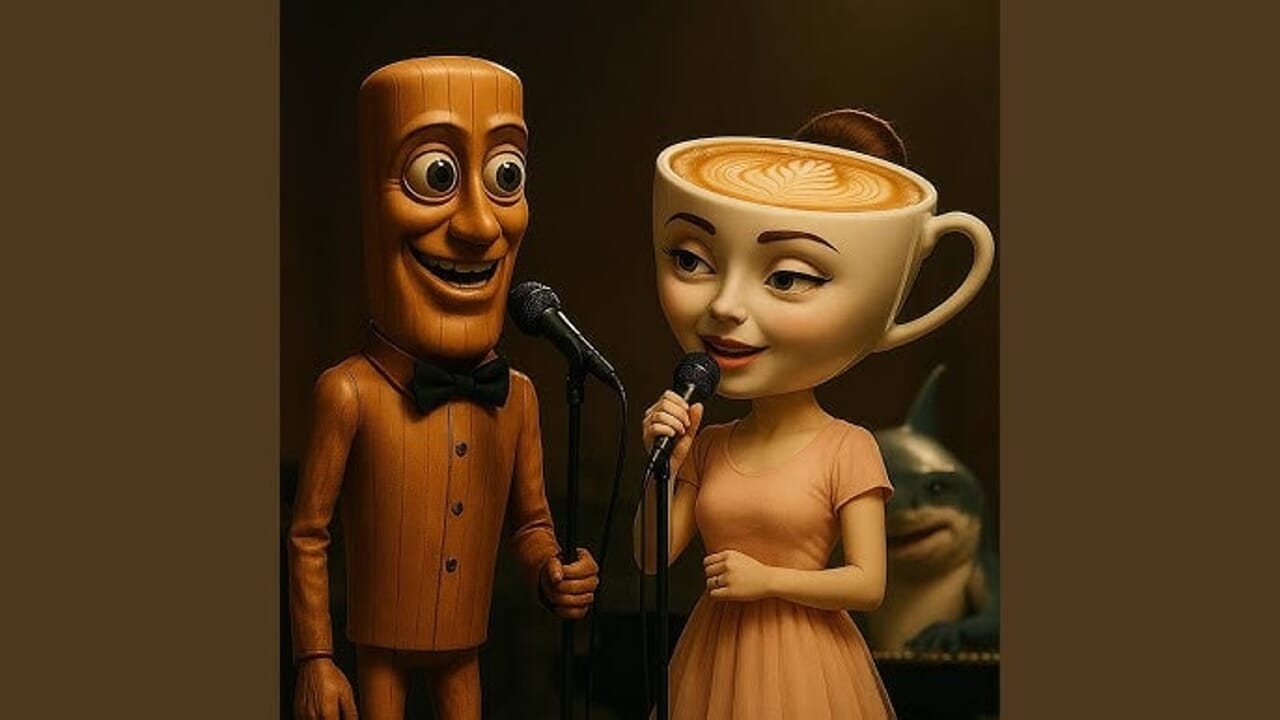
Gatters with faces singing songs by Eastern Europe artists (Skibidi toilet, from which the boppy skibids derives of which you have perhaps heard in recent months), animals and objects that thanks to AI programs become anthropomorphic animated cartoons that say and sing meaningless things, and also a series of words that have entered the youth slang all over the world. To the point that an Australian school has posted a sign that prohibits students from the use of terms of what is now the “Brain Rot language”, such as “Rizz” (as a charisma), “Gyatt” (from “Goddamn”, to indicate abundant and seductive female buttocks), “Fanum tax” (from the name of a streamer, fanum, who steals pieces and bites of his friends) or “Delulu” (crippling of “disappointment”, an English adjective indicating a person who does not recognize reality and, to put it for millennial, “a thousand films”).
And to the point that, in the playground under my house, two 9-10 year old children play those who know more video brainrot characters. So, after having finally understood the topic of that apparently absurd conversation, I decided to move from theory to practice. That is to go and see some of these brainrot videos before my older daughter, a little smaller than those children in the park, is involved in similar discussions. Even just to understand if there is something really worrying and dangerous, as well as stupid.
A few examples of Italian brainrot: is it to laugh or cry?
On Instagram, which is a sort of borderland between the young people of Tiktok and the old Facebook, using “brainrot” as a key search key, we basically come across three types of things: posts of parents who denounce the dangers of excessive consumption of these videos, users who make rankings or reviews or analysis of the most famous brainrots, and then the real viral videos Brainrot.
There are those famous all over the world, like the aforementioned Skibidi toilet, and there are those famous especially in the country where they were created. And so yes, there are Italian brainrots. After all, we report a few examples, from Cappuccina Frozenine to the Bipede Shape Lgery, without forgetting Tung Tung Sahur, Bombombini Gusini, Bombardiro Crocodilo, Cappuccina dancer and Celesta Girafa and many others who have also been gathered in special videos (see below). You can worry but also laugh, in any case it is better to be prepared, especially if you have children, also because there are already gadgets, accessories, games, figurines (such as the old groom, in the end), clothes and even special pizzas dedicated to the most famous brainrots. In short, the fashion that spreads in the Alpha generation seems destined to last and generate a discreet turnover, between social media, TV, objects, clothing and everything that can come to those who will try to earn something.
View this post on Instagram
View this post on Instagram
View this post on Instagram
View this post on Instagram
View this post on Instagram
View this post on Instagram
