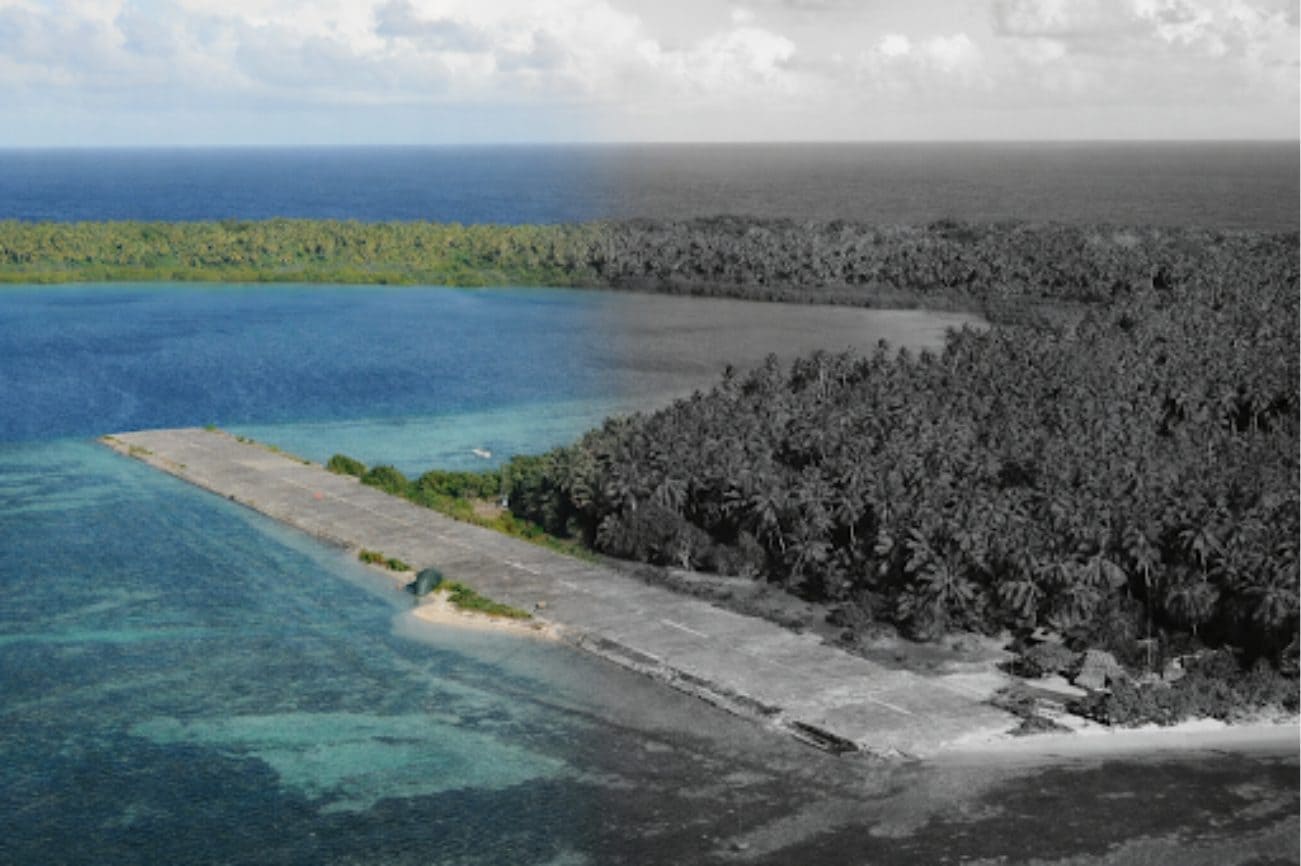
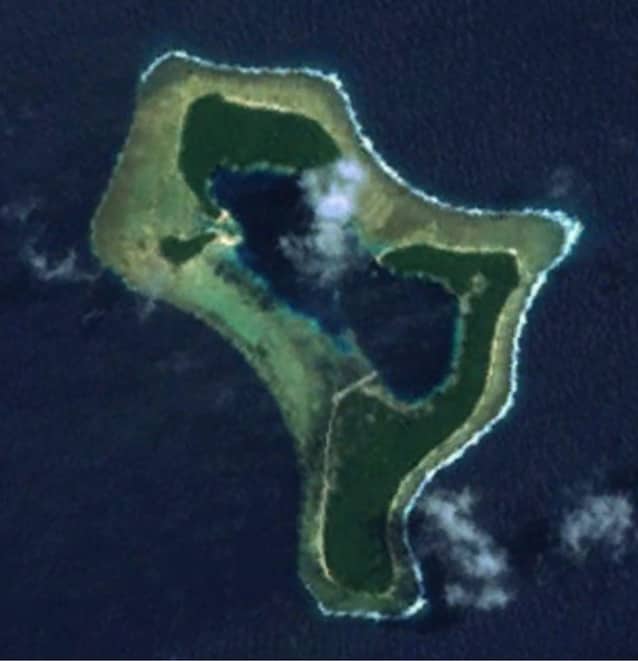
THE’Pingelap atoll it is a small atoll of Micronesia, just under 2 km long2with a unique feature in the world: about 5% of the population is affected by achromatopsiaa very rare genetic disease of the retina that prevents us from perceiving colors. Cases of achromatopsia on the island began to slowly increase starting from 1775when a catastrophic typhoon hit Pingelap, decimating its population. Following that event, a phenomenon called “bottleneck” – a form of evolution independent of natural selection And led by case – favored the spread of mutated copies of the gene responsible for achromatopsia, which spread one generation after another until Pingelap was famous as “the island without colors”. Today the atoll, located in the middle of the Pacific Ocean, has a population of approximately 360 inhabitants.
A paradise without colors
In the heart of the Pacific Oceanabout 14,000 kilometers as the crow flies from Italy, there is a small atoll in southern Micronesia called Pingelap. This is a real one earthly paradisewhere the greenery of the coastal woods is reflected in theblue of its crystalline watersseparated from each other only by long stretches of golden beaches. In short, one of those places that, at the sight of just one photo, makes you want to spend at least a week’s holiday there. Or, in the most extreme cases, to be reborn there, far from the stress of the Westernized world.
Too bad that if we were born on Pingelap, we probably wouldn’t be able to enjoy all of it wonderful shades of color that the island has to offer every day. About 5% of the populationin fact, suffers from achromatopsiaa very rare one genetic disease which affects the cones, the cells of the retina that allow us to see colors, causing a strong sensitivity to light (photophobia), reduced visual acuity, but, above all, the complete inability to distinguish colors.
The first cases of achromatopsia after the typhoon of 1775
The geographical location and climatic conditions make Pingelap particularly vulnerable to extreme natural disasters. One of the most devastating occurred in 1775when the typhoon Lengkieki it fell on the island, exterminating around 90% of the inhabitants and leaving alive only 20 survivors. However, as the old saying goes, ighey never come alone. Thus, while in the following two centuries the few survivors tried to repopulate the island, achromatopsia began to spread rapidly among newborns.
According to i local mythsthe person responsible for this disaster must have been Isoahpahuan evil nocturnal spirit who, having fallen in love with some women on the island, impregnated them through deception, leading to the birth of children comfortable in the darknessjust like him. Today, thanks to the work of anthropologists, ethnographers and geneticists, however, we know that there is an explanation entirely scientific.
At the origin of Pingelap’s achromatopsia
Going backwards four generationsfor an arc of approximately 200 yearsthe family tree of approximately 3,000 inhabitants of the island, some scholars in the Seventies managed to trace the “father” of all Pingelapese affected by achromatopsia: The Nanmwarki Mwahuele.
In 1775, Mwahuele was not just any Pingelapese, but the Nanmwarkior the highest authority political and religious of the community. Although he was not affected by the disease, he carried, without his knowledge, a mutated copy of the gene for achromatopsia, which however manifests itself clinically only in recessive homozygosity (i.e. in the presence of two altered copies). That is, he was what we now call a “healthy carrier”.
After the devastating typhoon, the Nanmwarki Mwahuele contributed significantly to repopulation of the islandmarrying three womenwith whom he had numerous children. Some of them inherited a copy of the altered gene. And so do their children’s children. With the passing of generations, and in the absence of contacts with the outside, consanguineous marriages became inevitablethus favoring the birth of children with two mutated copies of the same gene, and therefore affected by achromatopsia.
A particular case of evolution
At this point, a question arises spontaneously: why have the “defective genes” of achromatopsia spread so much, instead of being eliminated by natural selection? After all, Darwin taught us that for a characteristic to spread in a population it must confer a advantage in its environment. And achromatopsia, without a doubt, it has none. Cases like Pingelap’s are called “bottleneck” and they represent particular examples of evolution in which those who are advantaged are not the fittest, but the most lucky.
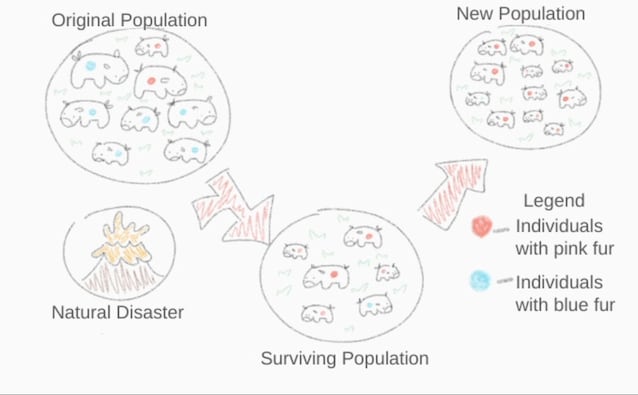
In Pingelap, the case – and not environmental pressuresas happens in natural selection – he wanted Nanmwarki Mwahuele to survive the typhoon of 1775, healthy carrier of an extremely rare gene in the world population, which without that catastrophic event would be slowly disappeared from the island. But in a suddenly decimated population, devoid of reproductive exchanges with the outside and with crossbreeding between inbredsthat gene found fertile ground to spread, taking away, one generation after another, the colors from Pingelap Island.
