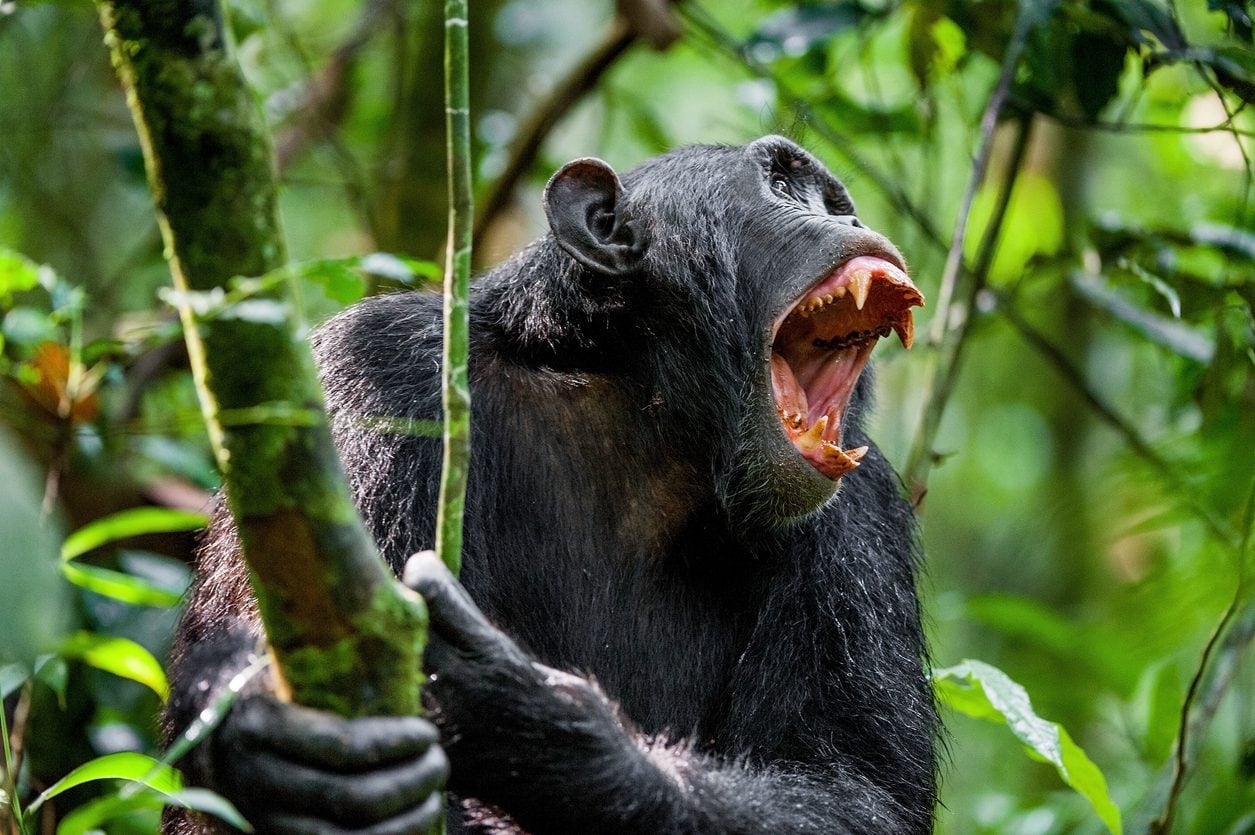
It might sound strange to you, but humans are not the only primates to wage “wars”. It was documented by the primatologist Jane Goodallrecently deceased, a 4-year civil war between chimpanzees (Pan troglodytes) In the Gombe National Parkin Tanzania, duration from 1974 to 1978. This conflict, known as Gombe Chimpanzee War or Four Years’ Warhe saw facing each other two chimpanzee factions with real struggles, competition for resources and unprecedented violence that are very reminiscent of the wars we humans are used to witnessing.
It is worth underlining that the use of the term “war” to describe these events still remains a theme today debated and not universally accepted within the scientific community, but the behaviors observed by Goodall – attack planning, premeditated aggression, acts of cannibalism – were a surprising discovery for the time which, together with the use and manufacture of tools and the feelings of complex emotions, brought chimpanzees considerably closer toHomo sapiens.
The Gombe Chimpanzee War: origins and conflicts
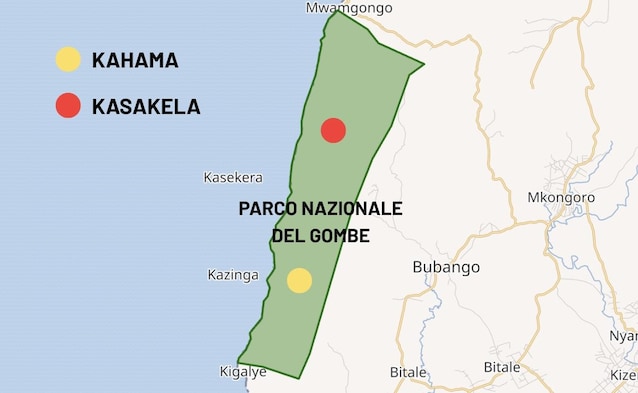
Before 1971, the chimpanzee community of Gombe National Park – near Lake Tanganyika in Tanzania – lived peacefully under the leadership of the alpha male Leakey. Upon his death, he took power Humphreya much more aggressive leader. The latter had to face fierce opposition which, fueled by the rebellious behavior of the brothers Charlie And Hughled the community to divide into two distinct factions.
THE Kasakela or Kasekelathe original group that remained in the north, led by the new alpha and including eight adult males (including Mike, Satan, Sherry, Everett, Rudolph, Jomeo and Figan), twelve adult females and their young. THE Kahamathe “separatist” group founded by brothers Charlie and Hugh, settled in the south. It included six adult males (Godey, Dee, Goliath, Sniff and Willie Wally), three adult females and their young.
The conflict began on January 7, 1974 with the first bloodshed. The first attack was launched by Kasakela. A group consisting of Humphrey and five other males ambushed Godeymember of the Kahama faction, while he ate alone in a tree. Godey was dragged to the ground, beaten badly and was never seen again. The Kasekela did not limit themselves to the massacre but noisily celebrated the killing with screams and howls.
For four years, the Kasakela adopted a true quasi-military strategy, attacking the Kahama males in moments of maximum vulnerability, or when they isolated themselves to eat, as happened with the first attack.
After Godey, the Kasakela sequentially killed Dee, Hugh, the elderly and peaceful Goliath, and finally Charlie. Willie Wally disappeared, while young Sniff held out for over a year before being killed by the Kasakela himself. Having exterminated all the males, the Kasekila targeted the Kahama females: one was killed, two disappeared and three were beaten and kidnapped. In this way, the Kasakela took total control of the former Kahama territory.
However, the victory was short-lived. At the end of 1978, a third and much larger community of chimpanzees, i Kalandeinvaded the area. Not being able to compete with them, the Kasekila were forced to retreat and cede the territory they had just conquered with blood to the Kalande.
Discoveries about the aggressive behavior of chimpanzees
From the first moment it was clear that the rivalry was characterized by one calculated and ruthless violencewhich removed the belief that chimpanzees were peaceful and gentle animals. In the animal world we usually read or see in documentaries fights between males for power with intimidating behavior and rarely lead to death. This is not the case with chimpanzees who have demonstrated the ability to use “war strategies” that seemed exclusive to the human intellect such as systematic patrolling or targeted espionage and ambush.
«For several years I struggled to accept this new knowledge. Often, when I woke up at night, horrible images would flash into my mind without me asking.” As these words demonstrate, Jane Goodall was deeply shaken by these events. In his book Through a Window: My Thirty Years with the Chimpanzees of Gombe recounts some macabre scenes:
Satan (one of the monkeys) cupped his hand under Sniff’s chin to drink the blood that flowed from a large wound on his face; old Rudolph, usually so quiet, rising to his feet to throw a stone at Godey’s body; Jomeo tearing a strip of skin from Dée’s thigh; Figan charging and striking, repeatedly, the wounded and shaking body of Goliath, one of his childhood heroes.
All these observations contributed to a much greater understanding of the complex society of chimpanzees. Elaborate social structuresfamily ties, struggles between males for power were part of the life of these primates. In hierarchical structures premeditated aggressive and violent behavior took place between different groups, the killing of children and even acts of cannibalism. In addition to these observations, over the years, it has been discovered that chimpanzees are able to solve problems by reasoning, to experience emotions similar to ours such as joy, amazement, pain, cruelty and altruism and that they are able to use tools to obtain food.
Is it correct to talk about “war”?
Many scientists and primatological experts urge caution regarding the use of the term “war”. This word risks projecting onto animals mental constructs typical of human beings. Chimpanzees do not fight over ideology, religion, pride, or political hatred. Their actions, however brutal and violent, are dictated by evolutionary instincts with the goal extend their territoryobtaining more resources (food) or reproductive success.
Episodes similar to those in Gombe have also been recorded elsewhere. A study published in the scientific journal PNAS, for example, documented the behavior of the chimpanzee community Ngogoin the Kibale National Park in Uganda: between 1998 and 2008, this group killed 21 individuals belonging to neighboring factions. A story as bloody as it is fascinating, told and made famous also by the docuseries Chimp Empire.
These observations of primate behavior have sparked debate and questions about the very origins of warfare. It is abiological inheritance in our evolutionary history or is it rather a cultural product born with the development of complex societies? At the moment, science still does not have a definitive answer.
