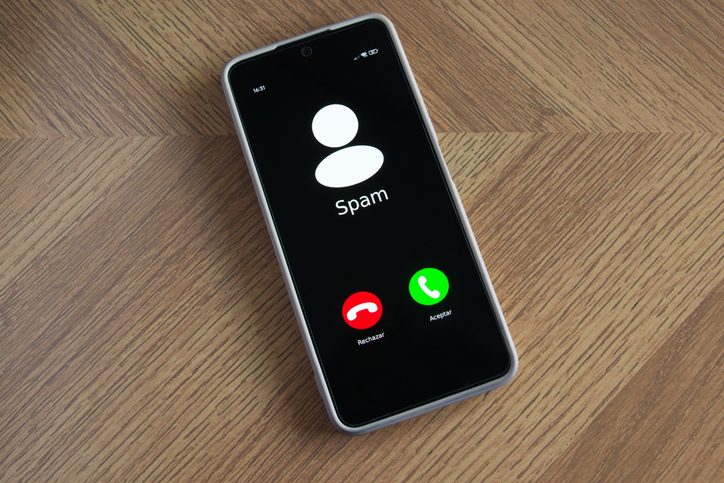
The Anti-Spoofing filter introduced byAGCOM last August 19th He is starting to produce the first tangible results. The information provided by the operators, collected by theAuthority for guarantees in communicationshave made it possible to determine a decrease in calls perpetrated with the technique of spoofing. According to the data in question, they would be in this case just under 43 million spam calls blocked in less than a monthequal to about 1.3 million per daywhich represent the 5.74% of total recorded traffic. In some moments, especially in the initial stages, the “spoofate” calls also touched the 60%. Despite the scope of the data, the same reports underline how it is partial and still limited over time, also influenced by the summer and the physiological drop in traffic during the weeks of holidays. What we can say, however, is that the filter has already produced a substantial cut of the phenomenon, even if it has certainly not eliminated it.
The term spoofing indicates the manipulation of the Cli (Calling Line Identification), or the information that allows you to view the number of those who call. By altering the CLI, a call center that adopts very aggressive telemarketing practices or, even worse, a scammer who wants to hide behind a false identity, can make a number that seems Italian appearing on the display, often with a fixed prefix, thus inducing greater trust in the recipient. AGCOM, with resolution 106/25/Cons, established that from August 19th Calls from abroad with altered Italian fixed network cli are intercepted and blocked before entering our networks. If a phone call arrives from abroad, this will have to report the real prefix of the country of origin, such as +49 from Germany or +44 for the United Kingdom, and so on. A second phase, that will also extend the filters to mobile cliis expected by November 19th. For now, therefore, we are in front of an important first step, which lets you glimpse future scenarios in which the scammers could move to other numbers, for example Italian cell phones or international cli not yet affected by the blockade.
The analysis of the data provided by AGCOM
Doing aanalysis of the data collected by Agcom It is clear that the anti-Spoofing measures have intercepted about 43 million unwanted calls in less than a month. This means that Every day, from August 19thhave been filtered beyond 1.3 million phone calls with altered numbers. The overall percentage of blocked calls compared to the total traffic is at the 5.74%but in some days the value has risen in a sensitive way, reaching peaks that exceed half of the entrance calls. A result that testifies not only the massive diffusion of the phenomenon, but also the ability of the filters to identify and stop a significant portion of abnormal traffic.
An interesting aspect is the progressive reduction of attempts after the entry into force of the block: the data indicate that operators have recorded a contraction of the falsified traffic already in the first weeks, a sign that the filtering systems are partially dispelled the flows of fraudulent calls. At the same time, a strong variability is observed: during the weekends and on the central days of August the total calls, and consequently also those blocked, dropped significantly. This trend reflects the link between spoofing and commercial or telemarketing activities, which tend to reduce themselves in non -working periods.
The prospectus transmitted by the operators shows significant differences between the various networks, even in the face of an identical technical measure for everyone. This suggests that the volume of blocked calls depends above all on the composition of the input traffic. For example, theOperator 6 recorded a very high locking rate, equal to 97.5%but on a rather reduced volume (724 thousand calls in total). On the contrary, theOperator 5 has managed enormous traffic, beyond 228 million callsbut with a more contained locking rate, just above the 3%. The case ofOperator 2on the other hand, highlights a check -up higher than 53% about 133 thousand callsconfirming the variability of the phenomenon. But the most impressive data concerns theoperator 9who alone managed almost 476 million calls: of these, 33 million were filtered, with an incidence of the 7%. Here too, the percentage is not among the highest, but the absolute volume makes it the main contribution to the total of the blocks.

Adoc’s comment
The associations for the defense of consumer rights commented with a certain positivity the data collected by AGCOM. THE’Adoc (Association for the defense and orientation of consumers), for example, claims that “The first anti-Spoofing measures implemented by Agcom to combat unwanted phone calls are demonstrating effectiveBut adding that all this “it is not enough». Why? Always the Adoc states:
Despite regulatory efforts, unwanted calls and telephone scams are still on the agenda, with a turnover of millions of euros. From our estimates, Each person receives on average 2 calls a day by unknown numbers. These are not only commercial offers, but also of fake surveys, pre -aggravated messages and deception attempts.
In short, the way to mitigate the problem seems to be still long, but an important first step has already been taken.
