It’s all about endurance
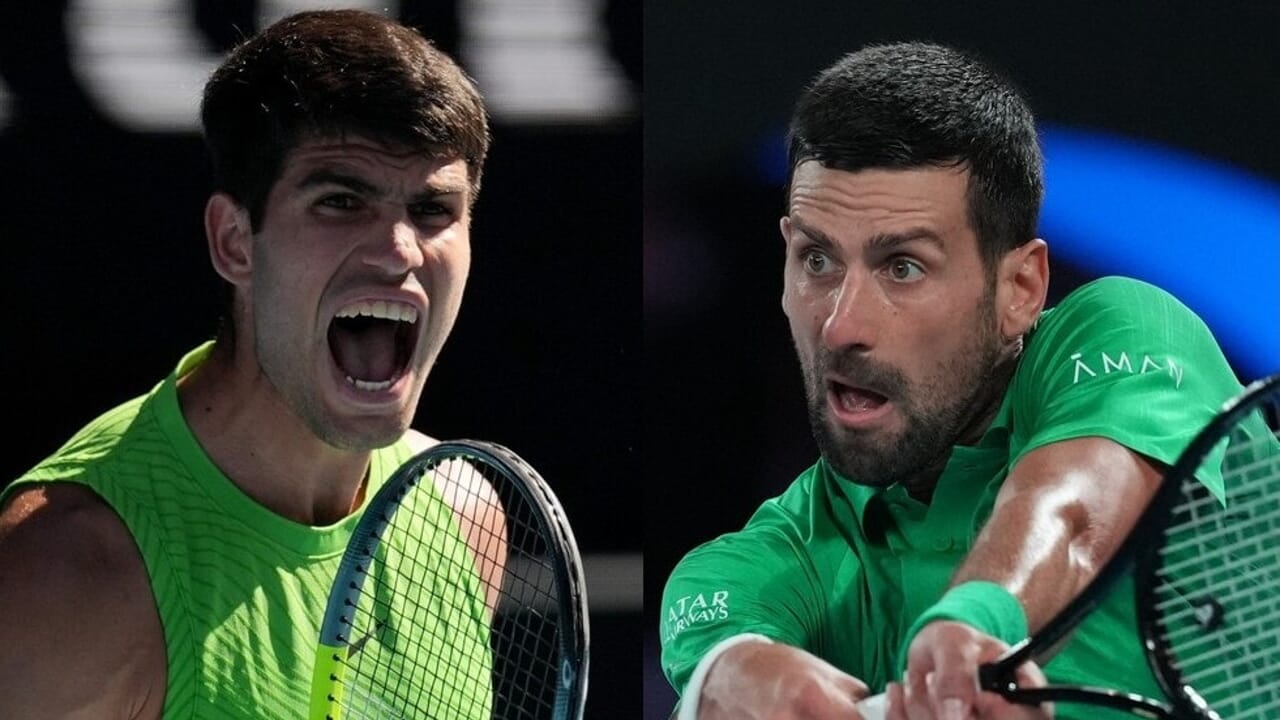
Twenty-two years and 272 days to win all the Slam tournaments (youngest ever to do so) and win the seventh major in his career, i.e. the same number as John McEnroe and one more than people like Boris Becker and Stefan Edberg. Carlos Alcaraz is playing another sport. In his own way, as he tells in the Netflix docuseries, allowing himself the luxury of firing someone like Juan Carlos Ferrero, coming close to the abyss with Zverev and starting the final very badly with Djokovic. Yet, when it really counts Carlitos is the strongest of all.
A labile concept in sport, but how else can you define a player capable of winning 15 of the 16 matches he played that ended in the fifth set? The only defeat was in Melbourne, 2022, against our Matteo Berrettini, but it was just the third Grand Slam tournament that he played without starting from the qualifiers.
History is written in the Slams and on these stages the phenomenon from Murcia has demonstrated so far that he is the man to beat. Since his first triumph at the ’22 US Open he has only lost twice to Djokovic and once to Sinner, Medvedev, Zverev and Van de Zandschulp. For the rest he won everywhere, just as had happened in the past to only eight tennis players: Fred Perry, Don Budge, Rod Laver, Roy Emerson, André Agassi, Roger Federer, Rafael Nadal and Novak Djokovic.
Nole heroic, but it wasn’t enough
The final lasted one set, the first, when Nole Djokovic slipped at the start of the match, knowing full well that he would not be able to withstand another long-distance challenge. Winning the first part well, putting so many doubts and so much pressure on the Spaniard that it sent him into a nervous breakdown and, perhaps, some help from the public in decisive moments. Djoker’s plan was clear. The Serbian’s problem is that the 2-6 scored in just 32′ didn’t stun Carlitos, but woke him up.
The exchanges of 4 or 5 shots started to increase and it was increasingly difficult for Nole to hang on to the match. Alcaraz kept errors to a minimum, was more solid in return and forced Djokovic to run every chance he got.
Not the absolute best version of Alcaraz, but this also says a lot about the Spaniard’s evolution. Already last season he understood that you can win sets and entire matches even without producing magic at every “15”. Especially against an extraordinary opponent who is still 15 years and 348 days older.
Nole, Mister 24 Grand Slam tournaments, capitalized as best he could on the good luck of the previous rounds. No minute spent in the round of 16 and Musetti’s knockout just when the airline was about to send him the ticket for the return journey are gifts of destiny that you cannot afford to squander. And Djokovic didn’t do it, defeating Sinner in five sets and looking for his greatest feat against the new King. He tried to stay in the wake by showing off his entire repertoire, built over a twenty-year career with infinite dedication and obsession. He asked a lot of his physique, his tactical ability and the mental strength that led him to obtain most of the records in this sport.
But the truth is that to date, no one has managed to beat Sinner and Alcaraz in the same tournament, three sets out of five. However, the honor of arms must be recognized: playing at these levels at his age is stuff for Martians.
Sliding Doors
It could have been the Slam of surprises and in that cloud of regrets of the 127 players registered in the main draw who did not lift the trophy, Lorenzo Musetti’s perhaps rings louder. He was getting rid of Djokovic with relative ease and Sinner, then defeated in the semi-final by the Serbian, never gave the sensation in these Australian Opens of having reached the form admired in the days of his greatest exploits.
Alcaraz himself, one step away from being defeated against Zverev and then capable of overcoming Nole in the final, would have been a very difficult client for Lorenzo, but not unbeatable.
Definitely a bad blow, however, for Sinner. From a rested Djokovic you can lose and there can be no drama. However, the fact that he has never won a match over 3 hours and 50 minutes of play is certainly a topic to start from. There are in fact nine long-distance defeats for our phenomenon: three against Alcaraz and one each against Djokovic, Zverev, Medvedev, Tsitsipas, Altmaier and Shapovalov. Building a less predictable tennis is the right direction, but observing who leads the rankings clearly emerges that – as for Musetti – the real leap in quality comes from resistance.
However, the regrets at home are almost over Zverev: Sasha, but what happens to you when you have the chance of a lifetime in front of you? 5-3 and serve in the fifth set in the 2020 US Open final against Thiem. 5-4 and serve, again in the fifth, in the Melbourne semi-final against Alcaraz. Same story every time. Zverev is doing everything to avoid a label that many would attach to him without hesitation: the best player still without a Slam.
