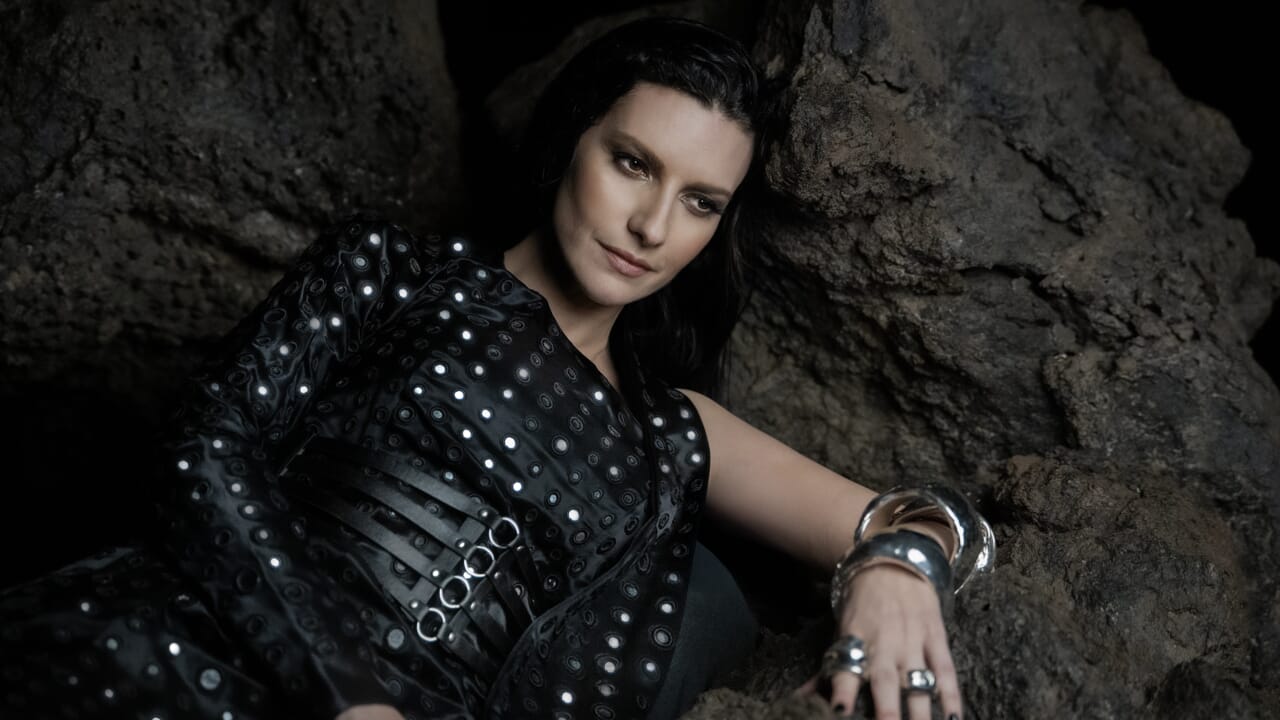
Laura Pausini’s latest album is a missed opportunity
Let’s clarify. I sing 2 by Laura Pausini – the second chapter of the saga, twenty years after the first, which was a success – is a huge operation, published simultaneously with the performance of the same singer from Romagna at the opening ceremony of the Winter Olympics and with the idea of launching it all over the world, Latin countries first and foremost, complete with a Spanish-language version in March and a world tour between 2026 and 2027. After all, Pausini’s record-breaking CV and international precedents they’re worth the ride. And so also the formula itself, very successful at the time: an album of covers – first only Italian, today partly foreign (there are The good island by Madonna, among others) – in which to take it head on and pausinize of the great classics of the music of recent or even very recent times (the most difficult, the ghost of the originals is closer), which means lending to those pieces the great voice, the determination and the super-pop aura of their new protagonist. Potentially, we could bring a lot of beautiful Italian music all over the world with a record like this. So, everything ok? No.
The secret to a good cover
That’s easy said, but not done. And not only for the controversy with Gianluca Grignani, with the associated, well-known legal dispute for having changed a verse of My story in your fingersaccording to the singer-songwriter, distorting its meaning (when in doubt, it is excluded from the official tracklist and only available digitally). Alright. Maybe it’s because the first time there was a sort of surprise effect, maybe it’s because this time the expectations are necessarily high given the success of the original, maybe it’s because less music was released then and the covers were rarer and more precious, while in the meantime they have established themselves X Factor and the evening of Sanremo duets (where Pausini will be co-host, it is part of a great plan, to show how much we are aiming for), the fact is that in 2026 the terrain is more rugged than in 2006. And I Sing 2 partly it stumbles.
Let’s go in order. What makes a cover a great cover? Roughly speaking, there are two ways: either you recover an almost forgotten song, as was the case for the same I sing at the time, a piece by Riccardo Cocciante from 1978 that the author himself didn’t even adore, but to which Pausini gave a new energy; or we turn directly to another championship, distorting the original in such a way as not to erase it, of course, but to be able to stand alongside it as standalone song. The examples, in this sense, are numerous, from the evergreen Amandoti of CCCP (first Gianna Nannini, then Måneskin) to a If by calling by Nek (2015), to which the Emilian singer-songwriter had given a contemporary and strictly pop feel. Here too, I sing he was a master, with a beautiful work on the (then) modern songwriting, as Sapccacuore by Samuele Bersani, which Pausini had transformed into a hit ballad.
Is it a question of bad choices?
I sing 2Let’s face it, skip the sunken treasures aside You chose me of Sugar, albeit in a version similar to the original. Rather, he puts his hand to sacred monsters, as seen including Madonna herself. The pattern is the same for all the covers: Pausinian interpretation, as mentioned, go-go and power-pop arrangements. The few exceptions are mostly hard to decipher, as But how cold it is in reggaeton style with Annalisa, with the two also bringing home a convincing interpretation, but with a guise that does not enhance the painful soul of Nada’s classic. The launch single works the same way I return to lovecover by Biagio Antonacci, an artist close to her and in fact the affinity is felt, just as it doesn’t seem like a reckless gamble Happiness in a virtual duet with Lucio Dalla (it must be said, however, that Cesare Cremonini did it three years ago), despite the fact that the use of the Bolognese singer-songwriter’s vintage voice was at least worth the risk of a spin. On the contrary, March 16 with Achille Lauro, in a guise that is inevitably close to the original also for temporal reasons, it has very little to say beyond the beautiful duet. In short, given the premises, it is reasonable to expect more
And that more, unfortunately, isn’t there. Above all, there is no underlying idea, going from international ultra-pop covers like the same one The good island, the meaning of which can be understood only in view of the launch in the United States, of pieces by Italian authors, diametrically opposed to these and in any case well-known. The spark, in this sense, is missing, the intuition that was also the first one’s I sing. And then, if Pausini’s energetic interpretation often holds up, there is often a lack of taste for the arrangements, too emphatic, which pass over the intimacy and sweetness of the originals (we are talking about a great songwriting, again) like a steamroller, flattening any ambitions that are not strictly radio-friendly which would still remain in play, from I’m not a small lady pop-rock marching (with pounding and, let’s say, disturbing drums) up to A sense And When key emptied, again, of their melancholy. It’s a shame, again, because the precedent and the potential were still there, as was the firepower to get certain Italian songs all over the world. And instead, in the end, it’s a bit of a missed opportunity for all of our music, which will perhaps do Pausini a good service, and that’s fine, but much less so for the originals.
