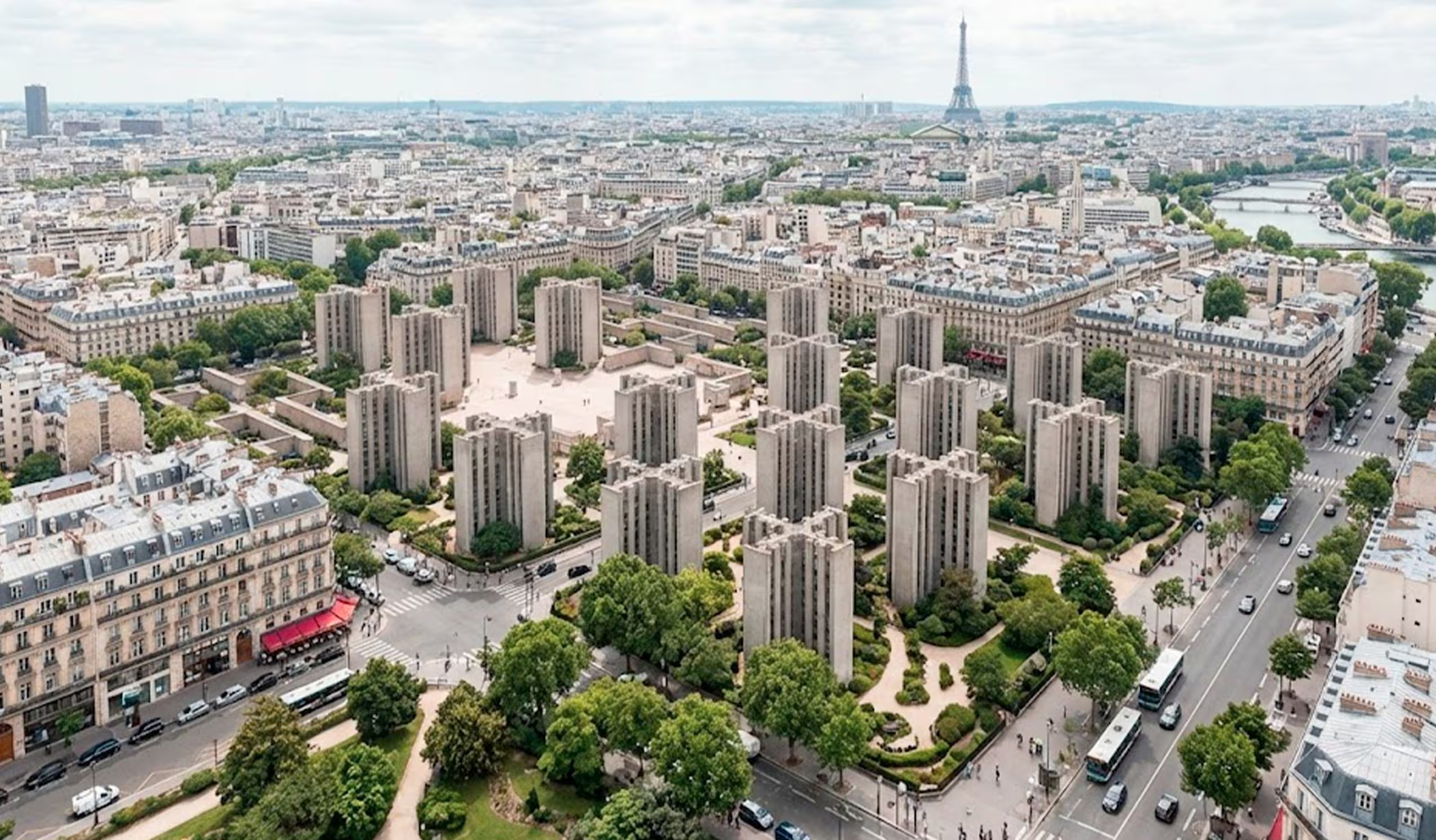
When it comes to absurd architectural and engineering projects, definitely the Plan Voisin wins a place of honor. Presented for the first time in 1925 on the occasion ofInternational Exhibition of Decorative Arts in Paristhis project, which bears the architect’s signature Le Corbusier, it essentially involved gutting (demolishing!) a large area of Paris 240 hectares near the Seine, in particular the neighborhood called Marais.
Gutting and reorganizing: Le Corbusier’s provocative idea
The plan envisaged a subsequent radical reorganization of the entire urban center through the construction of 18 cross-shaped skyscraperswith a height of 200 metersarranged on a regular grid. A first advantage, according to the French architect’s idea, would have been that relating to a much reduced urbanization of the land. In fact, of the entire area, only the 5% would have been built and the remaining 95% would have been allocated to green areas. The entire urban center would have been organized according to zoning, providing that the residential centers and offices would have occupied the central area, while the industrial and commercial area would have been located on the outskirts.
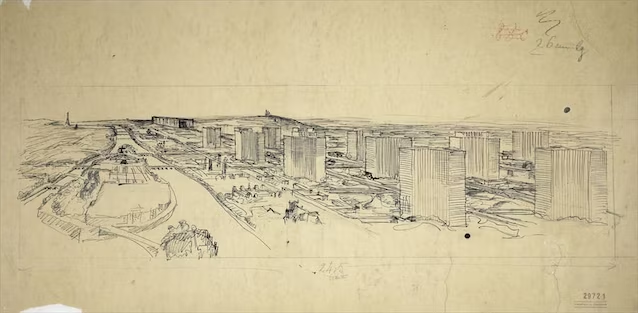
Source: Le Corbusier Foundation
The one presented by Le Corbusier in 1925 is undoubtedly an extremely radical project but which has, at its base, its own logic. First of all, the architect’s primary intent was to solve the problems that afflicted the city of Paris in that period, namely a serious overcrowding, an ancient road system, not suitable for more modern cars and transport systems, therefore also safeguard urban hygiene. The reorganized city would also have increased the population density of Paris as the habitable space would have increased drastically in height, and not along the surface.
In the following video, images of how Paris would have looked
Why was it never made?
There are many reasons why such an ambitious and radical project never saw the light of day. First of all we would have met the destruction of urban centers which however were, and still are, characterized by their architectural, historical and cultural identity. And this is something the city of Paris could never have afforded. On the other hand, we have the psychological impact that this project would have had on the population. Organize the inhabitants in huge blocks, all the same, it would have killed the typical street life that so characterizes European cities. Another priceless heritage that should not have been lost for any reason.
However, the way in which this ambitious project influenced subsequent urban planners, mainly those after the war, should not be underestimated. In fact, the idea of organizing the population into large residential blocks is the basis of the idea of the so-called “banilue” and has also influenced the urban planning of cities such as Brasilia.
