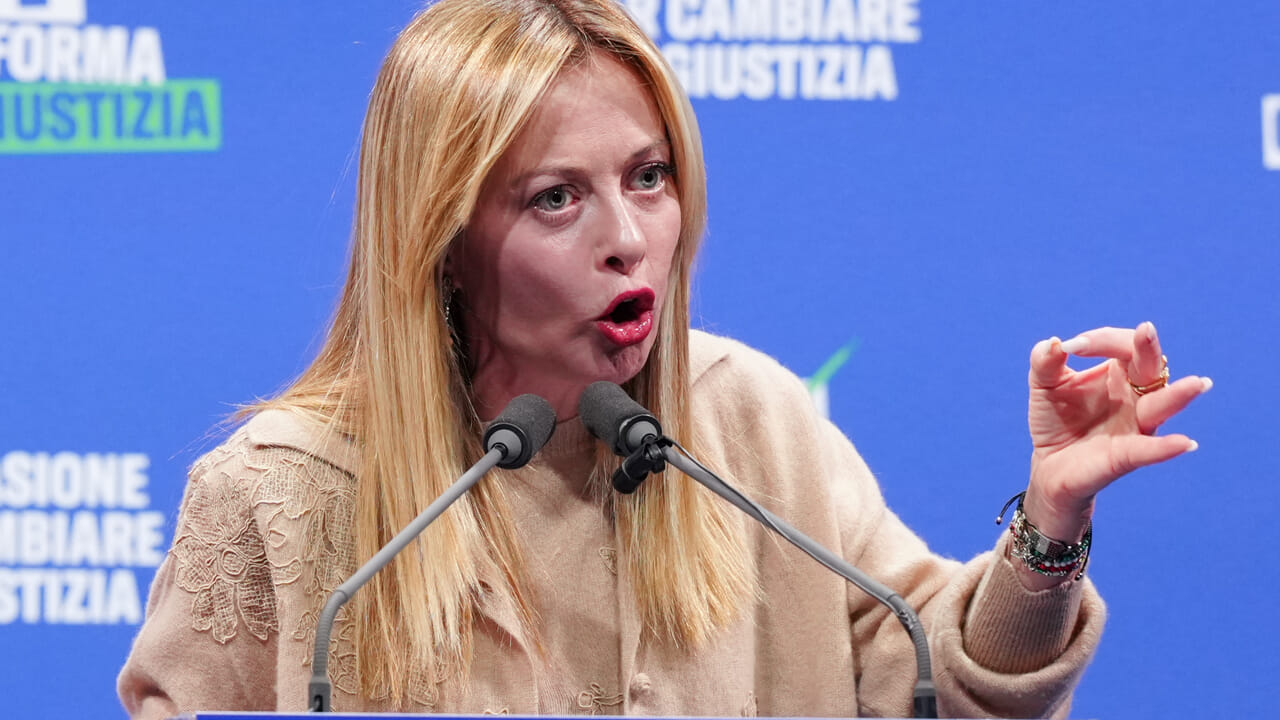
Meloni, Schlein and the others: blind beatings while the world burns
Let’s say that we were deluded, and that the Prime Minister’s speech in the morning in the Senate had made us think of the opening of a possible dialogue between the majority and the opposition, at least on such a delicate topic as the war. One of those things on which people expect the Palace to speak with one voice, a few hours after the explosion of a missile in an Italian military base in Iraq, and everyone was lucky that no one died, otherwise the fool would have been even worse.
More than in Tehran, the war is in Rome
“I’ll wait for you at Palazzo Chigi,” the prime minister had said bluntly, addressing the benches of senators to her left. Six or seven hours later the tone had already changed. In the reply delivered to the Chamber before dinner, Giorgia Meloni unearthed the hatchet and attacked without too much consideration. “You are cross-eyed, you are only outraged by the bombs that Republican presidents drop and not Democratic ones.”
Before and after the prime minister’s speech, the majority of opposition leaders and leaders had used the same method. Beaten by blind men, and not even the shadow of peace. Worse than in Tehran, with due proportions. All madmen and warmongers, all insensitive to the climate of concern that reigns among ordinary people? Is it possible that no one, in the sacred rooms, shows a surplus of attention? Why in certain moments does politics move forward like a train to the point of appearing self-referential?
Let’s not get distracted by Iran: here are the real fronts open for the Meloni government
The answer is complex and simple at the same time, and has to do with certain primordial instincts of politics and, ultimately, of life, first of all that of survival, the most authentic of all species. What we are experiencing is in fact a fundamental step for the continuation of the legislature and not only that, let’s say a turning point that can, for better or for worse, influence the next ten years of the life of the country. We are obviously talking about the referendum on March 22nd, and this regardless of the fate of the Nordio reform, the results of which are important, of course, but not as much as the political waste that a Yes or No victory will bring with it. The outcome of the polls will in fact cast a heavy shadow on the political elections in the spring of 2027. All the contenders have understood this and, even if they appear to be dealing with something else, namely the war, for at least a fortnight they have been calibrating every statement they make to try to bring home the victory.
The war outside, the showdown inside
Such a context of moves and countermoves, of crossed suspicions and of pitfalls placed between the opponents’ feet is obviously the worst for making some truly constructive dialogue and discussion blossom. The interests of one inevitably conflict with those of the other. The prime minister’s offer, which arrived twelve days after the start of the crisis, made the opposition suspicious of its instrumentality; on the contrary, Pd, M5S and Avs have understood that they cannot parade good people at Palazzo Chigi in front of Meloni, who, in an anti-reform perspective, they accuse of wanting to subvert the democratic order by placing the prosecutors under the executive.
So on the one hand the game of matchmaking began, the one where you try to place the blame for something you don’t want to do on the other, on the other the blows started, or started again. Nothing new, one might say: this has always happened in electoral campaigns with such high stakes. Only this time it’s a little more special, because, in fact, there are Iranian missiles falling on the heads of our kids, because in a week the price of fuel has skyrocketed, and then, turning on the TV, we would like to see everything except Schlein and Meloni arguing over the fate of the CSM or the High Court. Indifference? Simplification? Superficialism? Perhaps. But sometimes it is on the surface of things that their deepest truth lies.
