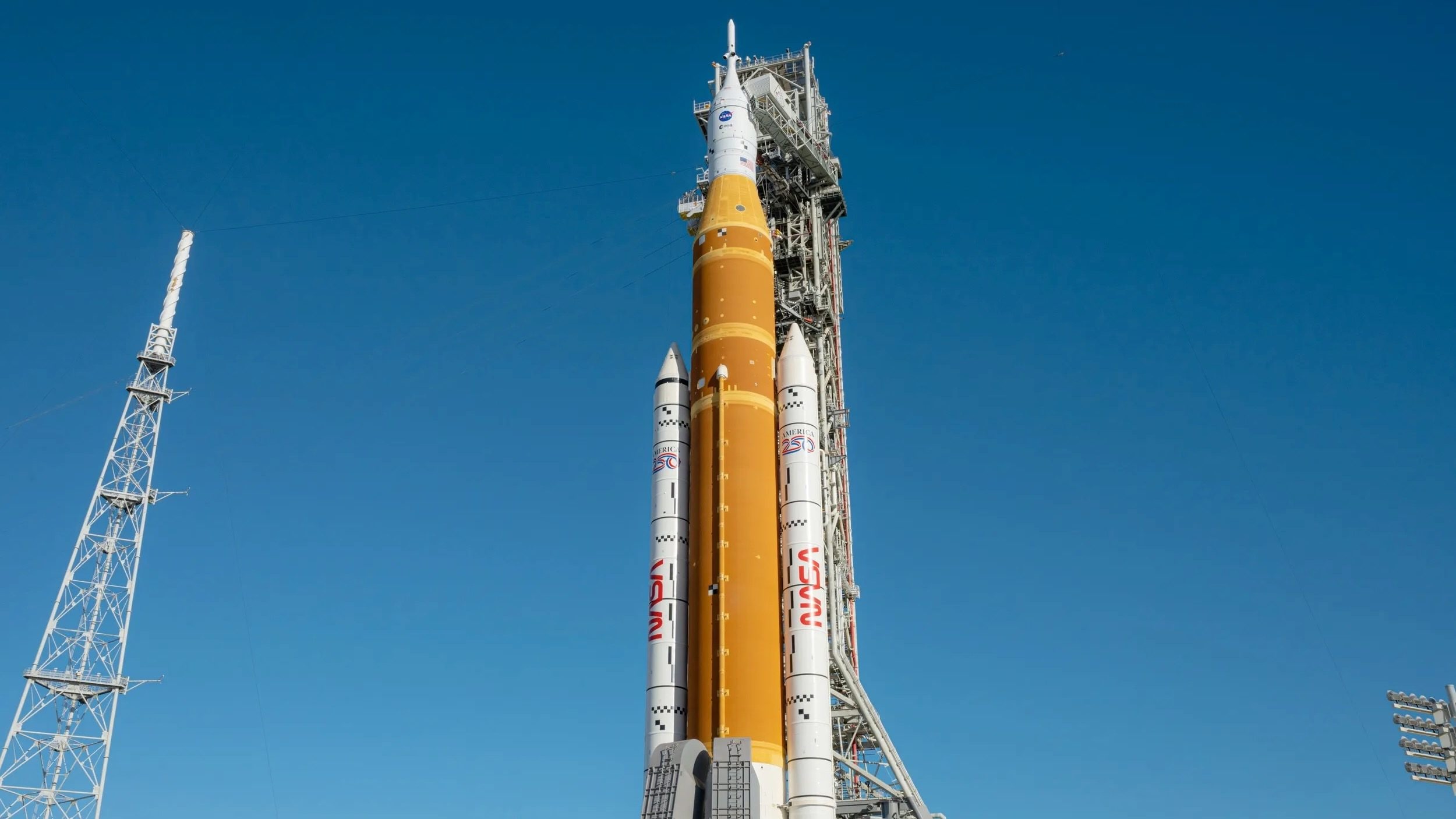
The mission Artemis II of NASA intended to bring humans back into orbit around the Moon will no longer start in March, as previously stated by NASA, but in April, with the first useful opportunity for 8.29pm local time on April 1st (2.29am on April 2 in Italy), when thelast launch window for the mission. This was announced by the director of the American space agency Jared Isaacmanwho explained how the postponement was due to the discovery of a problem related to the helium of the cooling system of the second stage of the rocket SLS (Space Launch System). The announcement came yesterday after the rocket had successfully passed the wet dress rehersal (a complete simulation of pre-launch procedures up to 30 seconds after launch) and the mission’s astronauts had already been moved to quarantine to avoid contracting pathogens ahead of a departure in March. SLS will return tomorrow February 24 in the assembly building to carry out necessary repairs, while the crew is released from quarantine waiting for NASA to establish a definitive date for the start of the second mission of the Artemis program.
The cause of the postponement of the launch of Artemis II to April
The anomaly on the SLS rocket emerged following the analysis of data collected during the wet dress rehersal. From a technical point of view it is one loss of flow helium used by the rocket’s second stage to keep the hydrogen and oxygen in the stage tanks liquid. This loss of flow can result – said Isaacman – from the malfunction of a valve, a filter or the connection system between the two stages.
The second stage of SLS is called Interim Cryogenic Propulsion Stage (ICPS) and has the task of carrying the Orion capsule with astronauts on board on their way to the Moon. To do this, it uses an engine powered by liquid hydrogen and oxygen, kept at very low through high temperatures pressurization. Helium is used precisely to keep the tanks pressurized. An interruption in the flow of helium can therefore compromise the stage’s ability to correctly maneuver in space.
Why returning to the Moon is so complex
The news of this postponement leaves something to be desired bitter in the mouth in astronautics enthusiasts, but also in the general public, who may be tempted to ask why is going back to the Moon so difficult if we have already been there over 50 years ago. It’s a legitimate question with a less than immediate answer.
On the one hand, the fact that we have already succeeded does not detract from the difficulty of the undertaking: bringing human beings to the Moon it still remains an extremely complex task from a technical and engineering point of view, especially if you want to do it with the maximum safety for the crew (this objective has been declared several times by NASA for the Artemis program).
On the other hand, we must not give in to the temptation to think that the Apollo program had no hitches or problems. We remember that at the time the urgency of arriving first entailed great sacrifices in terms of safety, so much so that the first American lunar program began with the death of three astronauts In the Apollo 1 disaster.
The program Artemis has no more problems than Apollo didhe simply has other priorities: it’s fine to go slower but guarantee greater safety for the astronauts. We must also take into account the fact that to carry out the Artemis program NASA is operating with a much more modest budget than that allocated to the Apollo program (less than 0.5% of federal GDP compared to over 4% in the Apollo era).
