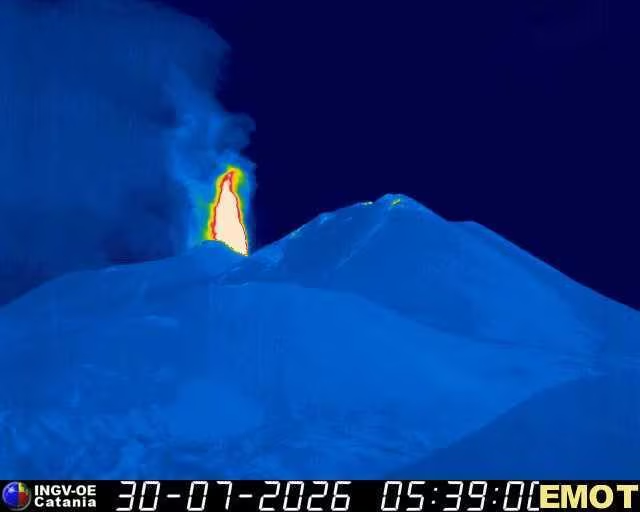
A new eruptive episode is underwayEtna: according to what was reported by the INGV Etna Observatory, starting from 01:30 UTC (03:30 in Italy), the network of cameras observed Strombolian activity at the Crater Voragine. Volcanic activity, that is gradually intensified in the last few hours, it has been producing an emission of ash which is dispersing in a north-west direction.
As reported by INGV, a Strombolian-type activity indicates a relatively low-level volcanic eruptionduring which a modest amount of energy is released. More specifically, this type of volcanic activity is characterized by the expulsion of incandescent waste, lapilli and lava bombs up to a height of tens or hundreds of meters above the eruptive vent.
According to the findings of the National Institute of Geophysics and Volcanology, the average amplitude of the volcanic tremor has undergone wide oscillations moving into the group of high valueswith a sudden increase recorded around 03:30. The springs are located in the area of Voragine and Bocca Nuova craters to a depth of approximately 3000 m above sea level.
At the moment, Etna’s volcanic activity is not impacting the airport’s operations of Catania: the VONA (Volcano Observatory Notice for Aviation), i.e. the alert for civil aviation, is still stable on the green level, the lowest.
Etna, however, is one of the most active volcanoes of Europe: at the beginning of July 2026 an eruption had caused emissions of ash from the Voragine Crater and a volcanic cloud 1.5 km high. In this case, the volcanic activity had also paralyzed the airport, with flights diverted to Palermo or cancelled.
