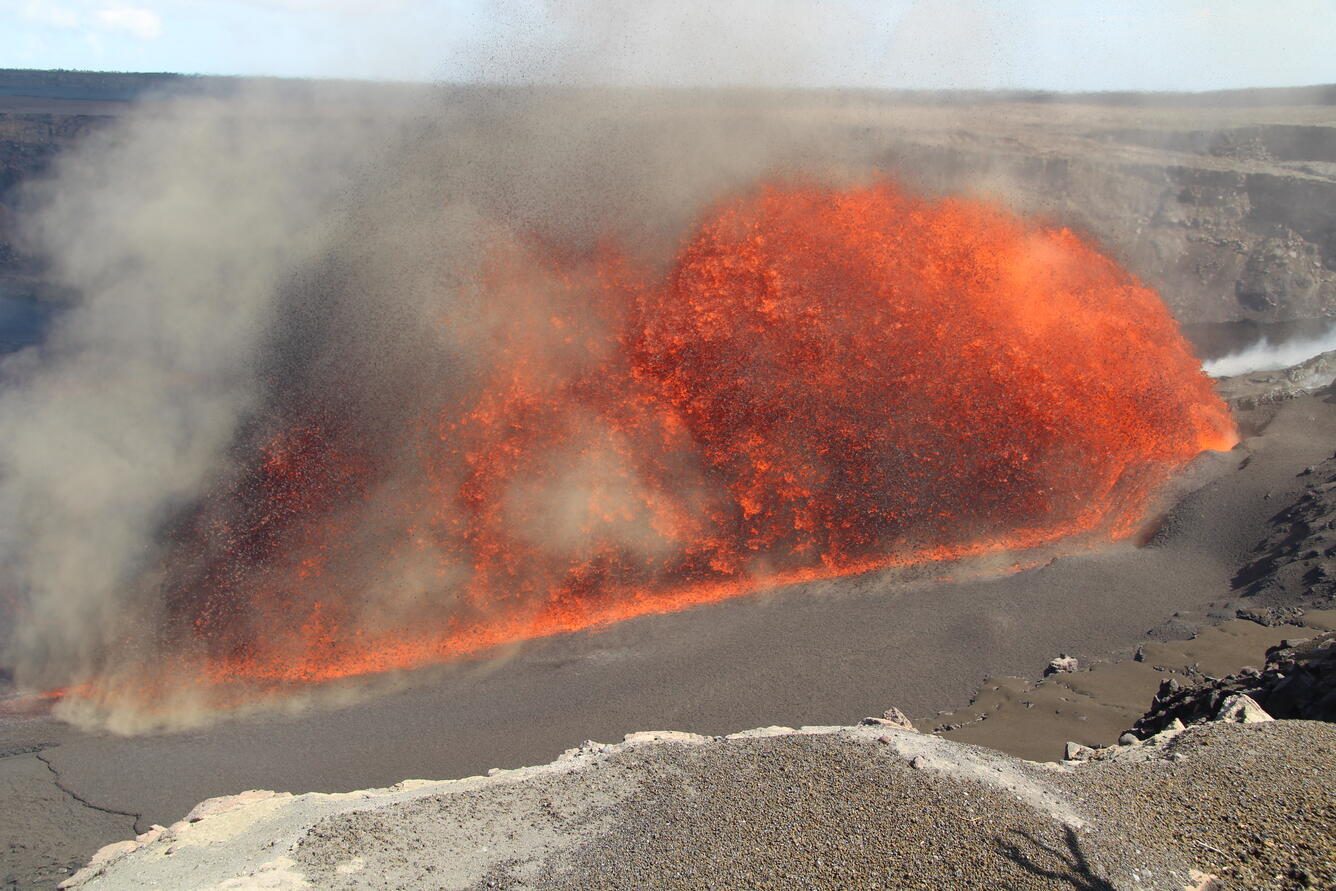
There was a new one eruption of Vulcano Kilauea In Hawaii: the USGS has made it known that the activity lasted more than 12 hourswith lava fountains inclined escape from two air intakes inside the crater of Halemaʻumaʻu, To then extend by about 300 meters. This inclination may have been caused by the construction of a internal cone during the previous eruptive activity. Of less intensity, however, the activity recorded by the southern mouth.
It is the 31st episode Eruttiva recorded from December 2024: thelast It had happened just over a month ago, theJuly 11thwhen the eruption lasted 9 hours with lava fountains up to high up to 365 meters.
The lava flows covered more than 75% of the bottom of the crater: although the erupting activity it ended, the American monitoring institute highlighted the risks related to volcanic gas emissions, mainly composed of water vapor (H2O), carbon dioxide (CO2) e sulfur dioxide (SO2). Just sulfur dioxide is potentially dangerous for human health, since it could react with gases present in the atmosphere and form volcanic smog, capable of causing respiratory problems if present in high concentrations.
In addition to this risk, the USGS has also reported the relapse of debris and so -called “hair of pele”, Very thin filaments of basaltic glass that can be transported by the wind up to 15 km away and could cause irritation in case of contact with eyes or skin.
The USGS then specified that in the coming weeks a new eruptive episode is likely: for this reason, a orange code For the aviation and the volcano it remains under the state of observation. Kilauea, which is located in the Hawaii island of the same name, is one of the most active volcanoes in the world, characterized by very frequent effusive eruptions, which are also reflected in its form of “shield volcano”.
