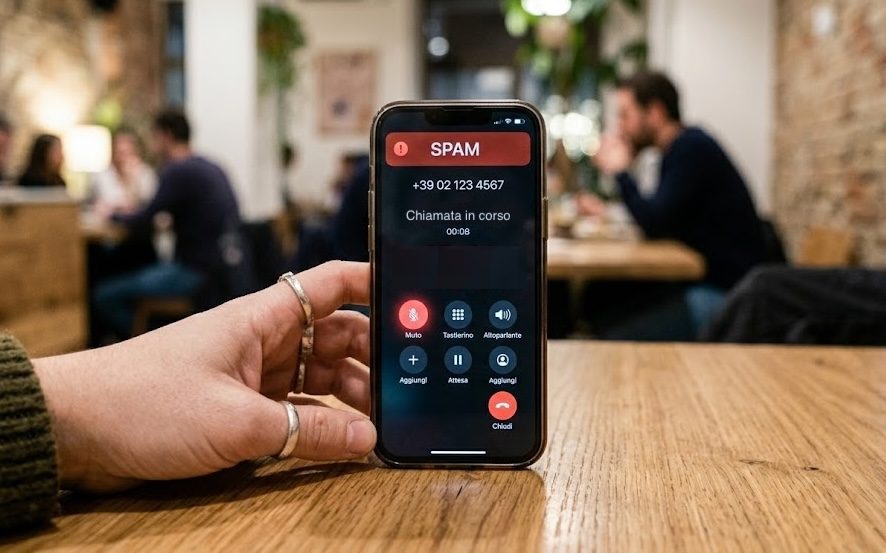
The Codacons recently issued an alert through some statements made by Francesco Tanasinational secretary of the association, according to which consumers should pay attention to receiving silent phone calls. These could in fact represent the first link in a scam based on the now infamous silent phone calls. According to the alarm raised by Codacons, these calls (not to be confused with the silent calls made by call centers). they are used to understand if a number is active, at what times the user is most likely to answer and how he reacts. It is, therefore, a sort of “test” useful for fraudsters to select the most vulnerable targets, often elderly people or people with low digital skills. The risk attributable to these phone calls is not immediate, because the request for money or sensitive data only arrives at a later stage, but it is precisely this apparent harmlessness that makes the phenomenon insidious. Let’s see how this possible scam works and what strategies to adopt to defend yourself.
How silent calls work: “they are not simple mix-ups”
The reports collected in recent months show a recurring pattern, which begins with the first phase of the scam. In this, very short calls are made by cyber criminals, without interlocution, which could sometimes be mistaken for simple misunderstandings: technical errors, numbers entered incorrectly by the caller, and so on. Actually, as he explains Francesco Tanasinational secretary of Codacons, these calls could have very different origins:
We are not always faced with simple misunderstandings. In many cases these are automated systems that check whether a number is active, at what times it answers, how long you stay on the line and what type of reaction is produced. It is a real preliminary profiling activity, aimed at selecting the most connectable contacts.
The systems mentioned by Tanasi record essential technical parameters: whether the user responds or not, how long he stays online, in what time slot, etc. This process of profilingi.e. the collection and analysis of data to build a behavioral profile of a person, is used by fraudsters to surgically choose potential victims, identifying the numbers defined by the secretary of Codacons «more attachable», i.e. more promising in case of subsequent contact.
Once the active numbers have been identified, the process begins second phase of the scam. Here come into play figures that we often hear about in the field of telephone scams: fake telephone operators who report problems with the line, so-called bank employees who talk about suspicious movements on the account, up to people who pretend to be relatives in difficulty. The credibility of these calls is often strengthened by the use of artificial intelligence, which is increasingly used to analyze large amounts of data and identify correlations. By cross-referencing public information available online, such as that on social networks, these tools allow realistic details of the life of the person called to be cited, scammers can give the phone call a certain aura of credibility, inducing the potential victim to lower his defenses.
Now, with what is reported in the previous lines we do not want to say that every silent phone call can automatically lead to these scenarios, but if you receive more than one over the next few days, be careful. You never know.
How to protect yourself from scams and block silent phone calls
Let’s see, now, at defense strategies. Here are some points to always keep in mind.
- Before you speak, wait: if you receive a phone call from a number not saved in the address book, when you answer do not say «Hello, who is it?», but simply wait for the person on the other end of the phone to speak. In fact, your voice could indicate data such as age and gender, which could be used by the scammer to personalize the “script” that he will recite in subsequent contact attempts.
- If you perceive any anomalies, end the call: If after receiving one or two silent phone calls, you receive a contact that seems suspicious to you, perhaps because the person who contacted you asks for personal information (for example, verification codes that you received on your phone), do not provide them. No serious body (be it a bank, an online shop, a social security institution, etc.) will contact you by telephone to receive similar confidential information.
- Enable spam filters: while not perfect, they could at least reduce the number of potentially dangerous calls you receive incoming. Consider activating them, if available on your smartphone.
