Not just Epstein: the system of child abuse is much more entrenched
The case of Jeffrey Epstein’s network demonstrates that the sexual exploitation of minors is neither an “Asian” phenomenon nor a crime typical of the lower social classes. For years, underage girls have been recruited, manipulated and abused within networks involving the financial, political and social circles of the Western elite. Not marginal suburbs nor ethnic or cultural characteristics, but luxury residences and relationships at the top of power. It is an example that immediately shifts the focus: organized abuse thrives where it finds vulnerability and protection, not where there is a specific ethnic identity or precise socioeconomic context.
The grooming gangs
In the UK, however, public debate has focused mainly on the cases of Rochdale and Telford, in which groups of men, largely of Pakistani origin, were convicted of abusing vulnerable white girls. Those scandals had an enormous impact on public opinion and contributed to delineating a clear image of the phenomenon of the so-called grooming gangs. Political campaigns have also been grafted onto this narrative. The independent MP Rupert Lowe, former MEP and former member of Reform UK, has made the request for a “complete truth” on grooming gangs one of the pillars of his public communication. In his interventions and statements, Lowe argued that the authorities had for years avoided openly addressing the ethnic dimension of the cases in the North of England, speaking of cover-ups and institutional reticence.
In his political campaign, the issue was often presented as evidence of a systemic failure related to immigration and multiculturalism, with the idea that organized child exploitation had been underestimated or hidden for reasons of political correctness. This narrative framework became one of the central elements of the launch of his new political project, Restore Britain, promoted as a response to what Lowe calls the state’s lack of transparency.
In the public discourse linked to this initiative, the cases of Rochdale and Telford are often taken as a paradigm of the entire national phenomenon. Child abuse and exploitation are thus mainly traced back to a specific ethnic matrix, transforming from a complex judicial and social issue into an identity-building and mobilizing topic. But the national picture is less linear. And so everything ends up being reduced to a question of “what to show” and “what to talk about”.
The Epstein system
The files on Jeffrey Epstein slide into the background, presented as if they chronicled a one-man operation. The United States Department of Justice line described Epstein as responsible for a network of exploitation of hundreds of minors for his own personal use. But the legal case and subsequent revelations indicated that dozens of figures belonging to the highest international political, financial and business levels gravitated around him. In public debate, however, this dimension tends to be reduced, while other cases are amplified and framed almost exclusively in an ethnic context.
The county lines
And so the phenomenon of county lines and child sexual exploitation that emerged in London in 2017 often ends up on the margins of the debate. Conveniently, public attention focuses almost exclusively on the grooming gangs of the North of England, while other dynamics remain less visible. County lines are networks that start from large cities and involve vulnerable minors to distribute drugs in other areas of the country. According to official data, in the year ending March 2025 over 15 thousand minors were identified as at risk or involved in this type of exploitation. In many cases sexual abuse overlaps with criminal exploitation. The logic is the same: create dependency, impose debts, use threats, sexually exploit.
In London these networks are often linked to traditional urban crime, largely made up of white individuals. They operate on a larger scale than described in the best-known cases from the North of England, but receive different public attention, because they do not fit into the ethnic narrative that has dominated the debate.
It’s not a marginal problem
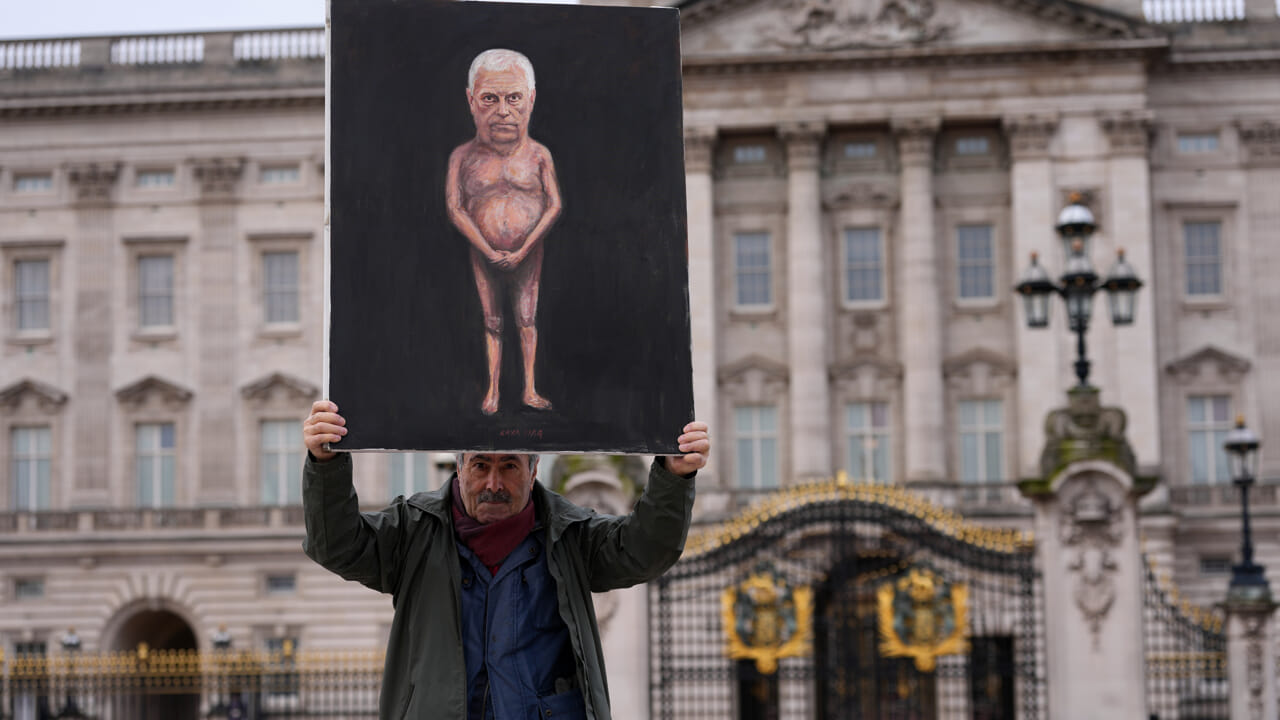
Reducing the problem to a question of identity therefore risks being misleading. The cases of Rochdale and Telford remain serious and documented, but do not exhaust the phenomenon. From gangs linked to London drug dealing to elite circuits such as that of Epstein, with the direct involvement, even, of the former Prince Andrew (who allegedly contributed to transporting numerous minors to the United Kingdom), the organized exploitation of minors extends across social classes, territories and ethnic groups.
The constant is not the origin of the abuser, but the combination of victims’ vulnerabilities, power networks and institutional failures. Added to this is a transversal element that emerges in very different contexts: a culture of domination and exploitation, in which minors (male and female) are reduced to objects, to resources to be used and exchanged.
This mentality cannot be traced back to a single religious or cultural tradition. It is visible in the dynamics of the grooming gangs that emerged in Rochdale and Telford, but also in criminal networks of a completely different nature. Eastern European organized crime, including structures linked to the Russian mafia, have historically used trafficking and sexual exploitation as sources of profit. In the UK, white gangs rooted in urban crime have employed the same pattern of control, coercion and commodification of vulnerable girls within drug networks and county lines.
The case of Jeffrey Epstein shows a similar dynamic in a completely different context, in terms of social class and access to power. Influential figures from the political, financial and business worlds gravitated around him. The civil lawsuits and subsequent investigations highlighted a network of facilitators, contacts and covers that allowed the system to function for years. Not an ethnic phenomenon, but a mix of privileges, relationships and silences.
Corruption
The issue of institutional corruption also fits into this framework. British investigations into cases of child exploitation have documented, in some contexts, omissions, underestimations and delays on the part of local authorities. The problem of corruption in the Metropolitan Police is not just the stuff of television fiction. The Line of Duty series, created by Jed Mercurio, is inspired by real-life scandals involving the Met, including the A-10 unit of the 1970s and the so-called “Bent Coppers scandal,” which led to the conviction of corrupt agents and the creation of internal anti-corruption structures. Some seasons have also recalled cases of child abuse and institutional cover-ups, reflecting a historically documented problem: the possibility that internal power networks hinder or divert investigations.
In the cases of grooming gangs, serious shortcomings in the response of local authorities have emerged. In the context of the county lines, individual episodes involved officers accused of collusion with criminal circles. In the Epstein case, public debate has raised questions about the protections and relationships the financier enjoyed before formal indictments.
It is therefore not just a question of ethnicity or origin. It is a culture of oppression that pervades street criminal environments, international mafia organizations and elite circuits. A culture which, at its core, normalizes the idea that the body of minors can be exploited as an instrument of profit, power or gratification, and which can find space when control, transparency and responsibility fail.
