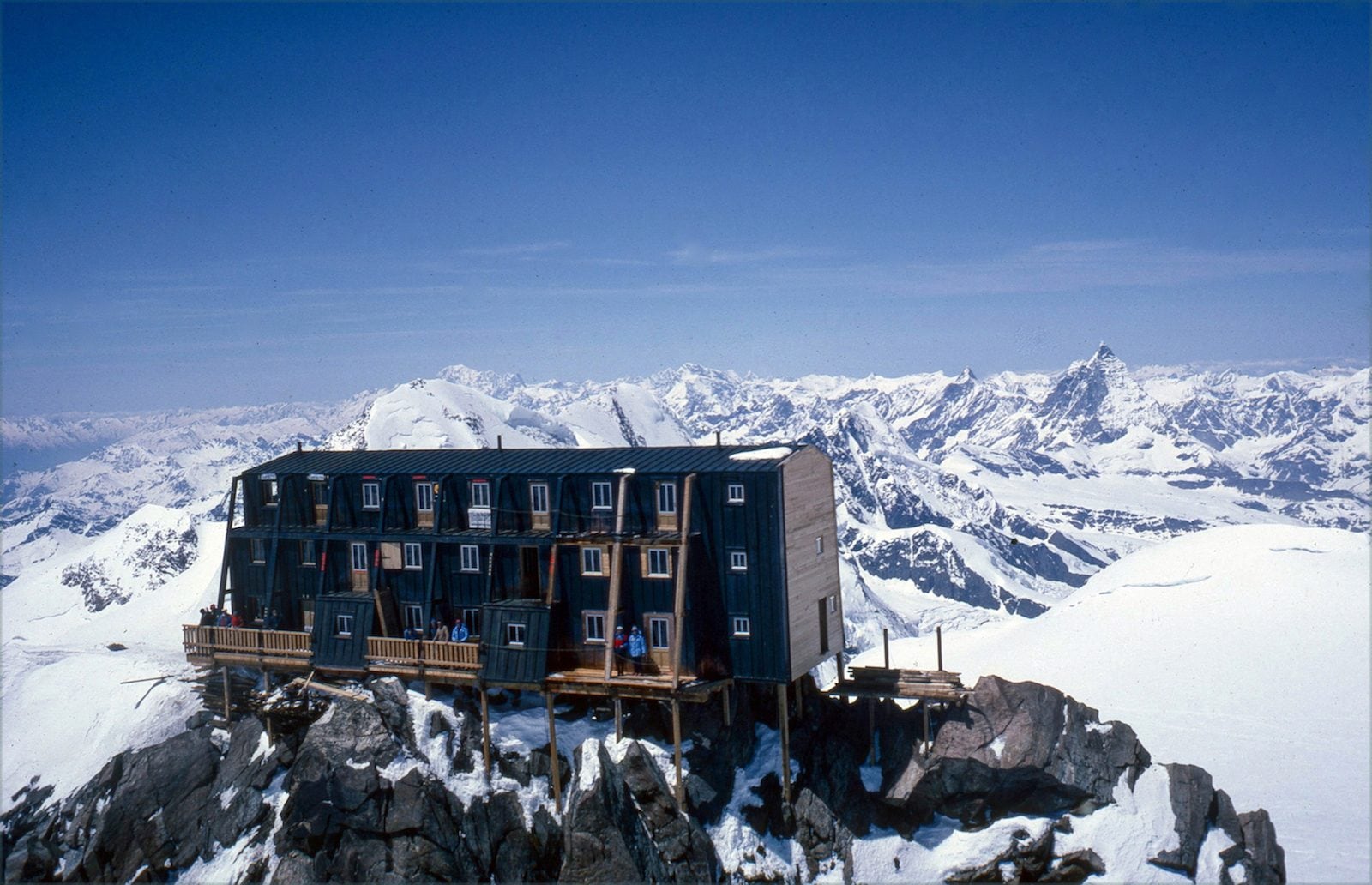
There Regina Margherita hut is an alpine refuge located in 4,554 meters above sea level, on the Gnifetti tip of the Monte Rosa massif on the border between Italy and Switzerland. It’s the highest refuge in Europe. It was built in 1893 on the initiative of the Italian Alpine Club and renovated in 1980. Today it serves as refuge for mountaineers exploring Monte Rosa, how meteorological observatory and for functions of scientific research at high altitude.
What is Capanna Regina Margherita: how to get there
The Capanna Regina Margherita is a refuge of the Italian Alpine Club, located on the Gnifetti tip of Monte Rosa, at 4,554 meters above sea level, near the Italian-Swiss border. The tip, entitled to priest-mountaineer Giovanni Gnifettiis slightly lower than the highest peak of Monte Rosa, Punta Dufour, which reaches 4,634 metres.
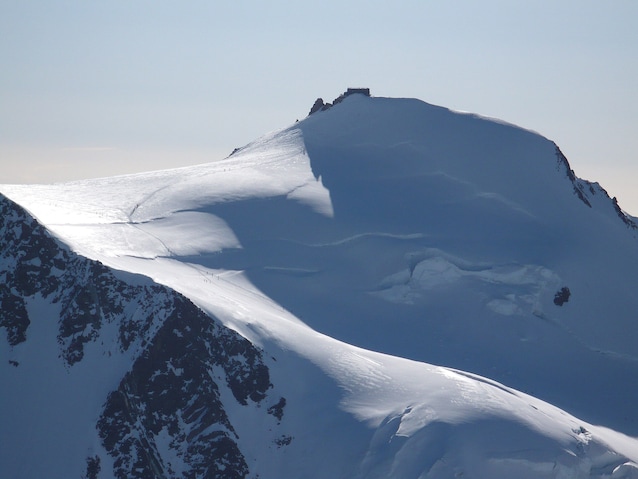
The Capanna is considered the highest refuge in Europe. You can reach it through various mountaineering itineraries with excursions organized by mountain guides. The costs to reach it are not low: several hundred euros per person are needed.
The history of the refuge on Monte Rosa
The construction of the Capanna Regina Margherita was decided by the Italian Alpine Club in 1889. One of the main supporters of the initiative was Angelo Mossoa doctor and physiologist, who wanted to use the refuge as a base for his research on the reactions of the human body at high altitude.
The construction of the hut took place in 1893. The components of the building were transported to the Gnifetti peak partly with mules and partly on shoulders, to then be assembled on site. The refuge was inaugurated on August 18, 1893 in the presence of Queen Margaret of Savoyto which it was named.
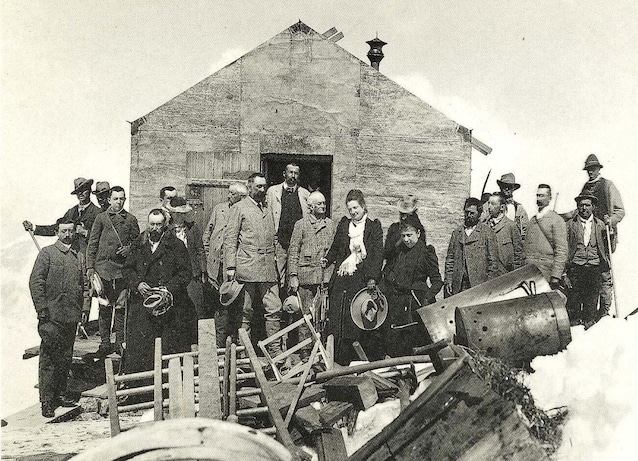
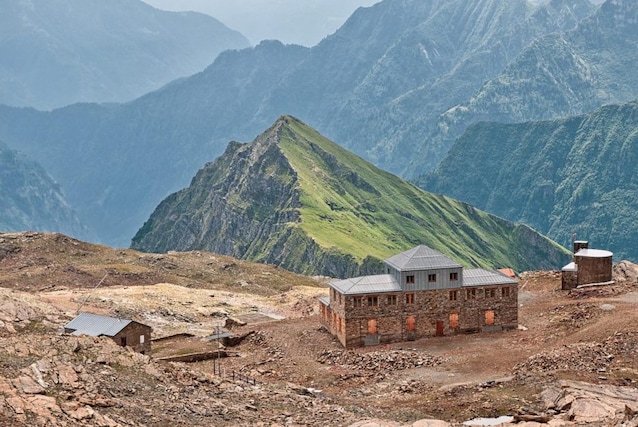
The cabin soon revealed itself to great usefulness. First of all, it facilitated the exploration of the Monte Rosa massif, guaranteeing mountaineers a place to stop and spend the night. Furthermore, it proved to be very important for scientific research: Angelo Mosso used it to continue his studies on breathing at high altitudethanks to whom he published a volume on the subject in 1894, Physiology of man in the Alps. In 1907for research functions, the refuge was joined by another centre, the“Angelo Mosso” Institutelocated at Passo dei Salati at 2900 meters above sea level.
The Regina Margherita hut continued to welcome climbers until 1979, when it was demolished and replaced with a new structureinaugurated on 30 August 1980. The building was designed to take ecological effects into account and in 2002 it obtained a certification attesting to its minimal impact on the environment.
The Capanna today: beds, characteristics and difficulties
Today the Regina Margherita hut has 70 beds. In summer the entire structure is open, while from autumn to spring only a smaller space is open, with 10 beds. The hut is equipped with internet wifi and of electric current.
Since 2000 it has been home to one weather stationthe highest in Europe, and since 2004 it has even hosted a small libraryset up with books donated by publishers.
Together with the hut, the“Angelo Mosso” Institutedestroyed in 2000 by fire but rebuilt in the following years. The Institute deals with research and dissemination and also houses a collection of ancient scientific instruments.
The Olympic torch at the highest refuge in Europe
The January 13, 2026 the Capanna Regina Margherita welcomed the torch of the Winter Olympics Milan Cortina. The organizers wanted the Olympic torch to reach the highest alpine refuge in Europe on its journey through Italy. The protagonists of the initiative were the mountain guides from the towns of Gressoney, Champoluc, Alagna, Macugnaga and Zermatt, who carried the torch to the refuge. After reaching it, the guides carried the torch to the Passo dei Salatiwhere some ski instructors gathered, and then moved totown of Gressoney-La-Trinitéat 1,627 meters above sea level.
