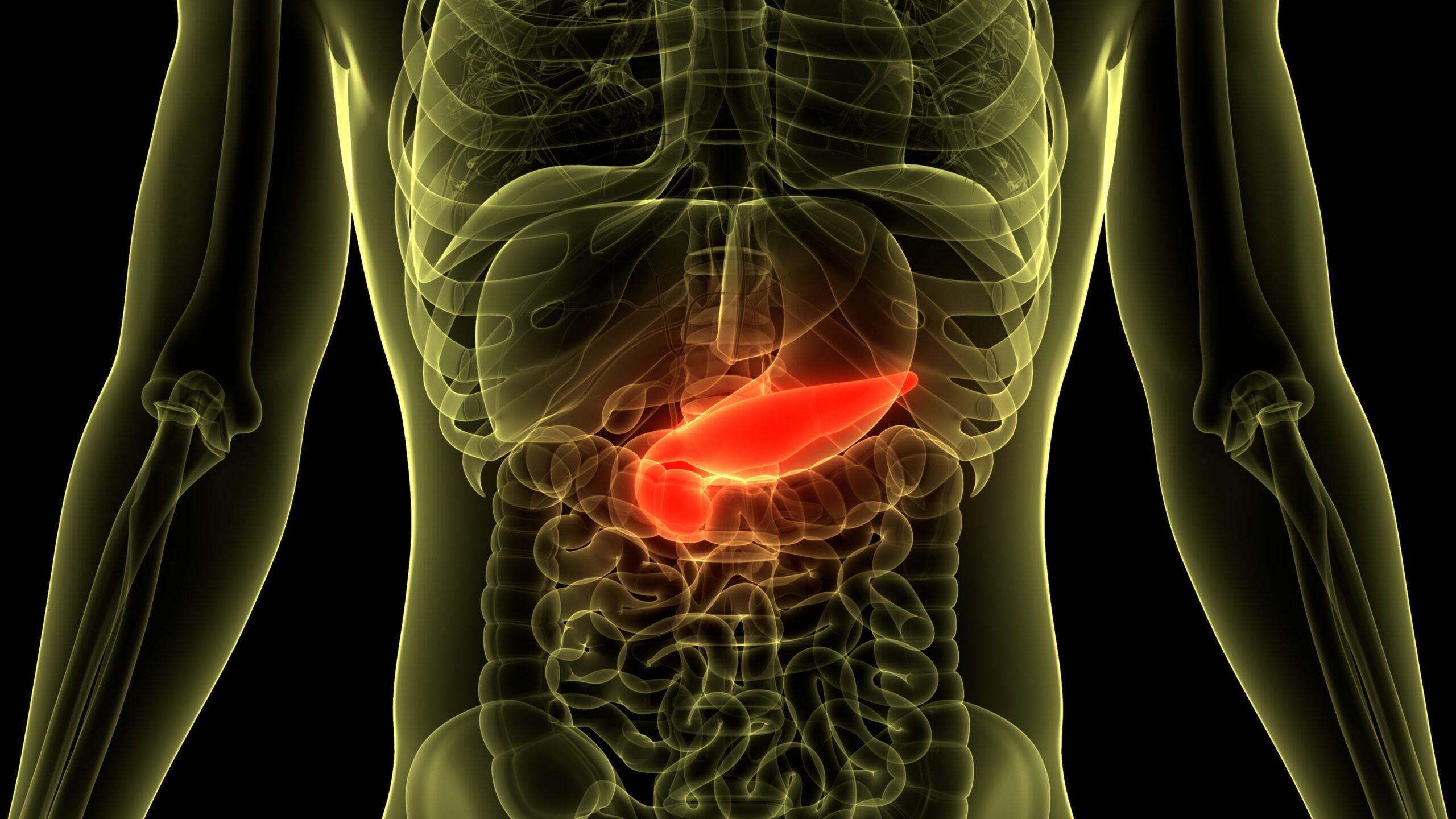
News of a possible “definitive cure” for the disease has been circulating a lot these days pancreatic cancerresulting from research conducted in Spain. As often happens when we talk about medicine and health, it is essential to sort out the newspaper headlines and the real data published by the scientific community. The study in question, published in the journal PNAS by a team led by Mariano Barbacid (head of the Experimental Oncology Group of the Centro Nacional de Investigaciones Oncológicas in Madrid), exists and is very promising. Using a mix of 3 drugs the group managed to regress the disease in a lasting way and without toxicitypancreatic ductal adenocarcinoma (PDAC) in animal models. However, we must immediately clarify a fundamental point, namely that the results, although exceptional, were obtained in pre-clinical phaseup mice, and not yet on humans.
To ensure maximum accuracy on such a delicate topic, this content has been reviewed and validated by Dr. Maria Pia Prottihead of the Tumor Immunology Laboratory atIRCCS San Raffaele Hospital in Milan.
Barbacid’s Spanish research on pancreatic ductal adenocarcinoma
The research of the Spanish team of CNIO of Madrid focuses onpancreatic ductal adenocarcinoma (PDAC), one of the most aggressive and lethal forms of cancer ever. According to the data AIOM (Italian Association of Medical Oncology), in Italy they are almost registered 14,000 new diagnoses per yearwith a survival rate that remains low 5 years after diagnosis (around 10-11%). Because the disease progresses without obvious symptoms, diagnosis often comes when treatment options are limited.
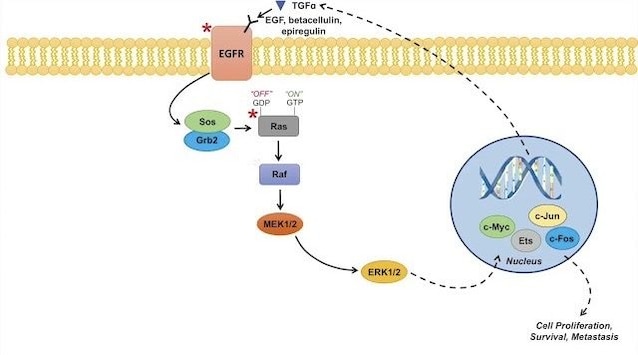
The main difficulty in treating this tumor lies in its ability to adapt. In the 90% of cases, everything originates from the mutation of a specific gene called KRAS. We can imagine the KRAS gene as a “switch” that regulates cell growth: when it changes, the switch does locks in the “ON” positionordering the cells to replicate relentlessly and forming the tumor mass.
To date, research has attempted to block this switch with specific drugs. The problem is that these tumor cells are “intelligent” and when the main pathway (KRAS) is blocked, they quickly learn to use secondary roads to continue growing. This makes therapies often ineffective in the long term.
The mix of 3 drugs against pancreatic cancer and the results on mice
The team’s intuition, explained in the article “A targeted combination therapy achieves effective pancreatic cancer regression and prevents tumor resistance”, was to change approach and, instead of hitting a single target, they devised a simultaneous attack on multiple fronts to prevent the tumor from finding escape routes. The strategy is based on three-drug combination administered simultaneously:
- A drug (daraxonrasib) attacks the main street (KRAS)
- A drug attacks i receptors (afatinib) alternatives upstream of KRAS (EGFR/HER2) that the tumor would use to bypass the blockage
- The third drug (SD36) has the task of degrading a specific protein that tumor cells use as a further survival mechanism, STAT3
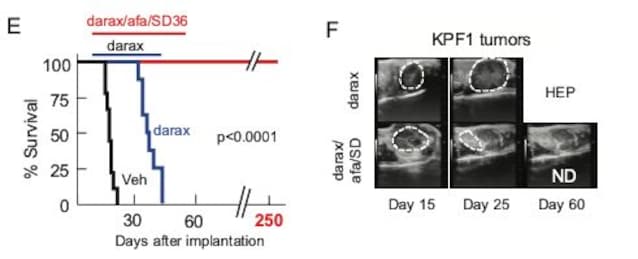
The results obtained on murine models (mice) were defined as surprising by the researchers themselves. Combined therapy led to rcomplete egression of the tumor mass. An important fact also concerns the duration of the effect: the treated mice showed no signs of relapse (return of the disease) for the entire observation period which was longer than 200 dayssuggesting long-lasting efficacy of the treatment in this animal model.
Because we cannot talk about a cure on human beings
If the results are so good, why can’t we still talk about cures for humans? Medical science has gods rigid times and protocols for a specific reason: the safety. Currently, the Barbacid group’s study concerns one pre-clinical phase and the same author specifies:
It is important to understand that although experimental results such as those described here have never been obtained before, we are not yet able to perform clinical trials with triple therapy.
The transition from mice to humans is the biggest obstacle in oncology research because of the genetic complexity – human biology is much more complex than that of a mouse – and the toxicity – it is necessary to verify that this mix of three drugs is tolerable for the human body and does not cause side effects. Finally, the drug that degrades STAT3 has not yet been approved for clinical use.
The Spanish study undoubtedly represents a significant step forward. He demonstrated that it is theoretically possible to “bypass” pancreatic cancer resistance by simultaneously blocking multiple signaling pathways. However, before we can see this therapy in hospitals, years of studies and clinical trials will be needed to confirm its effectiveness and safety in humans.
Sources
Umberto Veronesi Foundation IRCCS San Raffaele Hospital AIOM – Cancer numbers in Italy 2025
V.Liaki,S.Barrambana,M.Kostopoulou,CGLechuga,E.Zamorano-Dominguez,D.Acosta,L.Morales-Cacho,R.Álvarez,P.Sole,B.Rosas-Perez,R.Barrero,S.Jiménez-Parrado,UN.López-García,M.San Romano, JCLópez-Gil, M. Drosten, B. Sainz, M. Musteanu, E. Caleiras, (…) and M. Barbacidio, A targeted combination therapy achieves effective pancreatic cancer regression and prevents tumor resistance, Proc. Natl. Acad. Sci. USA 122 (49) e2523039122, https://doi.org/10.1073/pnas.2523039122 (2025).
CNIO
