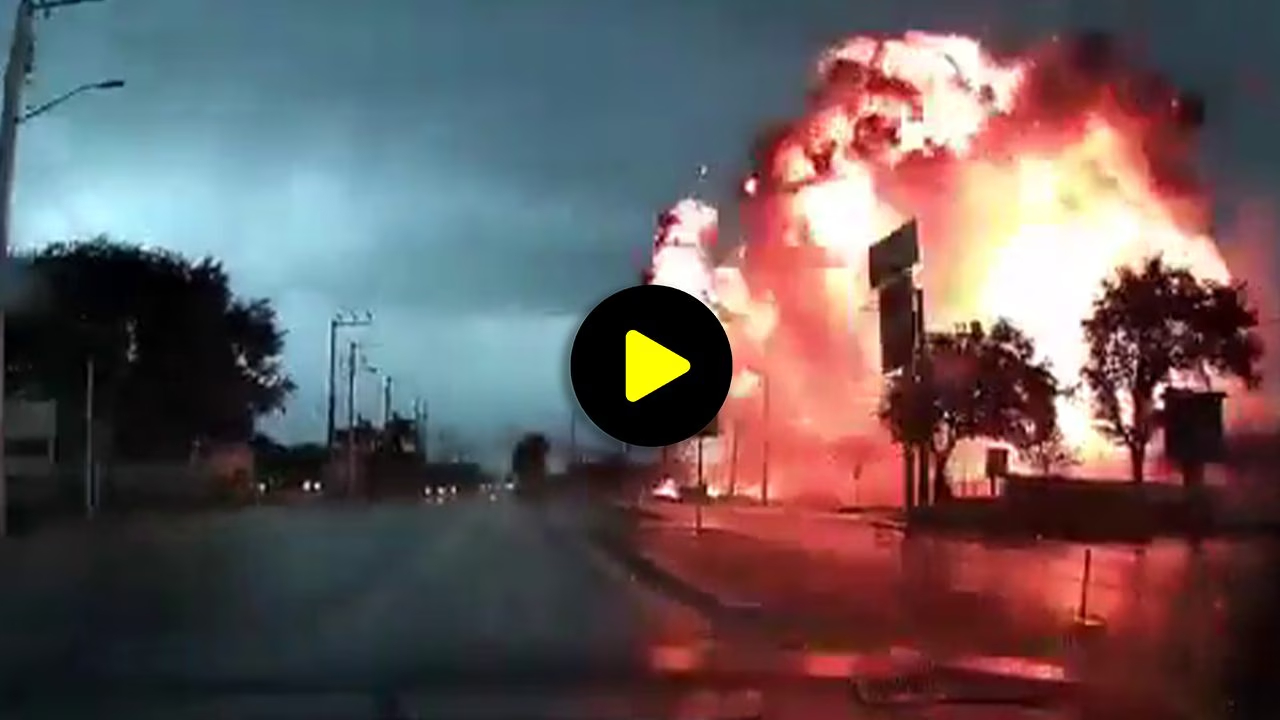
A Learjet 60 crashed in Florida: 9 people on board died, including the CEO and family members. The NTSB investigates the cause of the fatal dive. Among the hypotheses: turbulence, ice, technical failures or spatial disorientation, which caused loss of control and overspeed.
A jet private crashed in Florida in a fireball, leaving a crater in the ground. Fortunately there were no victims on the ground, but all the occupants of the vehicle lost their lives: in addition to the pilot and co-pilot, on board the Learjet 60 which crashed in Palm Beach County there were the CEO of three technology companies, his wife, his children with nanny in tow, and two friends. But what are the possible causes behind this disaster? To try to answer this question in the most exhaustive way possible, we will take as our main reference the statements made in the last few hours by National Transportation Safety Board, or NTSB, i.e. the US body that investigates plane crashes and which has made several statements on the matter.
The dynamics of the plane crash: what happened
On November 1st a Learjet 60 private jet (produced in 2004 and operated by Aurora Aviation / Upper Jets) takes off from Austin-Bergstrom Airport in Texas and begins its journey to North Eleuthera Airport in the Bahamas. They were on board nine people: Adam Robinson, his wife Helen Sharp with their two children, Emma and Charlie, nanny Anita Maria Cetina and two family friends, Rachael Reed and Charmi Fehr. In addition to them, the pilot Jeff Gregory and the co-pilot Nathalia Gadelha Filgueiras. Suddenly, however, a problem. As confirmed by the NTSB, at approx 35 thousand feet altitudethat is, approximately 10,700 meters, the crew reports to air traffic control ice light And turbulence moderatewith changes in altitude of approximately 700 feet (210 meters), more than double the 300-foot threshold beyond which a deviation is considered serious, asking to go up to 37 thousand feetapproximately 11,300 meters. The climb is authorized but, shortly after, the plane enters a descent steep. According to tracking data from Flightradar24, in just over a minute the plane passed by 35,250 to 8,750 feetthe last recorded data. Over the radio the crew reports a descent of 20,000 feet per minutethat is, over 100 meters per second: more than 360 km/h only vertically. In the meantime the pilots launched the mayday and reported a condition of overspeedi.e. exceeding the maximum speed.
Shortly thereafter, the terrible crash that we all saw. Unfortunately, all nine people on board lost their lives. This was confirmed by the US Secretary of Transportation Sean Duffy. Fortunately, no victims or serious injuries were reported on the ground, but Palm Beach County authorities have evacuated approximately 600 residents nearby and there, at the point of impact, a huge remains crater. Let’s take a moment. We saw what happened, but from a technical point of view, how was it possible? To get a little clearer ideas, let’s start from the analysis of the medium involved.
The features of the Learjet 60
The protagonist of this story is a Learjet 60, a medium-sized business jet certified byFAA (Federal Aviation Administration, the US civil aviation authority) in January 1993. It is a private jet, designed to carry a maximum of eight passengers plus crew. It is approximately long 17.9 metreshas a wingspan of 13.3 metres and has two engines mounted at the tail, on the sides of the fuselage, and a T-shaped empennage, that is, with the horizontal stabilizer at the top of the fin.
The engines are two turbofans Pratt & Whitney Canada PW305A and speed is precisely the strong point of this vehicle: in fast cruising it reaches approx 863 km/hwhile in economic mode it travels at 780 km/h. The maximum speed limit is Mach 0.81, which is 81% of the speed of sound. In fact, the wing is designed to fly close to the speed at which shock waves begin to form above it. Keep this number in mind, because we will need it soon.
As far as the quota is concerned, it can go up to 51,000 feetthat is, over 15,500 meters, and cover approx 4,450 km non-stop. In short, it is a plane designed to fly high and fast, and that is precisely where the margin for error narrows. The example involved, registered N722BD, it was built in 2004 plus the age, however, will count the flight hours and maintenance history of the plane, which investigators will examine
The physics of flight: what LOC-I is and why it is dangerous
The dynamics of the accident described so far by the NTSB are compatible with a precise category: LOC-I, Loss of Control In-flight. This in reality – it is worth specifying – is not a cause but a category of accident. LOC-I occurs when the aircraft deviates from its intended trajectory or exits its normal flight envelope, and the pilots can no longer maintain control. Often everything begins with an upset, an anomalous attitude: nose too high or too low, wings too inclined or speed outside the limits. According to IATA, the international airline association, 2009 and 2018 were the deadliest accident category of commercial aviation: caused 2,462 victims out of 4,075 total. Almost always, as we will see later, it arises from the union of several factors.
We must then keep in mind that at 35,000 feet the air has less than a third of the density that has at sea level, and the speed window in which a jet can fly narrows. Below this speed window there is the stall, while above there is the maximum speed, expressed in Mach number: for the Learjet 60 – as we have seen – it is Mach 0.81that is, approximately 880 km/h in those conditions.
Already approaching that limit something happens: the air flowing over the wing accelerates so much that in some places it exceeds the speed of sound, even if the plane overall is still slower. There they form shock waves. If the plane accelerates further, these waves move towards the back of the wing and drag with them the point where the wing “pushes” up. The result is that the plane it tends to lower its muzzle on its own and, just when they are needed most, the commands to bring him up work worse. In jargon this phenomenon is called Mach tuck.
In general, the higher you go, the closer the two minimum and maximum speed limits become, until they touch in the so-called coffin corner“the coffin corner”. Commercial and business jets usually do not fly so close to the limit – and in fact even in this case the vehicle was well below – but this does not mean that at altitude this window can be reduced to a few tens of knots, i.e. even less than a hundred km/h of difference between minimum and maximum. And in bad weather, gusty winds can make it difficult to stay in the right speed range.
In light of all this, therefore, what are the possible causes today?
Hypotheses on the causes
The NTSB has listed weather as one of the main factors to examine, calling turbulence “certainly a factor“, and is checking whether the plane broke up in flight. The following are therefore the scenarios that the physics of flight and the available data make plausible, and the cause could be a combination of them, or something that does not emerge at all today.
The first cause could be that of storm. In Florida, storm cells can exceed 40,000 feet, with updrafts and downdrafts capable of changing the plane’s altitude and speed in seconds. As we saw, the crew reported turbulence and was therefore looking for a calmer altitude. In the same radio communication there was also talk of ice light And glassy. In aeronautics, ice is classified by type (frost, grainy, glassy or mixed) and by intensity (traces, light, moderate, severe): glassy ice is considered the most insidious, because it is formed by large drops that flow on the wing before freezing, modifying its profile and reducing lift. The one reported, however, was of intensity light. The crew had reported an outside temperature of -47°C. At that temperature, liquid water practically does not exist and the droplets freeze immediately, so it is difficult for them to form again on the plane. It is possible that that ice had formed in an earlier phase of the flight, for example while climbing, and remained on the unprotected surfaces.
At altitude, however, there is another phenomenon to consider: the so-called crystal ice. In the deepest storms the air high up in the air is full of tiny ice crystals. These do not stick to cold surfaces, but on heated surfaces, such as probes and the inside of engines, they can partially melt, stick and refreeze
And this type of ice is treacherous because it can block theinside the engines oh tubes Of Pitoti.e. the probes that measure speed. It is a phenomenon documented right in Florida, where NASA and the FAA have conducted research flights into these systems. It also happened, in a much larger storm over the equatorial Atlantic, on the fly Air France 447 in 2009. For the Learjet there are currently no reports of unreliable speeds, but it is one of the investigators’ checks.
Another element we have already talked about is overspeed. Exceeding the maximum speed, in this case, could be more of a consequence than a cause: an airplane that has lost its attitude and is pointing its nose downwards accelerates quickly and, beyond the Mach limit, recovery becomes more difficult. The NTSB also has indications, yet to be confirmed, of a partial breakup in flight, so much so that some parts could be found some distance from the point of impact. At altitude the limit is the Mach number; going down, it becomes the indicated speed, the one that measures the air pressure on the structure: and it is this which, if it exceeds the design values, can cause some parts to break in flight.
Among the members of the NTSB team there are also systems and structures specialists, so a broken down technician the specialists will examine the fractures of the wreckage, to understand if a piece has failed due to overloading or a pre-existing defect, and the state of flight controls, trim (which regulates the attitude), autopilot and probes
And then, as always in these cases, the hypothesis of factor human. In fact, in every investigation the NTSB reconstructs what the crew and air traffic controllers knew, and above all when they knew it and what they did. In fact, in the cloud, without external references, a sudden event can surprise anyone and the body can perceive the plane’s attitude incorrectly. It is spatial disorientation, against which pilots train with specific courses for recovery from unusual anomalous attitudes, made mandatory by ICAO since 2014 also following accidents such as that of Air France 447, where the obstruction of the probes was followed by a response from the crew that brought the plane to a stall
Florida’s, therefore, was a tragic accident which – in the worst case scenario – could have turned into a real massacre.
As always in these cases, the exact formulation of the causes will take time, but with the elements at our disposal we can at least have an idea of the main elements at play and the main difficulties encountered in the minutes before the disaster. A plane crash almost always starts from one chain Of events: Psychologist James Reason described it with the Swiss cheese model, in which the accident occurs when the holes in multiple safety barriers line up. For this reason, Annex 13 of the Chicago Convention, implemented in Europe by regulation 996/2010, establishes that the purpose of an investigation is to prevent new accidents, not to look for culprits. Waiting for the NTSB’s conclusions is also a way to respect the nine people who lost their lives and their families.
