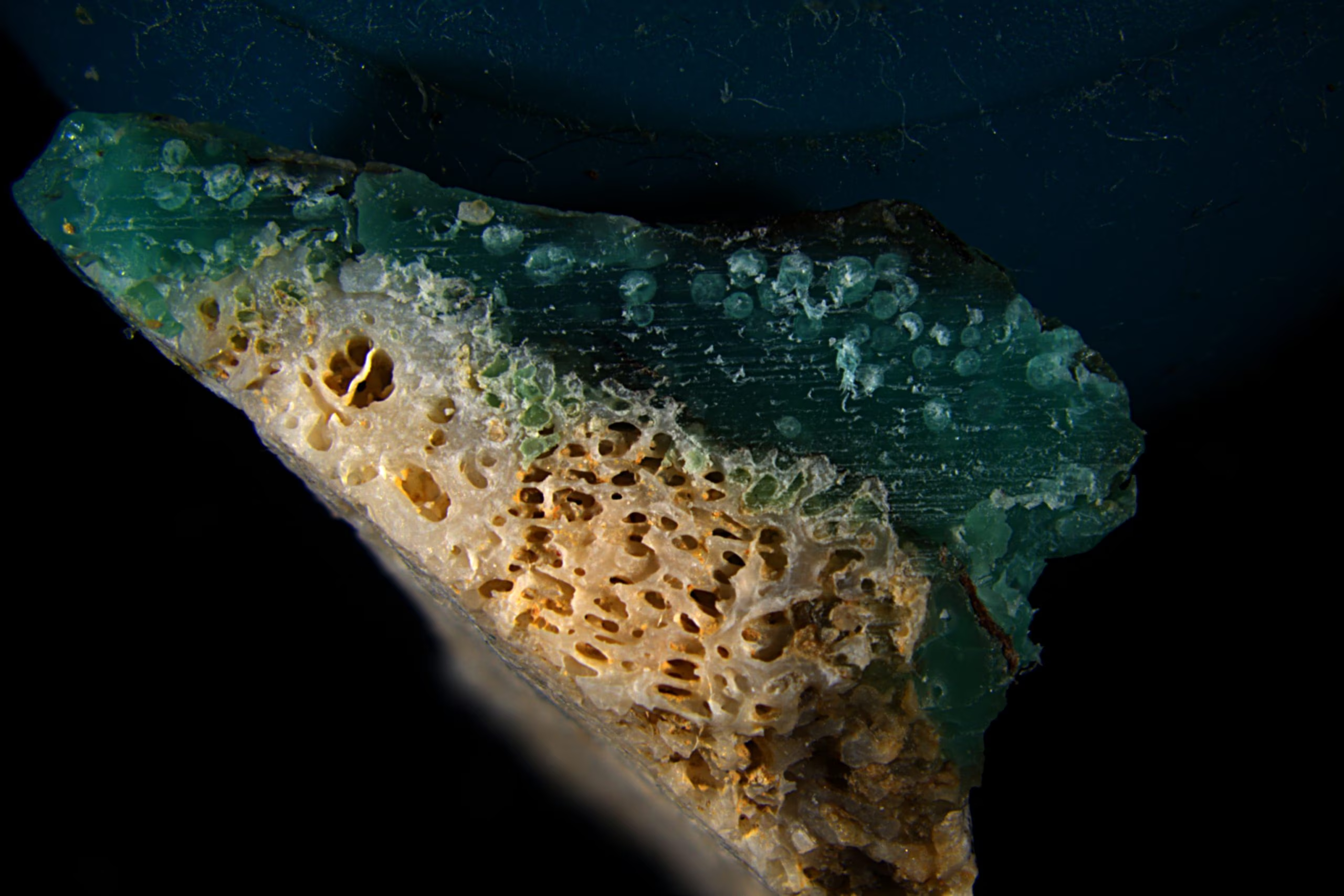
On some beaches of Okinawain Japan, researchers found fragments of a dead coral mixed with melted plastic. A structure so particular that it coined a new name: plastic corals, plasticorals in English. It has been described as a hybrid material in which the artificial polymers and biological skeleton are a single body, impossible to separate. The discovery comes from a team fromOkinawa Institute of Science and Technology (OIST) and of theRyukyu University in a study published in the journal Marine Pollution Bulletin.
The discovery occurred during normal monitoring of waste washed up on the island of Okinawa. The authors noticed small, brightly colored dots among the pale coral debris. Microscopic and spectroscopic analyzes revealed that gods were present polymers melted inside the coral.
In these fragments, the plastic has actually penetrated the marine organisms. To understand how, you need to look at the structure of a coral skeleton. When a coral dies, it remains calcium carbonate scaffolda hard structure but full of micro-pores, similar to a petrified sponge. There commonly used plastic (bags, bottles, fishing nets) is made of heat-sensitive polymers such as polyethylene and polypropylene and, according to the researchers’ reconstructions, the plastic corals would have formed from burning of plastic on beaches during bonfires. The molten polymers then bonded tightly to the dead coral. The heated plastic, becoming viscous, would have flowed into the pores of the skeleton and would have cooled and solidified. The result is what scientists call “biogenic plastic agglomerate“. This is a special case of plastiglomeratethe family of hybrid materials born from the fusion of plastic and natural substances, which shows the long-term effects of plastic pollution on coral reefs. These have also been proposed as possible markers of the “Plasticene” or “Anthropocene”, thehypothetical geological era marked by plastic.
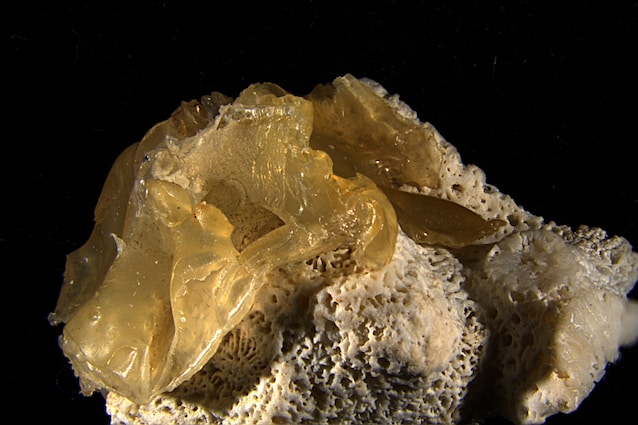
In total they have been documented five cases: three on Sosu Beach, one at Ibu Beach and one at Odo Beach. Still relatively low numbers but which demonstrate the existence of these structures without establishing how widespread they are or what concrete damage they cause. However, the study authors did make some hypotheses on possible harmful effects.
First, beached coral fragments often return to the sea, where the debris serves as basis for the growth of new corals and offers shelter to fish. If there is melted plastic in that foundation, the base on which the barrier is built becomes a source of pollution.
Furthermore, on the one hand a chemical risk: plastic debris can release substances into sea water, disturbing the proliferation of corals and accumulating harmful molecules and pathogens. On the other the fragmentation (caused by waves, sun and salt) risks crumbling these structures and releasing microplastics in the environment. Researchers talk about new ecotoxicological risks for environments already under stress due to the climate change.
