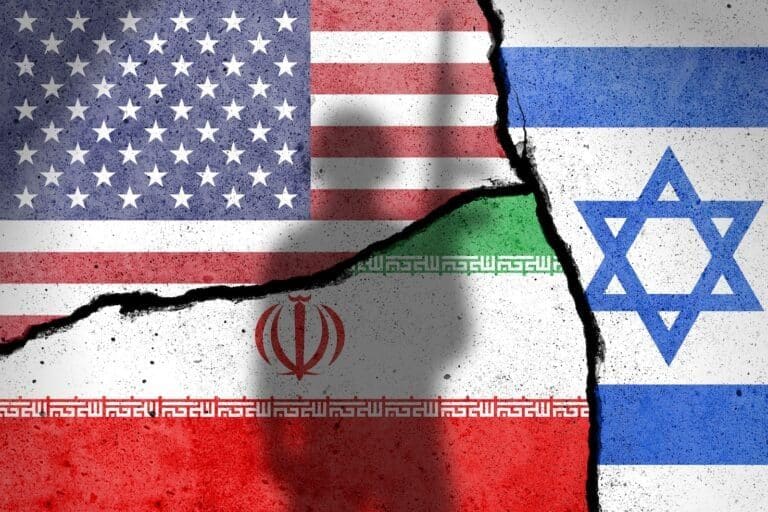
The conflict in the Middle East is expanding on a regional scale after the joint attack by the United States and Israel againstIran – in which the Ayatollah was killed Ali Khamenei – and the Iranian retaliation in various areas of the Gulf (with missiles hitting American bases, but also Israeli cities and other cities in the region such as Dubai), effectively rekindling a conflict that had been in the shadows since 12 Day War erupted in June 2025. Also other prominent Iranian figures, such as Mohammad Pakpour, commander of the Islamic Revolutionary Guard Corps (IRGC), the Minister of Defense Aziz Nasirzadeh and the admiral Ali Shamkhani, head of the Defense Council, were killed in Israeli-US raids. In response, Iranian forces launched missiles and drones not only against Israel, but also against numerous US bases and civilian objectives in the neighboring Gulf countries, and the conflict seems to be spreading on a regional scale.
The current situation: the conflict after the attacks in Iran
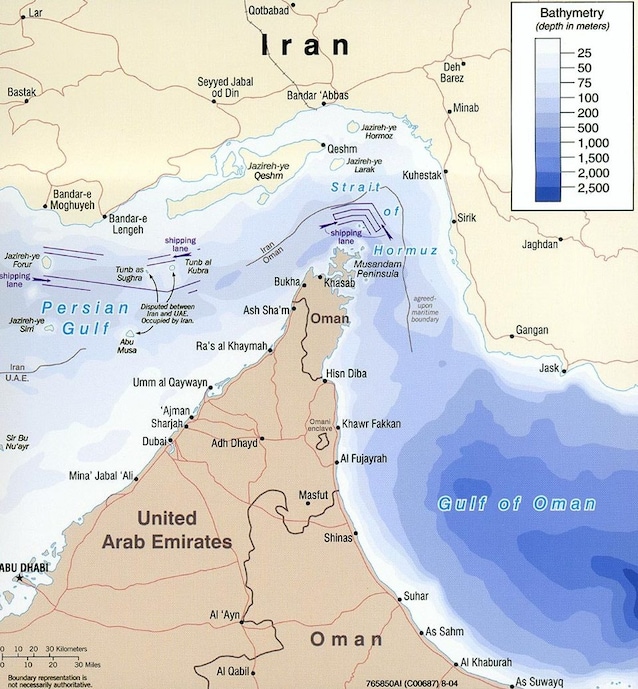
The one that was announced by the US president Donald Trump like a 4-day “blitzkrieg”, the military mission Epic Fury – or Lion’s Roar– , actually seems to be widening and expanding both in terms of timing (with a minimum duration of four weeks according to Trump’s latest declarations) and from a geographical point of view (with a expansion of the conflict to neighboring Gulf countries: Saudi Arabia, Qatar, Kuwait, Oman, Jordan and Bahrain). The latter has great strategic importance both because it is close to the Strait of Hormuzand for the presence of the main US naval command in the area in the capital Manama.
A war against Iran could therefore spread to the entire region, with consequences that were unpredictable at the moment, although at the beginning the United States did not want to engage in a long war. As regards theEuropefollowing the launch of missiles on Cyprus, United Kingdom, together with France and Germanyannounced in a joint statement that they are ready to adopt measures to defend its own interests and those of its allies in the region, «enabling necessary and proportionate defensive actions to destroy Iran’s ability to launch missiles and drones at the source».
Although therefore they do not openly take the field alongside United States and Israel – also mindful of the past in the long and bloody war in Iraq in 2003 – are ready to adopt defensive measures: the United Kingdom also granted the use of bases into its territory by the United States for “defensive” strikes against Iranian missile attacks. A few hours ago, meanwhile, strong explosions were also heard in Beirutwhere following an Israeli attack, according to the Lebanese Ministry of Health, there would be 31 dead and 149 injured.
The closure of the Strait of Hormuz and the oil question
A central issue in the crisis between Iran and Israel-United States is represented by the Strait of Hormuz, connecting the Persian Gulf to the Gulf of Oman and the Indian Ocean. In fact, through this passage passes approximately the 20-30% of the world’s crude oil (about 15-20 million barrels per day) along with the 25% of global natural gas exports liquefied, mainly coming from Qatar. The Strait of Hormuz was closed and merchant ships blocked: Iran has already threatened numerous times in the past to close the Strait in the event of a large-scale US attack. In this scenario they could also occur attacks against US warships, which could cause a further escalation of the war.
Possible scenarios
Net of the fact that at this moment it is impossible to make certain predictions about how the situation may evolvewe can still try to outline the most likely scenarios that could arise in the near future.
Expansion of the conflict on a regional scale
The current attack by Israel and the United States in Iran could determine thespread of the conflict on a regional scale, with aopen military escalation and the entry into the field of Shiite militias in neighboring countries, such as Iraq, Syria, including the Houthis in Yemen and Hezbollah in Lebanonwhich however are more weakened than in the past. At the moment, especially after the Iranian attacks on some US military bases in the Gulf countries, the United Arab Emiratesalong with others Countries, such as Qatar, Saudi Arabia, Kuwait, they called for de-escalation, moderation and diplomacy. However, regional players are certainly evaluating alliances and defensive positions also considering the risks of the action of the United States and Israel. The conflict could therefore spread on a regional scale, in a spiral of retaliation and violencemaking de-escalation quite complicated. Furthermore, unlike episodes such as the one that occurred in Venezuela at the beginning of January, the change of regime with external intervention in Iran it is much more complex and not immediate, like some models regime change implemented in the past by the United States in other countries. This is due to complex political and institutional structure of the country: even following the death of the supreme leader, therefore, it is not certain that there will be an end to the current authoritarian regime. After the death of the Ayatollah Khameneia was created in Tehran triumvirate which provisionally assumed the powers of the Supreme Leader: formed by the President of the Islamic Republic Masoud Pezeshkian, the head of the judiciary Gholamhossein Mohseni Ejei and the new religious leader, Ayatollah Alireza Araf.
Protracted conflict
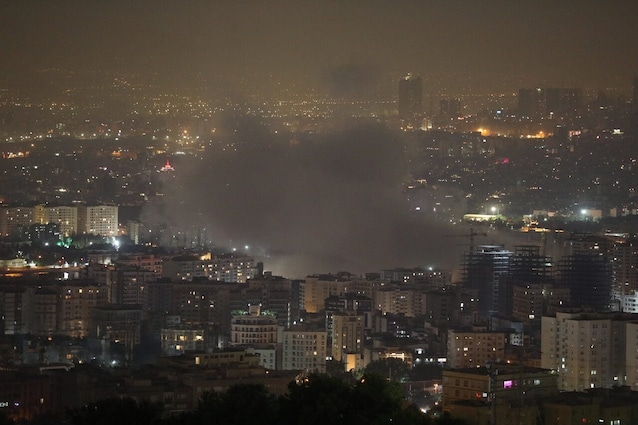
Rather than a blitzkrieg as defined by US President Trump, another scenario could be that of a continuation of strategic pressures and economicalsuch as limiting naval traffic in the Strait of Hormuz, using drones and missile attacks to put pressure on a conflict that could however become prolonged. On the other hand, US President Trump seemed to want to obtain a decisive result but not in the long term, which could demonstrate its strength towards a historic US adversary such as Iran. Currently, however, he has declared that the attacks will continue ” for as long as it takes to reach our goal“, attacking infrastructure, strategic resources and the dome of Iranian power. Regarding Israelhistorical ally of the United States in the area, its interest is weaken Iran regionally: economic tensions, military losses and internal rivalries could weaken the country, a historic enemy in the area. In addition to clear strategic interests in the area, Israel also wants to send a message of deterrencedemonstrating that with US support it is able to intervene militarily even against a large state actor such as Iran. In this context, the entry into the field of Russia and Chinacountries “allies” of Iran regarding supplies within the framework of the military technology – the first – and from the point of view energetic – the second – could completely change the scenario and therefore really lead to a phase that is not just about escalation but say expansion of the conflict on a global scale.
Economic shock forcing negotiations
The closure of the Strait of Hormuz could lead to one global economic and energy shock, with direct consequences that concern inflation, trade and financial markets, which could lead to a need for diplomatic channels and conflict resolution. In this context also powers such as China and Russia there would be no passive actors left: the Beijing government, which has large interests in Gulf energy flows, could seek to increase its presence on the negotiating table, presenting himself as a mediator. The European Union continues to invite all parties involved to de-escalation, but is currently in a “marginal” role compared to the game being played in the Middle East: numerous European countries, including the‘Italywere warned of the Israeli-US attack when it was already underway. The High Representative of EU Foreign Affairs, Kaja Kallas, in a statement on behalf of the 27 members, invited the parties to “protection of civilians and full respect for international law”, appealing to the principles of the United Nations Charter and international humanitarian law.
