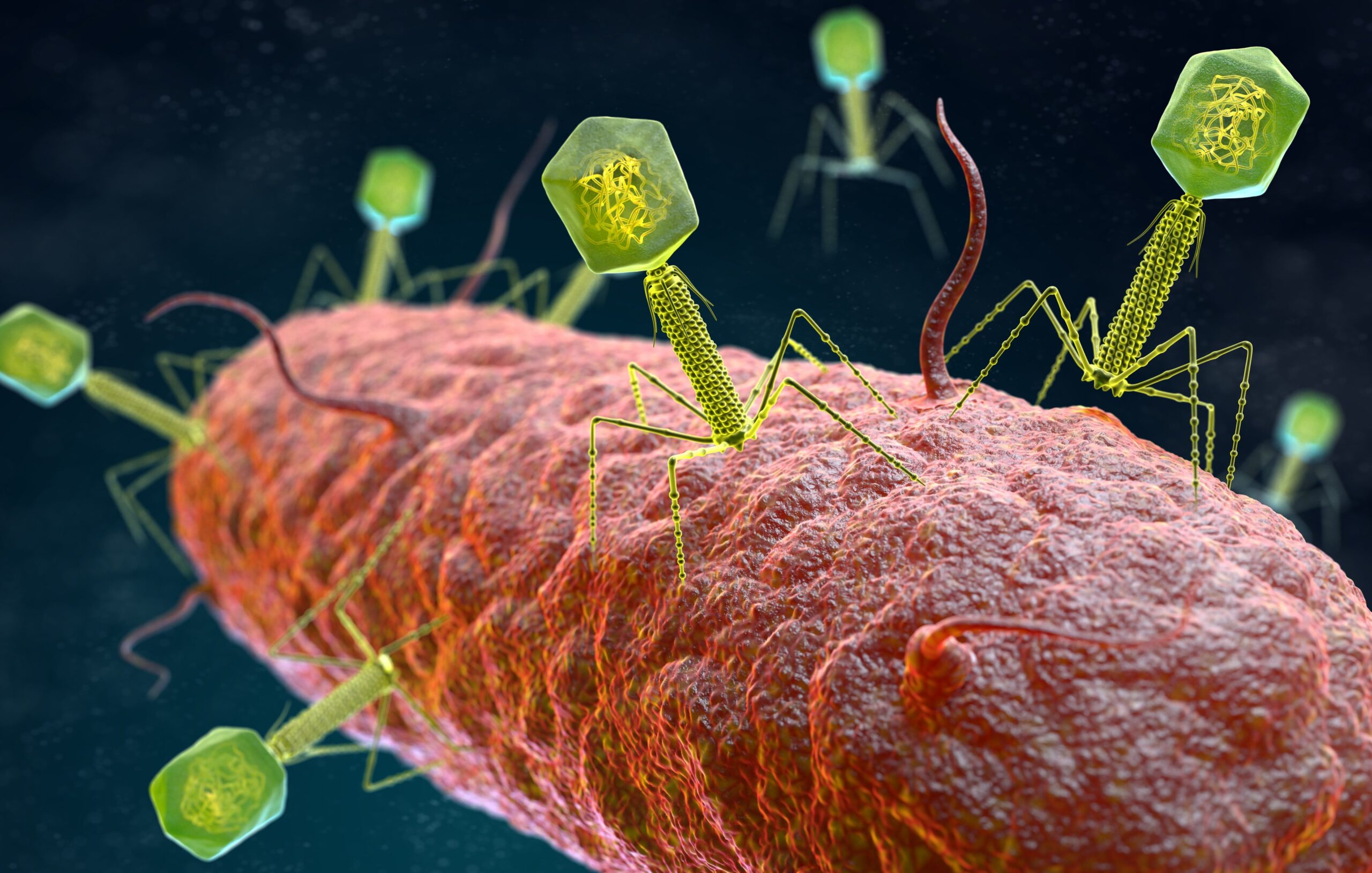
They were made for the first time of viruses that infect only bacteria whose genome was partially generated by an artificial intelligence model. The results, obtained from a team of researchers from the University of Stanford and the Arch Institute of Palo Alto and spread on the Biorxiv platform, have not yet been subjected to a peer review (fundamental step for publication in a scientific journal), but still represent a significant stage in contemporary biotechnology. The model Evoused by the research group, is able not only to interpret existing biological data but also of propose entire plausible genomes. Trained with millions of genomes of bacteriophagi viruses (viruses that infect only bacteria), the system generated numerous DNA sequences that were then synthesized in the laboratory. Some of these gave rise to viruses actually operatingcapable of attacking crops of Escherichia coli antibiotics resistant. This approach would be inserted as part of the Fagica therapya strategy discussed for some time for its potential. However, its large -scale application is still far away, since it requires further studies to validate their effectiveness and guarantee full safety.
How viruses created with AI: the EVO system work
To better understand the scope of this discovery, you need to look closely at EVO operation. The model was trained with an approach similar to that of linguistic systems that generate texts, with the difference that instead of books and newspaper articles, the model “read” millions of genetic sequences. In particular, scientists have nourished it with beyond 2 million genomes belonging to bacteriophagi. From this immense Evo archive he learned to recognize the typical rules and patterns of the DNA language.
When he was asked to propose variants of the small fago Φx174a virus composed of just over 5,000 bases And 11 genesEvo has produced hundreds of different sequencessome of which never observed in nature. The researchers have selected 302 And they have synthesized them chemically in the form of DNA filaments. These were then introduced into crops of Escherichia coli. The result has passed the most rosy expectations: 16 Synthetic genomes have created working viruses.
Some of these beans showed the ability to infect bacterial strains that the natural φx174 could not attack. The tangible test came from the appearance of the so -called “pheasant plates”, circular areas on the petri plates where the bacterial colonies had been destroyed by the synthetic virus. The potential of such a technology is very interesting as the beans have the advantage of selectively acting against bacteria without affecting human cells, and the possibility of designing them to measure thanks to the AI could open new paths against the problem of antibiotic-resistance.

At the service of biology: opportunities and risks
Until a few years ago the synthesis of an artificial genome required long years of manual work, with a continuous process of development And experimentationmade of multiple attempts and as many errors. Now, an algorithm can propose hundreds of solutions in a very quick time, transforming biology into an iterative cycle: the Ai suggests, biologists verify and the results feed the model again. After the Nobel Prize for the chemistry awarded in 2024 a Demis hassabis And John Jumper by Google Deepmind for the use of AI to predict the structures of the proteins, now also the EVO model shows how much theAi be more and more at the service of biology.
It is evident, therefore, that we are witnessing a paradigm change and this, as often happens, brings with it opportunities and risks. For this reason many experts invite to strengthen international governance tools and to update treaties such as the convention on biological weapons, which does not explicitly contemplate the impact of artificial intelligence.
