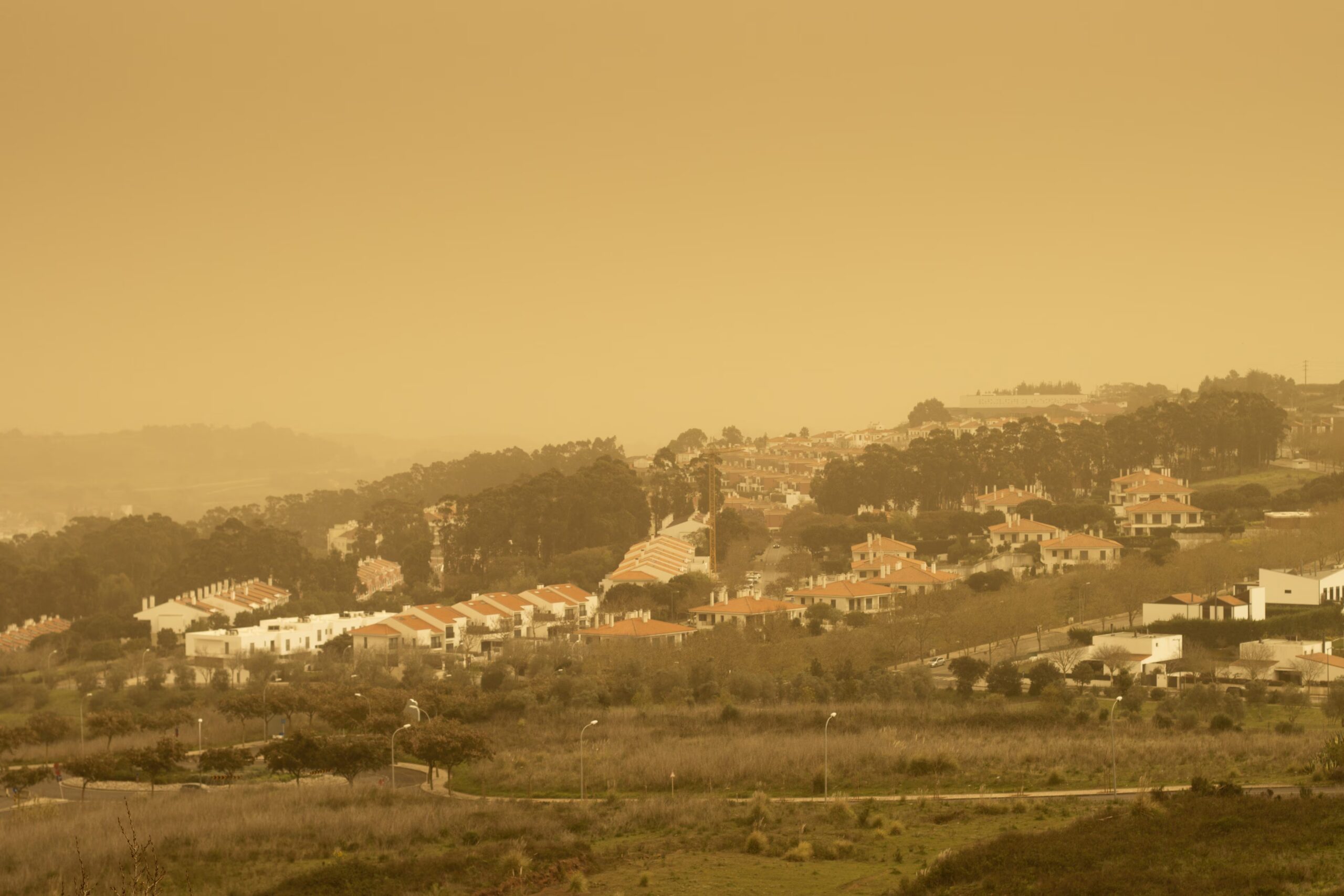
Yellowish skies and milky atmospheres: in recent years the increasingly frequent and imposing presence of Saharan dust above i European skies it has become a constant in our summers. This is not a simple and extemporaneous phenomenon of color, but the visible effect of a profound and structural mutation of atmospheric circulation at a continental level.
The geography of the weather in Italy and Europe is changing pace, replacing the classic balances of the Mediterranean climate with extreme configurations of a subtropical matrix. That this phenomenon always be more intrusive it’s not just a visual sensation: a confirm it scientifically it is a recent study published in the prestigious journal Nature (titled “Rising dust pollution across Europe in a changing climate”), led by researchers from Paul Scherrer Institute.
What is Saharan dust really?
When we talk about “desert sand” in suspension, we are actually referring to a aerosol atmospheric known as desert mineral dust. These are not the coarse grains of sand we find on beaches (too heavy to travel through the air), but a very fine particulate matter composed of elements such as silicon, aluminium, iron, titanium and calcium.
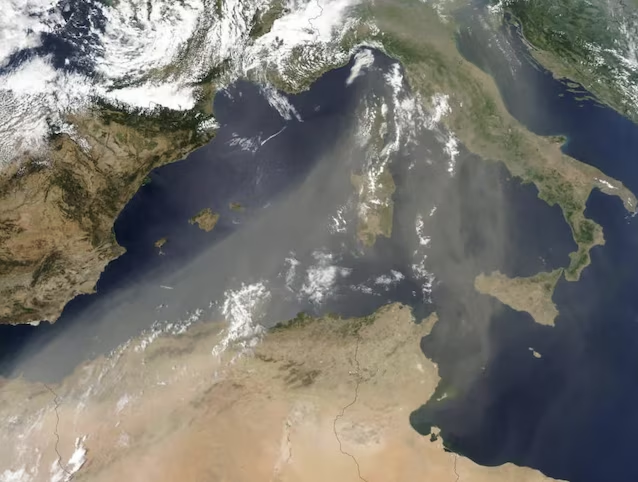
These microscopic particles (many of which fall into the categories of PM10 and PM2.5) come raised by wind storms in the arid basins of the Sahara and injected up to the medium and high levels of the troposphere (even above 3,000-5,000 meters above sea level). Once at altitude, they act as a real “atmospheric tracer”: their presence in our skies is the unmistakable signal that above our heads we have a mass of air taken directly from the heart of continental Africa.
The data from the Nature study: an increase of up to 25% in the last ten years
By analyzing data collected over the last decade from over 100 monitoring stations across Europe and cross-referencing them with artificial intelligence models, the authors of the study published in Nature found that the Concentration of desert dust in European skies increased between 10% and 25%.
Southern Europe and the Basin Mediterranean (with theItaly on the front line) are the areas more exposedrecording average dust concentrations up to more than double compared to Northern Europe. Not only that: the analysis of ice cores extracted from Alpine glaciers reveals that the deposit of Saharan dust is increased by approximately 110% compared to the pre-industrial eraproof of how atmospheric dynamics are progressively altering.
In addition to the strong meteorological impact and the collapse of the visual quality of the sky, the massive presence of Saharan dust causes health implications well highlighted by the Nature report. Although these are natural dusts and not linked to industrial combustion, i particulate peaks (PM10 and PM2.5) combined with extreme heat and high humidity put heavy strain on the cardiovascular and respiratory systems, increasing the risk of asthma exacerbations and complications especially in frail subjects, the elderly and children.
The disappearance of the Azores Anticyclone and the new subtropical reality
For decades, summers in the Mediterranean basin have been governed byAzores anticyclone. This structure of high pressure of oceanic origin guaranteed the classic Mediterranean summer climate: ample days sunnyrates of moisture content And temperatures which almost always remained within i 30-32°Cthanks to constant ventilation and continuous air exchange.
Today, that meteorological figure appears almost completely disappeared or confined to the Atlantic Ocean. In its place, the European summer scene was completely taken over by the subtropical anticyclonic promontory continental, a vast bubble of scorching air arriving from the Sahara desert. This change of “main actor” has upset not only the temperatures on the ground, but also the very composition of the atmosphere.
But why has the African anticyclone become so intrusive? According to the discoveries also highlighted in the Nature study and shared by the scientific community, the cause lies in theincreasing dryness of North Africa combined with an alteration of global atmospheric circulation patterns.
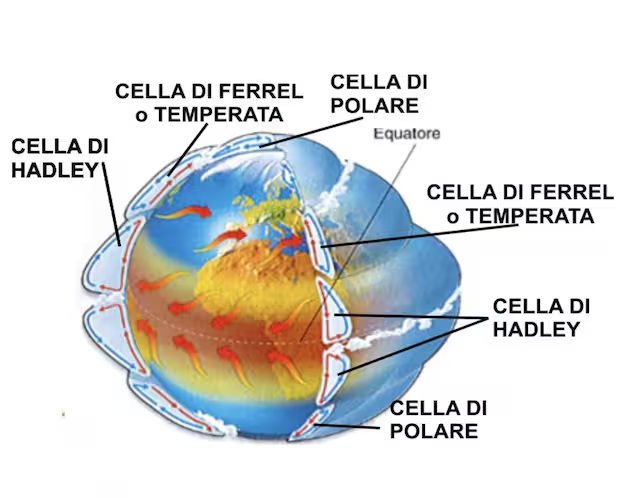
Global warming favors the expansion of the Hadley Cell
Global warming is favoring thenorthward expansion of the Hadley Cell (the gigantic tropical atmospheric circulation, shown in the image below). There desert belt Saharan, overheating at record rates, generates very hot air masses that find a lot more ease in moving back towards the middle latitudes, invading the Mediterranean basin.
This phenomenon has also altered the nature of the Azores Anticyclone. When the latter attempts to push towards Europe, it rarely presents itself as “pure” or solely oceanic: flying over territories and seas that are already highly overheated, the Azorean anticyclone undergoes asubtropical footprintbeing “contaminated” by contributions of North African air which drastically raise the thermal values and the dust load.
How the flow of dust and heat arises
The meteorological dynamics that transform the continent in a furnace starts when a deep depression settles over the eastern Atlantic, positioning itself at the largo of the Ibero-Moroccan coasts. Working like a real centrifuge or suction pump, this low pressure hook the huge ones hot air masses of the Saharan desert and pushes them decisively towards the north.
The very strong ones currents ascending currents over the Sahara they raise dust up above the clouds and southerly winds carry it for thousands of kilometers.
As this mass of hot air rises over the Mediterranean, it consolidates into an imposing high pressure at altitude which activates the phenomenon of atmospheric subsidence: the air is forcefully squeezed downwards. In making this movement towards the ground, the air compresses and heats up further adiabatically, creating a real “heat dome” (heat dome).
This invisible “lid” blocks ventilation, traps moisture and retains Saharan dust in the lower layers, sealing our cities in a scorching climate, a pall of heat and orange skies.
