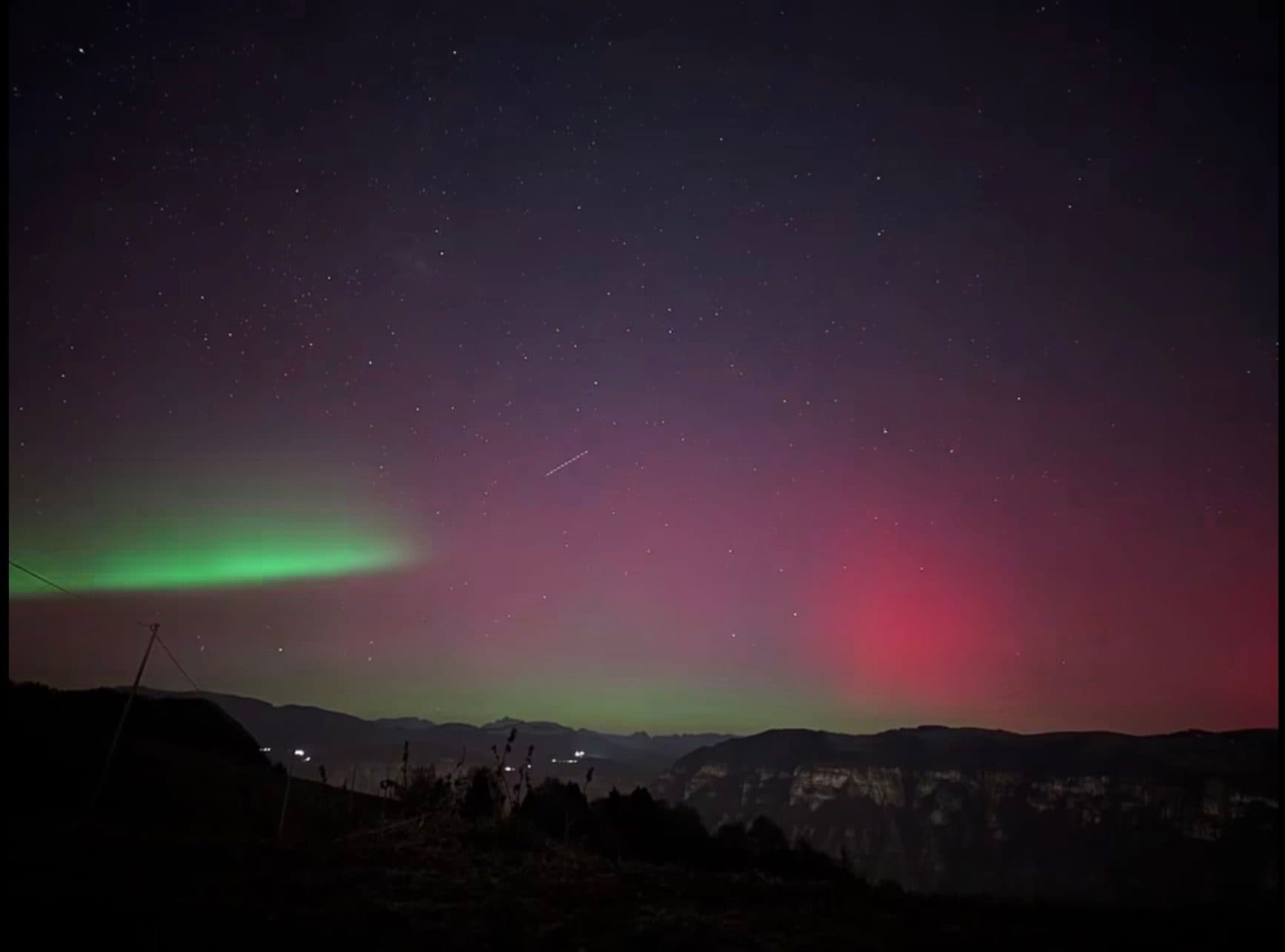
The Earth was hit by one G4 category geomagnetic stormconsidered “severe” on a scale ranging from G1 to G5, and began around 8.38pm (Italian time) on Monday 19 January: it was caused by acoronal mass ejection (CME) produced by the Sun last January 18th, associated with a X1.9 class flare (the highest class). At the moment, the storm was downgraded to class G3 (strong), but forecasts could change.
Several newspapers have defined the event as “the strongest geomagnetic storm of the last 20 years”, but it’s not like this: just think that the G5 class was reached in May 2024. What NOAA actually recorded instead is the most intense storm of solar radiation since 2003. As reported by the Space Weather Prediction Centerthis is a rare event, the potential risks of which fall mainly on the functioning of satellites and on space launch systems.
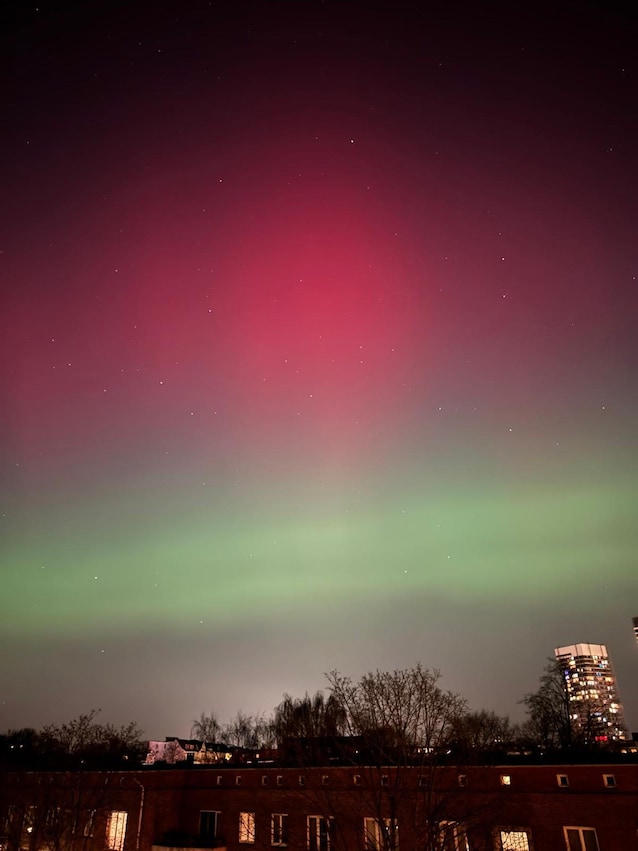
Thanks to the geomagnetic storm they occurred Northern Lights at lower latitudes than usual: in the early hours of the morning, in fact, auroral phenomena were spotted in several Central European countries, including France, Germany and the Netherlands, but also in some areas of Trentino-Alto Adige, Veneto and Lombardy. According to forecasts, however, the event is unlikely to be repeated also in the next few hours.
Geomagnetic storm and solar radiation storm: possible risks
To understand potentials effects from the geomagnetic storm G4 and of solar radiation storm S4 we must first understand the difference between the two phenomena: to simplify, the first indicates a disturbance of the Earth’s magnetic field, while the second occurs when a high concentration of energetic protons is arriving near the Earth.
More specifically, a solar radiation storm occurs when large quantities of high-energy protons, accelerated by solar flares, reach the space environment around our planet.
That’s why impacts of the two storms will be very different from each other: G4 class storms can cause anomalies for i satellites artificial in orbit around the Earth and some difficulties with the system GPSbut in our latitudes they do not produce effects that can be felt by the population.
Those of solar radiation, however, can cause an increased risk of radiation exposure for astronautsbut also of the risks for satellitesparticularly those in geostationary orbit, and for space launch systems. At the same time, NOAA has indicated possible effects problems with high frequency communications beyond the horizon in the polar regions.
In short, among the main inconveniences of this S4 storm there are possible ones delays of the Artemis II mission (which will bring man back around the Moon after 54 years), whose first launch window is scheduled between 6 and 11 February.
Will the Northern Lights be seen again from Italy?
But, therefore, will it be possible to see the Northern Lights again from Italy?
First of all, it should be specified that the disturbance of the Earth’s magnetic field it is measured with a parameter called Kp indexwhich ranges from 0 to 9. The geomagnetic storms of recent years have testified that, at our latitudesit is possible to observe auroral phenomena (such as red auroras or auroral arcs) with a Kp index of 7. Consider that the most intense geomagnetic storm recorded, known as the “Carrington event”, was so violent that it caused aurora borealis visible even in Rome and Naples.
Between 10pm on January 19th and 12am on January 20th, the Kp index increased achieved The value of 9-, this is why it was visible in some regions of Northern Italy. At the moment, a Kp ranging between 6+ and 6- is expected for the next few hours, so it seems unlikely that the Northern Lights may be spotted again this night in our latitudes.
Be careful though: it is not certain that the Kp index forecasts will prove correct. Among other things, to form – and to be visible at our latitudes – auroras not only need sufficient geomagnetic disturbance, but also the right alignment between the flow of particles expelled from the Sun and the magnetic field of our planet. Without this alignment, in fact, the particles simply cannot penetrate the “geomagnetic shield”.
