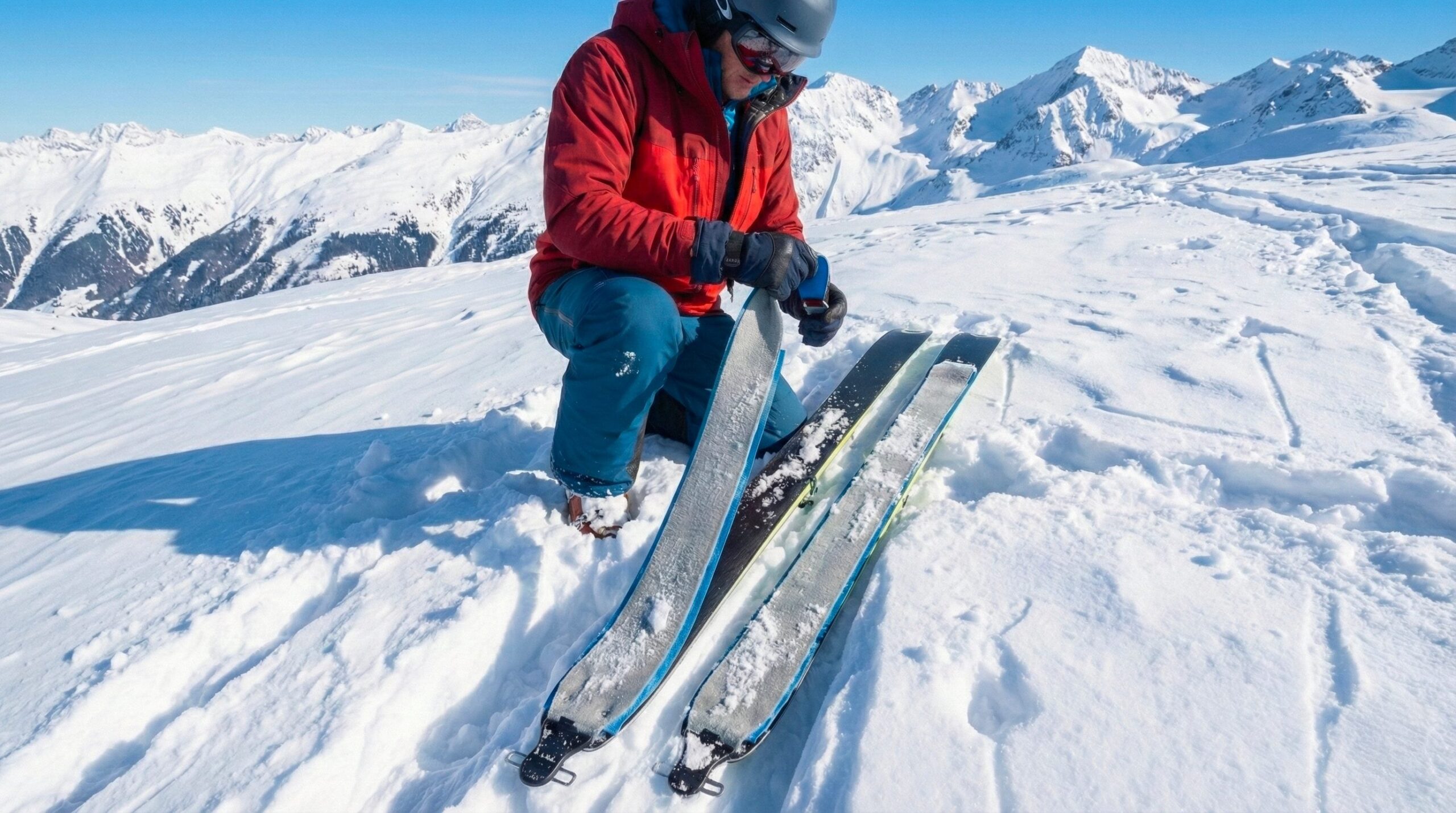
The sealskins (or climbing skins) are fabrics to be applied under skis to be able to go up a snowy slope without sliding backwards. They are fundamental in ski mountaineering (also called ski mountaineering), the sporting discipline that combines ascents and descents in the mountains, especially off-piste, introduced for the first time in gtheyouthful eyes of Lausanne 2020 and officially entered the Winter Olympic Games of Milan-Cortina 2026. The hairs of these fabrics are oriented in such a way as to favor forward sliding and increase the‘friction when you tend to retreat. Once they reach the top, they are removed before descending onto the ski slopes. The name derives from the historical use of the mantle of common sealalthough in the past the furs of other mammals, such as reindeer, were also used. Today leathers are made with modern materials like mohair and nylon. If you are following the Olympic competitions these days, pay attention to the so-called “trim changes“, the most excited and decisive moments of the race, in which the athletes, having reached the top, tear these skins off their skis in fractions of a second to launch themselves towards the finish line in search of a medal.
What are sealskins used for and how do they work?
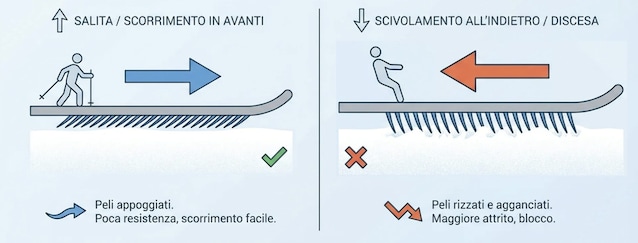
The key principle to understand how sealskins work is anisotropic friction, that is, a friction force that varies depending on the direction considered. Skins are in fact made up of oriented hairs and lean in a certain direction:
- during one climbpushing the skis forward, the hairs rest under the weight of the person and there is little resistance to sliding.
- if you slide backwards, the hairs stand on end and catch on the snow: a greater friction and there is resistance in proceeding downhill.
A study conducted by University of Applied Sciences Technikum Wien analyzed the behavior of different climbing skins by evaluating their sliding friction values, i.e. that friction force typical of two surfaces in contact that slide over each other. The skins presented a glide direction (sliding direction, the one for proceeding uphill) and one grip direction (anti-reverse direction, which prevents sliding backwards). The objective of the experiment was to compare the test results with the characteristics declared by the manufacturers. However, it emerges from the data that the values obtained are strongly influenced by environmental conditions (in particular by temperature), making a direct and unambiguous comparison difficult.
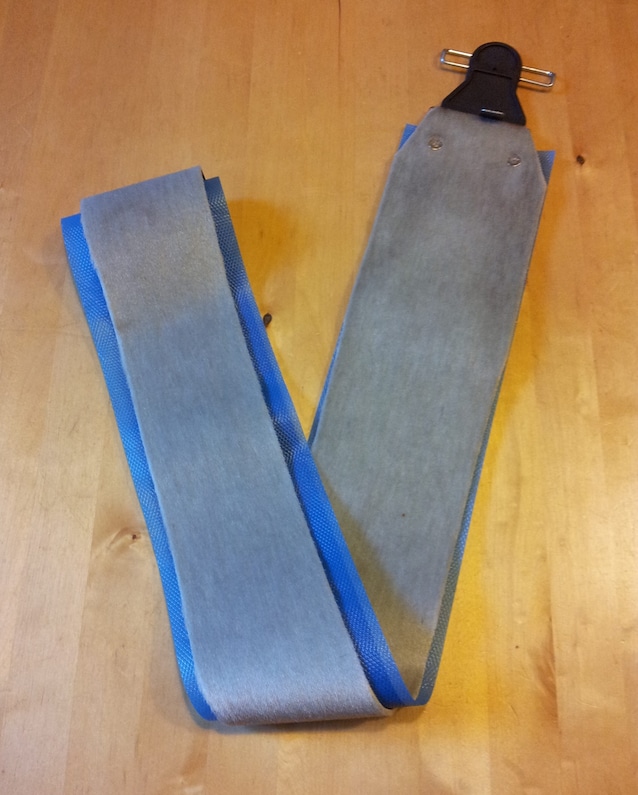
Credit: Ppong.it, CC BY–SA 3.0, via Wikimedia Commons
Why are they called that way? Meaning and origins
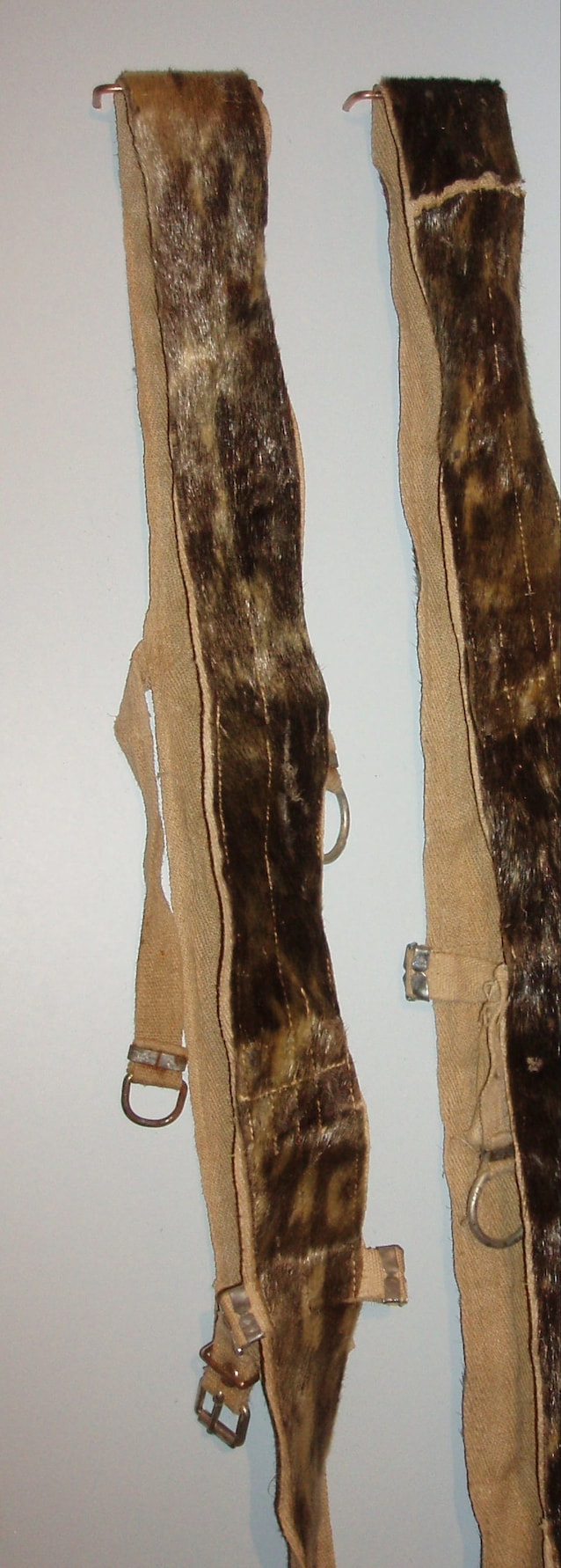
Climbing skins are also known as sealskins because in the past the mantle of the was actually used common seal (Phoca vitulina), fixed under the skis. The fur of this animal, naturally equipped with hairs oriented in a single direction, allowed it to advance uphill while limiting sliding backwards.
Historical sources also mention skins of other mammals: in a testimony from the Swedish archbishop Olaus the Great it is said that i Sami (indigenous population who in the sixteenth century lived in the region of today Lapland) used skis with skins reindeer applied on the lower surface to avoid sliding backwards during steep snowy climbs.
Today, synthetic fabrics are used
Today the climbing skins used for ski mountaineering no longer derive from the fur of seals, but other modern textile fibers are used. The most common are the mohairobtained from the fur of the Angora goat and very similar to wool both in composition and properties, or the nylon, a synthetic polymer appreciated for its high resistance.
Another area that requires technological development is that of adhesive glues which are used to secure skins under skis. In fact, these must be sufficiently resistant not to come off during the climb, but at the same time they must be easily removable once you reach the top, before tackling the descent.
