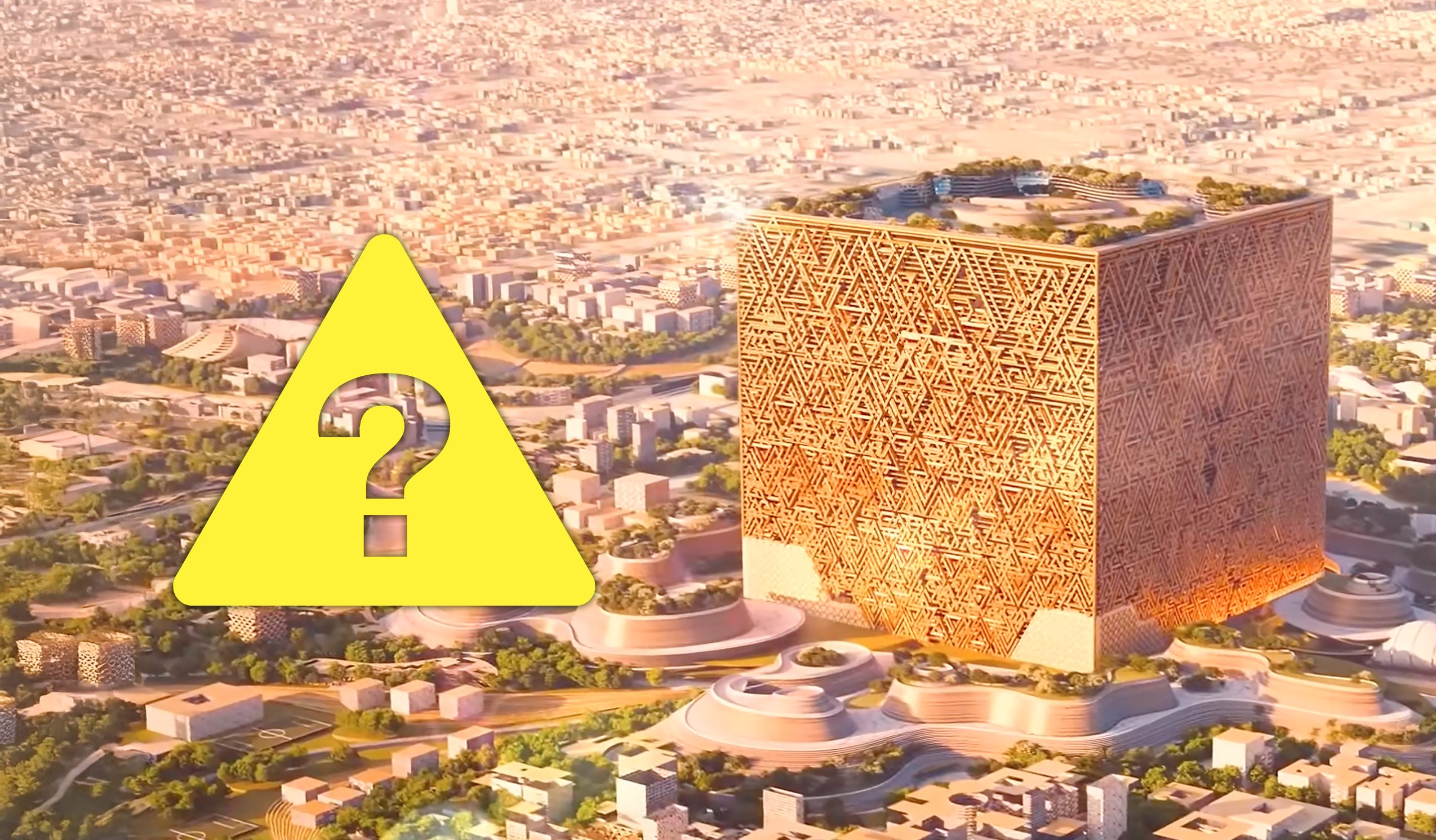
THE’Saudi Arabia has suspended construction work on the Mukaab, the enormous skyscraper in the shape of cube which should have been built in the capital Riyadh. The project, an integral part of the larger one Vision 2030will have to be canceled (or at least scaled down) due to a change of course at an economic level: the kingdom’s sovereign fund to be 925 billion dollars is scaling back its ambitions to keep costs down. The Mukaab, designed by the AtkinsRéalis studio, was supposed to be built in the new Murabba neighborhood, in the center of Riyadh.
News like this, however, is not new, given that many engineering projects have already been scaled down by the Saudis in recent times: a similar thing has in fact happened with The Line, the utopian horizontal city project that died in the bud due to heavy budget cuts. But where does the need to make an economy in the country come from?
The characteristics of the Mukaab: surface of 25 million m2
The skyscraper will measure – or rather, would have measured – 400 meters high, wide and longfor a total surface area of 25 million m2. But not only that: they would have been created inside 104 thousand housing units and hotels for a total of 9000 rooms. Added to all this are gardens, a theatre, a museum, dozens of entertainment venues and almost a million m2 of surface area dedicated to commercial activities. In short, it would have become to all intents and purposes a city enclosed within a gigantic cube.
The choice behind the budget cuts and the suspension of the project
The choice to reduce expenses is closely linked to change in the price of barrels of oil. In fact, in recent months, especially due to Washington’s new policies, the value has dropped significantly, going from approx 80 dollars a barrel about 60. For a country that has based its economy on the export of crude oil, this drop is anything but negligible.
The Government’s choice, consequently, was to divert funds from these maxi-projects to other more prioritiessuch as the infrastructure needed to accommodate theExpo in 2030 and the FIFA World Cup in 2034. Furthermore, some of these utopian maxi-projects (especially The Line) were already experiencing heavy delays and this, as it is easy to imagine, had already increased the budget, providing further motivation in favor of the suspension.
