Strengthen farmers’ negotiating power, stabilize their incomes and make relationships along the food supply chain more transparent. This is the aim of the revision of the regulatory framework known by the acronym CMO (common market organisation), under discussion in Brussels.
The European Parliament and the EU Council have reached an agreement on new provisions that introduce mandatory written contracts between farmers and buyers, strengthen the role of producer organizations in collective bargaining, define the conditions for the use of terms such as “fair” or “short supply chain” on product labels and reserve meat-related denominations only for products of animal origin.
The agreement, which will have to be formally approved by both institutions before entering into force, responds to the protests and difficulties accumulated by the agricultural sector in recent years and incorporates some of the recommendations that emerged from the strategic dialogue on the future of European agriculture. Overall, the new rules aim to ensure that prices paid to farmers also take into account actual production costs, helping to reduce power imbalances in the food chain.
Victory for farmers
“The agreement reached represents a great victory for our farmers. The guaranteed contracts will ensure that they have a fair role in the value chain, while the obligation to use a mediation mechanism will protect their income in the event of a dispute with their main buyer”, said the rapporteur of the text for the Chamber, the popular Frenchwoman Céline Imart.
The need for the review arises from the observation that in the food supply chain bargaining power is distributed in a very asymmetrical way. Farmers, often small and fragmented, find themselves dealing with interlocutors – processors, wholesalers, large-scale retailers – who have much greater negotiating power. The result is that the prices charged at origin do not necessarily reflect the real costs of production and agricultural incomes are chronically lower than the average of other economic sectors.
Written contracts as a rule
One of the main interventions concerns contracts between farmers and buyers, which generally become mandatory in written form. Until now, written contracts between farmers and buyers were only foreseen in some specific sectors, such as dairy, and were not a general requirement.
With the new agreement they become the rule for everyone and will have important consequences. A written contract requires defining the conditions of the transaction in advance (price, quantity, delivery times, payment methods, etc.), reducing the possibility that the buyer imposes less favorable conditions afterwards, when the product has already been harvested and the farmer has no alternatives.
The contracts must also include a review clause, which allows the conditions to be adjusted over time to take into account market changes, fluctuations in production costs and general economic conditions. In practice, if the price of energy or fertilizer increases significantly, the contract may provide for a revision that helps the producer not to lose too much money.
Price indicators
Closely connected to the contractual issue is the mechanism of price indicators. Member States will be obliged to define and publish online indicators to be used as benchmarks in contract negotiations. In practical terms, these are data on average production costs, market prices and the trend of raw materials, which allow both parties to anchor the negotiation on objective and verifiable elements, rather than leaving the final price to be determined exclusively by the buyer’s bargaining power.
More strength to producer organizations
Another pillar of the reform concerns the strengthening of producer organisations, i.e. recognized associations of farmers who work together to market products, plan production or negotiate with buyers.
The new rules simplify the procedures for legal recognition of these organizations and strengthen their role in collective bargaining. In particular, it is clarified that buyers must negotiate with the organization as a whole and not directly contact individual producers who are part of it, thus avoiding circumventing the collective process.
The underlying idea is to rebalance the balance of power between farmers and large distribution or food industry operators. When producers negotiate individually, their bargaining power is limited. By acting collectively through a recognized organization, they can instead discuss more favorable and more stable conditions.
Clearer rules for labels and marketing
The agreement also introduces more precise rules on the use of certain wordings on the labels and commercial communication of agricultural products.
Terms such as “fair” or “fair”, for example, can only be used if specific criteria established by law are respected. These criteria may include the product’s contribution to the development of rural communities or support for farmers’ organisations. The aim is to prevent these expressions from being used in a generic or misleading way.
Similarly, the indication “short supply chain” can only be used for products produced in the European Union with a limited number of intermediaries between farmer and final consumer, or when the distance or transport time remains short.
No more synthetic “meat”.
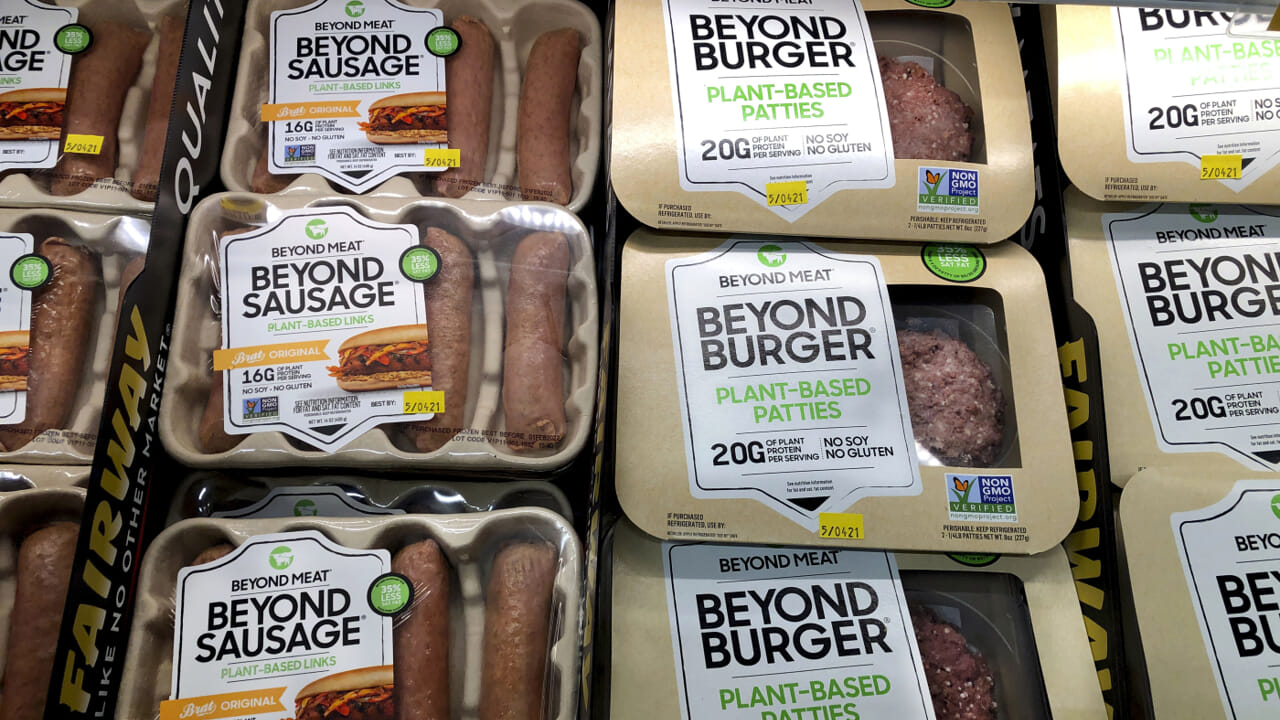
The most debated topic is probably that relating to meat. The agreement introduces a legal definition of meat as “edible parts of animals” and expressly reserves a detailed list of names for the sole use of meat products: not only “steak” or “chop”, but also more technical terms such as ribeye, T-bone, brisket, tenderloin, sirloin and numerous others. These names may not be used for products that do not contain meat, including products made from laboratory-grown cells — so-called “synthetic” or “cultured” meat.
“This agreement represents an undeniable success for our farmers. By reserving the use of the terms ‘steak’ and ‘liver’ for the products of our farmers and by committing the co-legislators to expand the list during the negotiations as part of the reform of the common agricultural policy, Parliament has taken a decisive step forward”, claimed Imart, according to whom “furthermore, the explicit inclusion in the text of the ban on the use of the name ‘meat’ for any laboratory-grown or cell-based product constitutes a step decisive progress for our farmers and for the conservation of the agricultural and food heritage that we defend”.
