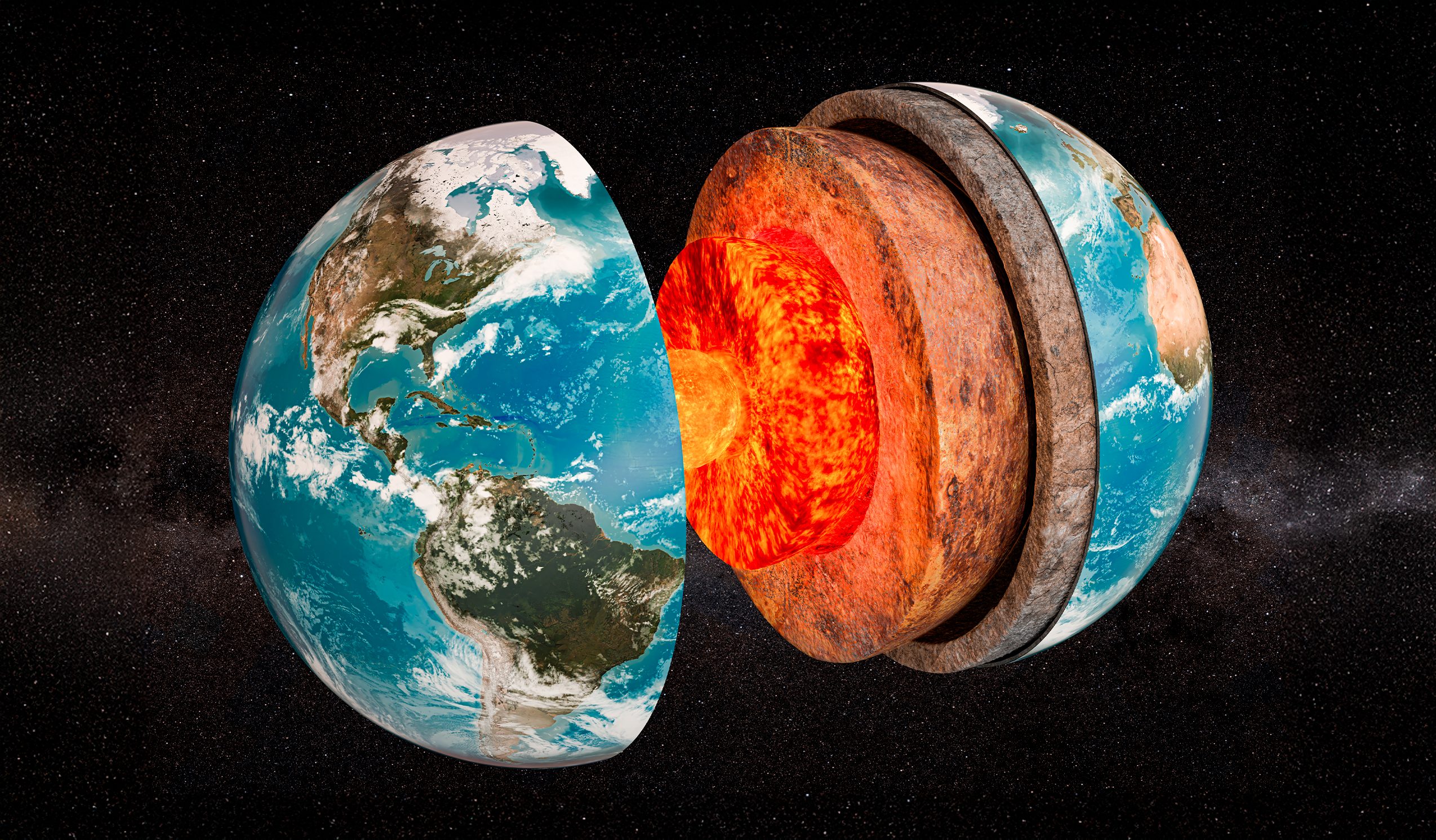
A new research project, the SAKURA project (Studying the Asthenosphere as a Key to Understand the Dynamics of Plates and the Origin of Magmas), was started to study in more depth the layer of the Earth’s mantle called asthenosphere and located Between about 100 and about 400 km deep. The objective of the project financed byINGV (National Institute of Geophysics and Volcanology) and coordinated together withUniversity of Bologna is to better understand how this layer influences the dynamics of tectonic platesthe development of earthquakes and the magma formation in volcanoes. The research will focus in particular in the area of Mediterraneanincluding the area of Phlegraean Fields. Obtaining new information about the asthenosphere can contribute significantly to a better risk management linked to earthquakes and volcanic eruptions.
What does the SAKURA project that studies the asthenosphere involve
The SAKURA project is part of the project ROSE (Reinforcement of the Observational Systems of the Earth), funded by the Construction and Research Infrastructure Fund of Ministry of University and Research (MUR). The ROSE project, thanks to an interdisciplinary approach, aims to better understand the internal dynamics of planet Earth and how it is correlated with the phenomena that occur on the earth’s surface, involving the Italian and international scientific community. Within SAKURA, researchers will conduct different types of investigations using advanced technologies and integrating different disciplines: geology, geophysics, volcanology, physics and mathematics. In particular, in Mediterranean (including areas of Phlegraean Fields and Ischia), will come enhanced monitoring geophysicalfor example with the installation of new seismic stations in areas that currently have few seismic stations, the construction of innovative instruments to measure gravity and magnetotelluric investigations that use magnetic fields to reconstruct the subsoil geology. These tools will allow you to collect and analyze a large amount of datawhich will be integrated with those coming frommineralogical and geochemical analysis of rocks magmatic taken from the earth’s surface. Models will then be developed to simulate how the asthenosphere interacts with the overlying one lithospherethe uppermost layer of the Earth.
What is the point of studying the asthenosphere: the origin of magma and earthquakes
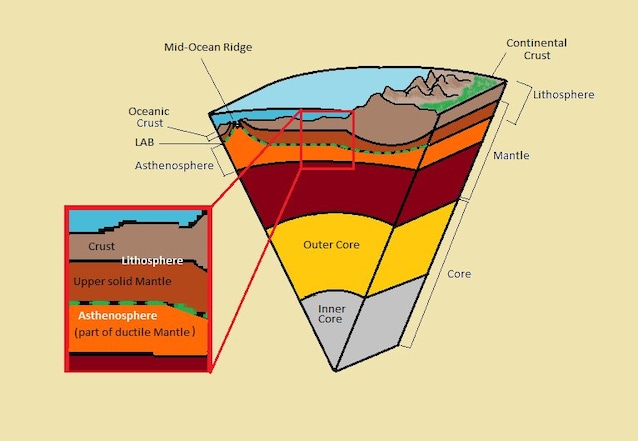
Although over time we have gained a lot of information about the structure and composition of the Earth’s interior by studying the speed with which seismic waves generated by earthquakes propagate on our planet, there is still much to discover about the properties and behavior of the asthenosphere. This layer, located between approximately 100 and approximately 400 km depthis part of the Earth’s mantle and it has a very important role. Its rocks have the characteristic of deform easilyunlike the rigid ones of the overlying lithosphere (made up of the earth’s crust and the lithospheric mantle). Thanks to this property they can be mixed by continuous circular movements fueled by temperature differences within the Earth, the so-called convective motions. In this way, they act as a “conveyor belt” that drags the lithospheric plates above. The movements of lithospheric plates, in turn, are associated with earthquakes and to magma escape on the surface. This means that knowing more about the asthenosphere will allow you to refine the understanding of volcanic and seismic phenomena which can have serious consequences on the population and manage risk better linked to them. In particular, the co-coordinator of the project Luca De Siena underlines that the SAKURA project will allow “clarify the role of the asthenosphere in heat transfer within the Earth’s mantle, in plate interactions, and in the generation and migration of magma“.
