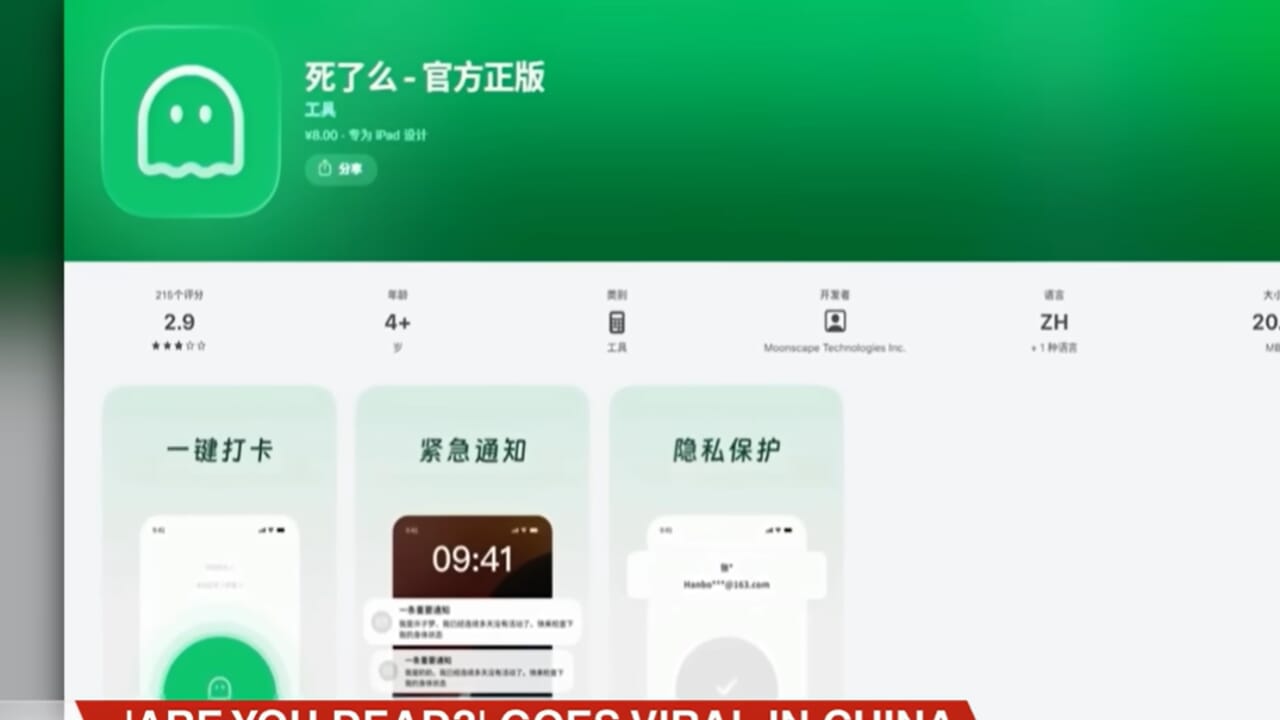
The app that asks you if you’re dead will (maybe) come here too
Applications that notify friends or relatives that they are still alive are becoming popular in China. This news has caused quite a stir here, yet similar tools are destined to grow in Italy too, for various reasons. The first is linked to loneliness and the fear of the so-called “lonely death”.
The confirmation
With the fragmentation of families into increasingly smaller units, today many people live completely alone, perhaps study or work for long periods at home and therefore have rather rare direct social contacts. In this context, the need arises for an application that, every 12 or 24 hours, requests confirmation that you are alive and well and automatically sends this information to loved ones. However, the first question that arises spontaneously is: why don’t you call each other instead of sending a notification? A conversation of even just five or ten minutes in the evening could more effectively serve the same function as the app, while also building a more solid and meaningful relationship. Several factors probably come into play here. On the one hand, the growing social anxiety, which sometimes makes even simply talking on the phone with a relative or friend tiring and uncomfortable.
“No contact Christmas”
On the other hand, the fact of having complicated or conflicting family relationships, as also demonstrated by the recent trend of the so-called “no contact Christmas”. Added to this is the question of time: in an increasingly fast-paced and overstimulating society, finding time for a phone call every day can be difficult or even perceived as boring and annoying. However, there are other relevant functions behind the boom in these applications. In addition to signaling that you are still alive, they also allow you to ask for help. For example, they allow you to send SOS messages if you are attacked or, more generally, are in a dangerous situation. In this sense they can increase the perception of safety of some people, in particular those who come home late in the evening and know they can immediately report a problem to their contacts. And so far nothing strange. However, it must also be underlined how these apps can easily transform into tools of control, especially if used by particularly apprehensive or possessive parents or partners. And this growing need for control isn’t just about China.
Monitor your children
In many countries, including Western ones, it is now widespread practice to equip your children with GPS devices, so as to be able to constantly monitor their position. A trend that is also growing in Italy, especially in the largest and most technological cities, such as Milan. Ultimately, these applications, which at first glance may seem to come out of a Black Mirror-style dystopian reality, actually respond to real needs related to loneliness, fear and the transformation of social bonds. At the same time, however, they risk fueling paranoid or overprotective dynamics and normalizing forms of continuous surveillance. In any case, they represent the signal of a society that is profoundly changing in its relational structure and which, in an attempt to adapt, is equipping itself with new tools to deal with these changes.
