
The Museum of Modern Artoften shortened to MoMAis located in New York in the Midtown Manhattan neighborhood, on 53rd Street and is a world reference point for modern art. It opened on November 7, 1929, ninety-six years ago. The MoMa hosts works by famous artists such as Van Gogh, Pollock, Picasso and was conceived and designed with a very specific concept. The idea of the influential patrons Lillie P. Bliss, Mary Quinn Sullivan and Abby Aldrich Rockefeller (wife of the famous billionaire), was to rewrite the History of Art by challenging conservative policies of traditional museums and found an institution dedicated exclusively to “modern” art (for Italian classifications, however, many of the works of art preserved here are contemporary).
The museum introduced a revolutionary innovation for the time: exhibiting the works following a chronological orderand no longer thematic, to show the evolution of artistic movements over time. Initially led by Alfred H. Barr Jr. with a specific educational intent, the museum moved to its current location in Manhattan in 1939. Today MoMA houses over 200,000 works divided into various departments (paintings, models, films, drawings and design objects) and offers, thanks to its vast library and archives, an unrivaled research center worldwide. Among the most famous masterpieces preserved here we find The starry night by Vincent Van Gogh, Les Demoiselles d’Avignon by Pablo Picasso and Campbell’s Soup Cans by Andy Warhol.
The unmissable masterpieces of the MoMa in New York
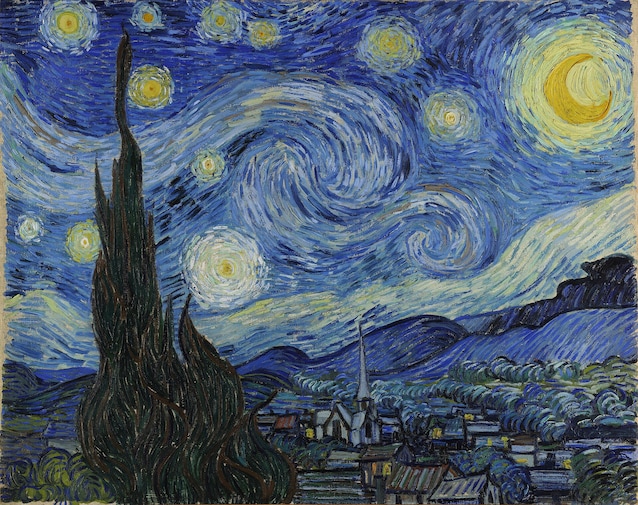
The Starry Night by Vincent Van Gogh
Among the most iconic masterpieces kept at MoMA is The Starry Night by Vincent Van Gogh, a work that starts from the idea that art must be faithful to nature but transforms it into pure emotion. In this famous nocturnal landscape, the intense colors and dramatic brushstrokes make the canvas vibrate, transforming the sky into a whirlwind of sensations.
The Water Lilies by Claude Monet
They are of a completely different tone but equally revolutionary The Water Lilies by Claude Monet: in this series of large works the artist paints the flower garden of his house in Giverny, the fulcrum of his artistic production during the last 31 years of his life. Revolutionary at the time, these monumental paintings inspired Abstract Expressionist artists decades later.

Les Demoiselles d’Avignon by Pablo Picasso
Then there is Les Demoiselles d’Avignon by Pablo Picasso, a painting that rewrote the history of art. Created when the artist was just 25 years old, this painting is traditionally presented as the beginning of Cubism, that is, that use of fragmented forms and changing points of view that revolutionized art in the years preceding the First World War. Picasso kept it hidden in his studio for almost 20 years.

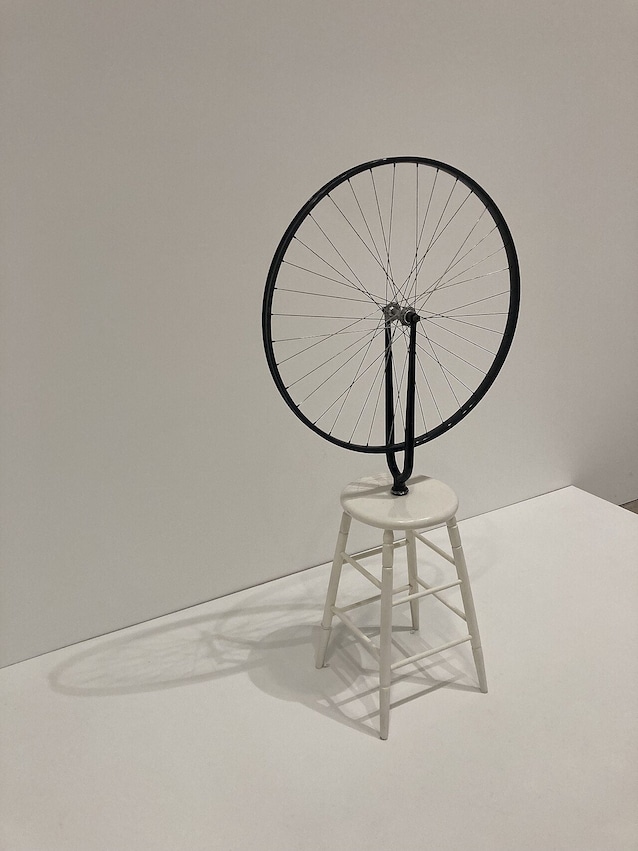
The Bicycle WheelMarcel Duchamp
With The Bicycle WheelMarcel Duchamp instead opens the doors to a new idea of art. It is the first of his famous ones Readymade – a revolutionary art form that sees common objects transformed into works of art simply because the artist chooses them as such – tells those who look at it something that was previously unthinkable: art is creation, and every artist can choose to make even a common object art.
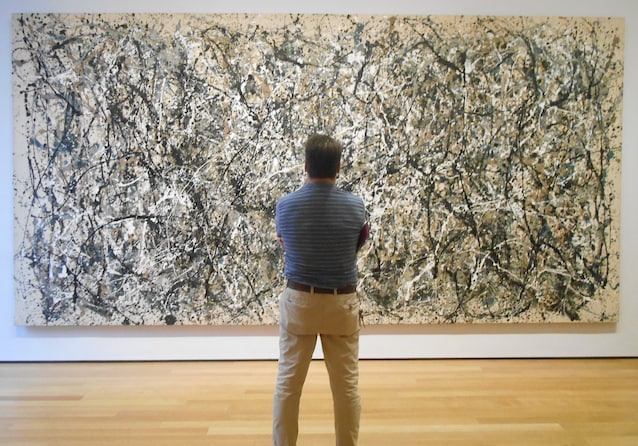
One Number 31, 1950 by Jackson Pollock
To represent the energy of Abstract Expressionism there is One Number 31, 1950 by Jackson Pollock. Sometimes defined as gestural art or action painting, because by looking at it you can imagine the movements that the artist had to make to apply the colour, Abstract Expressionism is the first modern American artistic movement, born in New York.
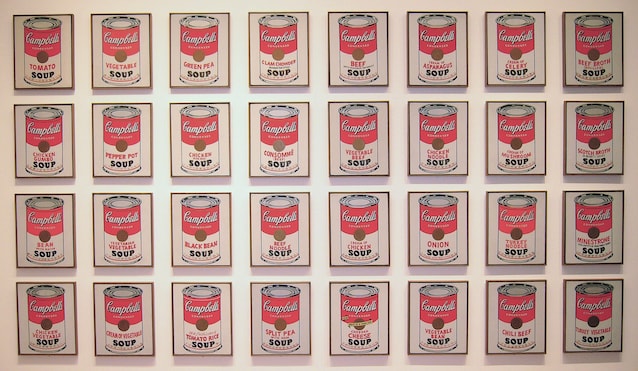
Campbell’s Soup Cans by Andy Warhol
And then there is Campbell’s Soup Cans by Andy Warhol, the manifesto of Pop art. With his soup cans, Warhol takes art out of museums and puts it on supermarket shelves, making it accessible, everyday, democratic. It is the celebration of American consumption and imagination, but also a subtle reflection on the power of images in modern society.
The Italian works exhibited at MoMA
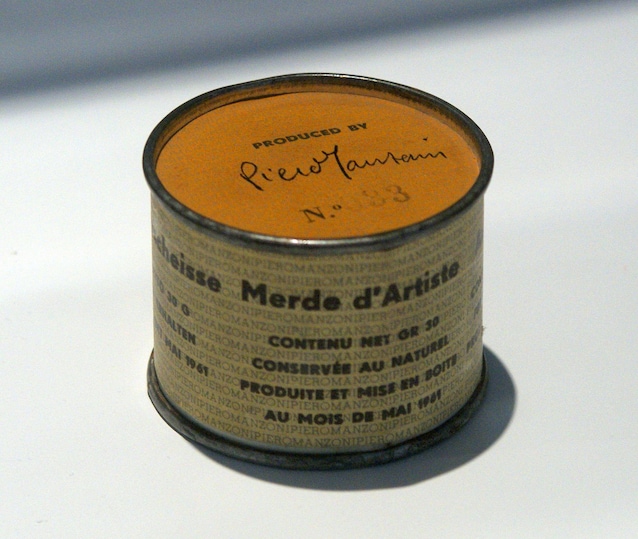
There is no shortage of significant Italian presence in the MoMA collections. There are provocative works like the Artist shit by Piero Manzoni, one of the famous “cuts” by Lucio Fontana, the suspended landscapes of Giorgio de Chiricoand works of Boetti, Burri, Boccioni, Pistoletto and Balla.
Alongside figurative art, there is also space for Italian designrepresented by icons such as Fiat Multiplathe Bialetti Mokathe Olivetti typewriters and products from historic brands such as Alessi, Flos, Zanotta, Artemide, Vitra, Poltronova and C&B.
Together, these works tell not only the story of modern art, but also that of human creativity in all its forms – visionary, everyday, ingenious.
