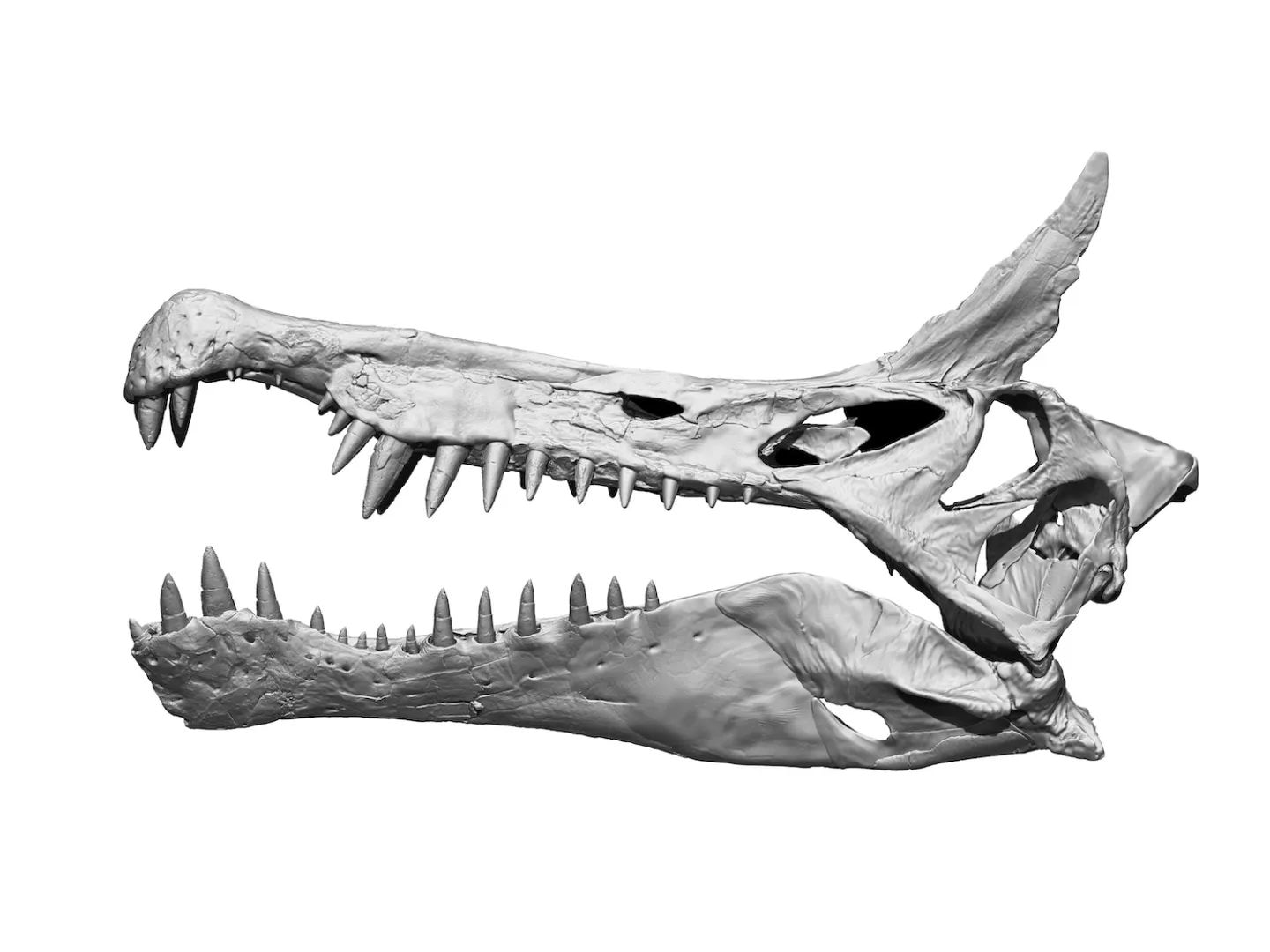
A new study published in the journal Science describes a new species of spinosaurid discovered in the desert of Central Saharain Niger. The fossil, attributed to the genus Spinosaurus and named Spinosaurus mirabilisprovides new data on the evolution and lifestyle of these dinosaurs Late Cretaceous (lived 95 million years ago).
Spinosaurids are a group of dinosaurs carnivores tall among 2.35 and 5-7 meters and characterized by elongated skull, conical teeth and adaptations related to capture of aquatic prey.
The best known representative is Spinosaurus aegyptiacusalso famous for its large dorsal sail. The new example stands out for one thing marked scimitar-shaped cranial crestprobably covered by keratinwhen the animal was alive. According to the authors of the study, this structure would not have been functional for nutrition, but rather for visual communication or recognition between individuals.
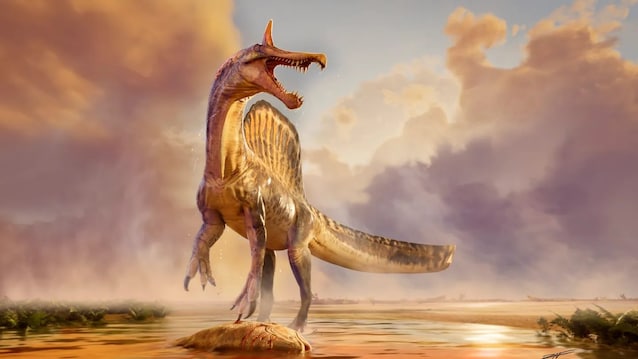
The morphological analysis of the skull also shows teeth that interdigitate between the upper and lower jawa feature compatible with a predominantly fish diet. This element strengthens the interpretation of spinosaurids as predators specialized in catching fishalready proposed for the genre Spinosaurus. These creatures had a lifestyle that probably allowed them to hunt both on land and in aquatic environments.
An important aspect concerns the geographical context of the discovery. The remains come from internal deposits of the Saharafar from ancient coastlines, even millions of years ago. This suggests that these animals were not limited to marine or coastal environments, but also frequented river systems and wetlands continental. The hypothesis is consistent with other evidence indicating progressive adaptation to semi-aquatic lifestyles.
From an evolutionary point of view, the new species discovered in the Sahara contributes to clarifying the diversification of spinosaurids. The data indicates a gradual process: from mainly terrestrial forms with adaptations for fishing, to increasingly larger species specialized for aquatic or semi-aquatic environments. Spinosaurus mirabilis would represent an important phase of this transition. This discovery expands knowledge of the morphological variability of the group and provides new information on the lifestyle of spinosaurids, suggesting a wider distribution and greater adaptive complexity compared to what has already been hypothesized in the past.
