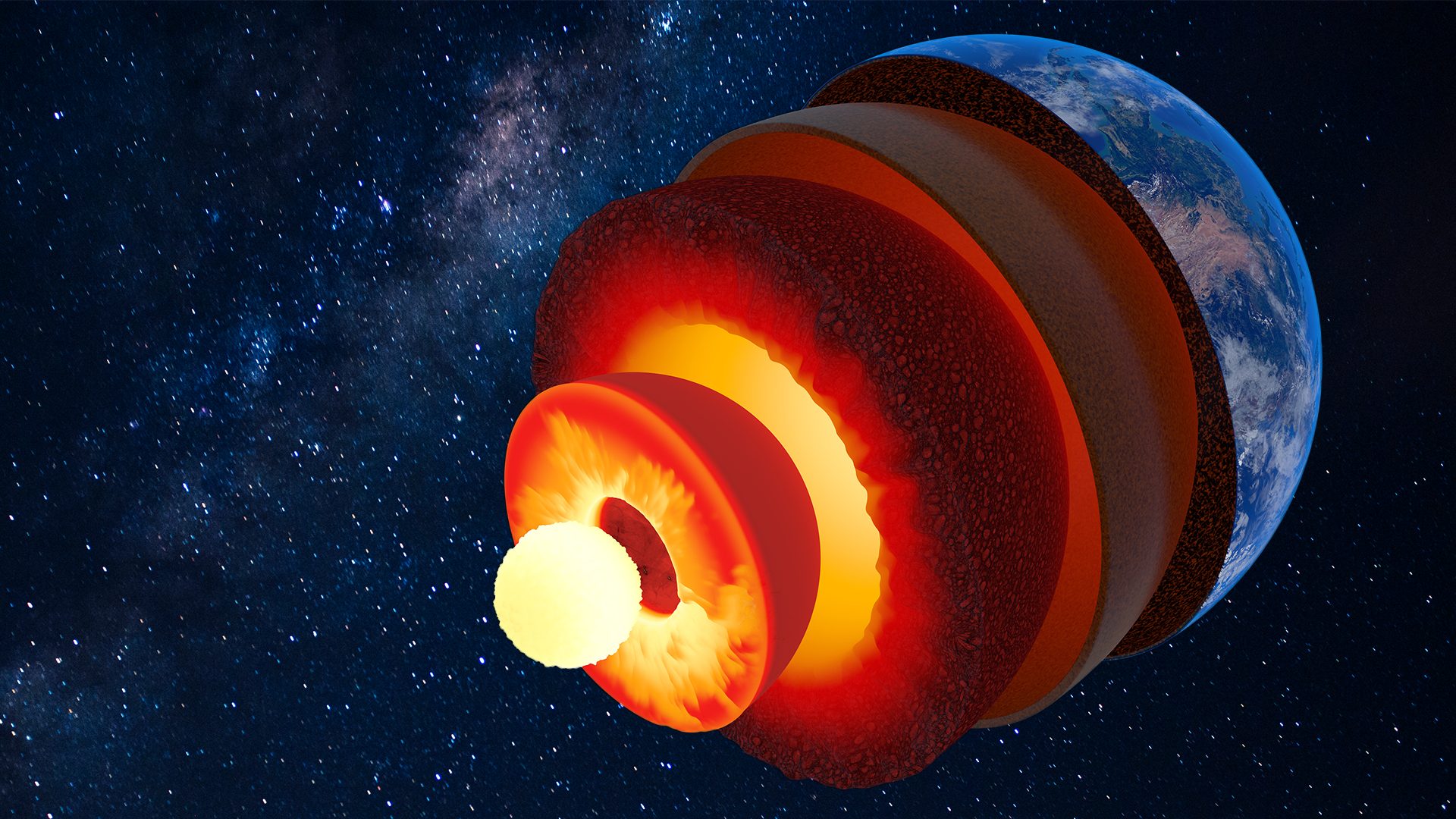
In the Earth’s core would be found the largest hydrogen tank of the planet, dissolved in the iron-nickel which constitutes a large part of the nucleus, in a quantity even included between 9 and 45 times that contained in the oceans and which corresponds to 0.07-0.36% of the mass of the nucleus. This item would have been stored about 4.5 billion years agowhen the Earth was formed. The discovery suggests that terrestrial water comes mainly from the Earth’s interior and not from comet impacts, as previously believed. This is supported by the new study, published in the journal Nature Communicationsresearchers at Peking University, who arrived at this conclusion through complex laboratory simulations.
What the study says about hydrogen in the Earth’s core
The study of the propagation of seismic waves within our planet, combined with simulations and laboratory experiments, has allowed us to obtain information on the composition and physical properties of the Earth’s core. It was thus discovered that this layer is consisting mainly of ironbut also that it is not dense enough to contain only this element. This has already led researchers in the past to hypothesize that together with iron there is a lighter chemical element, in particularhydrogen. However, estimating the quantity of hydrogen is very difficult because it must be based on indirect measurements and recreate the extreme conditions that characterize the nucleus. This is what Chinese researchers tried to do by making small children interact samples of iron and hydrated silicates (composed of silicon and oxygen), contained in the “magma ocean” that constituted our planet 4.5 billion years ago, and from which dense and heavy elements such as iron then migrated towards the center. The samples were placed in special devices called diamond anvil cells and were heated to a temperature of approx 4827 °Cexerting a pressure of approximately 111 gigapascals.
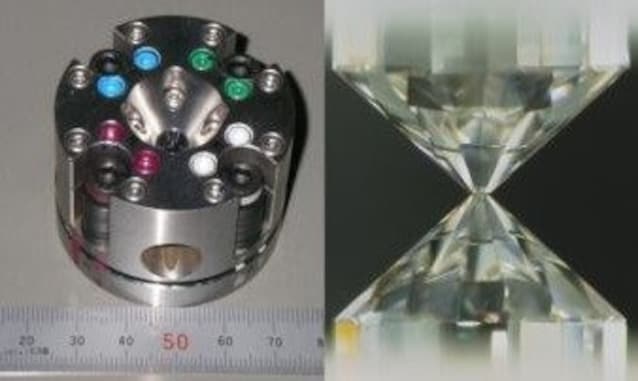
After allowing the samples to cool and solidify, the researchers used the atomic probe tomographywhich made it possible to map the distribution of chemical elements. They thus observed how, in the presence of such temperatures and pressures, the iron has trapped small structures containing silicon and hydrogen in the same number of atoms. It was thus possible to calculate the overall concentration of hydrogen: it turned out that the earth’s core contains hydrogen 0.07-0.36% hydrogenequivalent to 9-45 times the water contained in the oceans.
Why the discovery is important for the origin of terrestrial water
The discovery is very important to better understand theorigin of water on our planet. The presence of such a quantity of hydrogen in the Earth’s core implies that this element, the most abundant in the Solar System, has been trapped during the formation of the Earth. The hydrogen released from the core into the mantle would turn into water over time. At depth, the water would have favored the melting of the mantle rocks and therefore the formation of the magma that feeds them volcanic eruptions. Through eruptions, water would have reached the surface influencing its global cycle and ensuring thehabitability of the planet. So, it would not have been subsequent impacts of comets, which we know contain ice, that brought most of the water to Earth. This discovery will have to be integrated with new analyzes aimed at perfecting the measurement of the quantity of hydrogen in the core and the understanding of its role within the Earth.
