An unprecedented trade agreement, which will reduce customs duties on the value of 96.6% of European Union exports of goods to India, with an estimated saving of around 4 billion euros per year in duties on European products.
With the conclusion of the agreement, defined as historic, the EU and India are looking for alternative routes after the new US tariffs introduced by Donald Trump. The EU concluded a criticized agreement in August which provides for tariffs of 15% on the majority of products, while with New Delhi they were raised to 50% on a significant portion of goods.
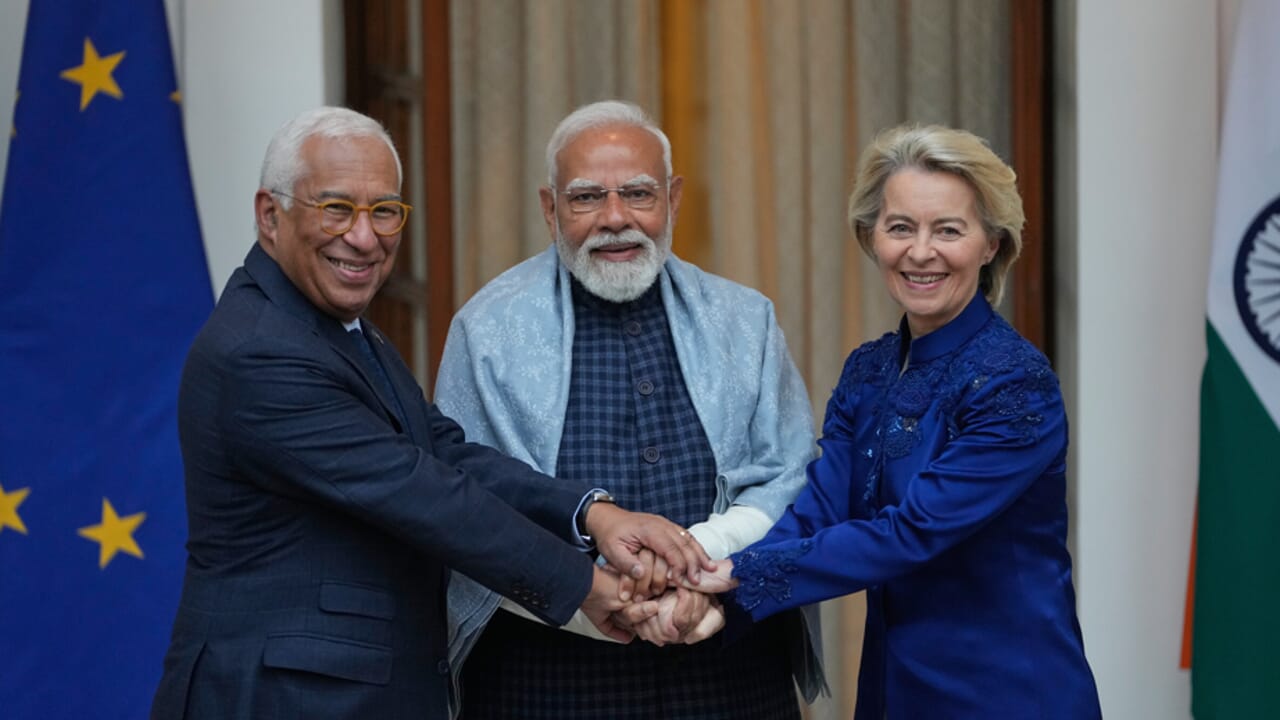
“Europe and India are writing a page of history today. We have concluded the most important agreement ever. We have created a free trade area involving two billion people, with benefits for both sides. This is just the beginning. We will further strengthen our strategic relationship”, announced the President of the European Commission Ursula von der Leyen, who met Indian Prime Minister Narendra Modi in New Delhi.
“In an increasingly unstable world, Europe chooses cooperation and strategic partnerships”, claimed von der Leyen, in a clear response to the tensions with its American ally.
What’s in the deal
The opportunities for the European market are significant: the agreement provides for a gradual reduction in duties on cars from 110% to 10%, while those on components will be eliminated within 5-10 years, with expected benefits for European car manufacturers. Tariffs on machinery, chemical and pharmaceutical products will also be largely eliminated, as will those in the wine and agri-food sectors, which are key for countries such as Italy, France, Spain and beyond.
Duties on wines will be reduced, going from 150% to 75%, then up to 20%. Those on olive oil (from the current 45%) will reach 0 over five years, and those on processed products such as bread and sweets will also be cut. After years of confrontation and tensions with European farmers, the Commission has decided to cut out products deemed “sensitive”, such as beef, chicken, rice and sugar.
Geographical indications remain outside the agreement and should be the subject of a separate agreement, currently under negotiation to protect European products from imitations on the Indian market. By will of New Delhi, products from the dairy supply chain were also excluded.
The agreement also provides for access privileged to the Indian services market, including finance and maritime transport, and a chapter dedicated to environmental protection (in particular an EU-India platform on climate cooperation, to be launched in the coming months and European support of 500 million euros in the next two years for India’s sustainable industrial transition), and one to workers’ rights and the condition of women.
Negotiations on the agreement were started in 2007, then suspended in 2013 and relaunched in 2022. Brussels, after the signing of the agreement Mercosuris in an acceleration phase on its strategic partnerships.
Before the official signature, the agreement with India will be ratification by the Council and the EU Parliament is now necessary. The Commission aims to keep the deadlines short, hoping for entry into force in 2027.
