
The action of throwing the exhausted oil used for cooking can be harmful not only for pipes but also for the environment and the marine ecosystems. Imagine this scene: you just cooked some fries, take the pan with the exhausted oil and empty in the sink, also helping yourself with a jet of tap water. End of the story, you think. In reality, from that moment an underground journey begins that leads that dark liquid to transform into a hidden but gigantic problem. In the tubes under the house, the oil begins to solidify and crystallizecreating growing deposits that slow down the outflow and can reach block entire sewage networks. If then the oil reaches the waterways, floating like a thin film hinders the entrance of air and sun, representing a danger to marine organisms. As if that were not enough, during cooking the oil produces toxic substances which, once dispersed, pollute the seas And they can damage their inhabitants. All this for a gesture that seemed trivial to us. But the good news is that there are simple alternatives: collect the oil, keep it and bring it to the collection points. So what could become a hidden enemy turns into a precious resource for planet Earth, thanks to Recycling: from biocarbiants to components for the asphalt.
What happens to pipes and sewers if you throw the oil exhausted in the sink
One of the main causes of sewage obstruction is precisely theaccumulation of fat (Americans use the term Fogthe acronym for “Fats, Oil and Grease“) In the pipes. When we pour the still hot oil in the drain of the sink or toilet this seems to slide away like water, but be careful: once it starts to cool down, the fats contained in the oil solidify Well yes they attack on the internal walls of the ducts, recalling and then collecting all the debris that pass down the tube as one sticky magnet. This leads to the formation of real fat caps, known as Fatberg (“Mountain of Grasso”) that obstruct the pipes and, worse still, the city sewers: damage to the water network and sewage spills can be verified (SSO, Health Sewer Overfloss).

The damage of cooking oil to marine ecosystems
Passing through the sinks of our homes, the exhausted oil we used in the kitchen can go to the sea. Here, being less dense than water, tends to float on it forming a sort of film oily. This real physical barrier reduces both the exchange of oxygen with the atmosphere that the penetration of sunlight, indispensable for the photosynthesis of some aquatic organisms. But there is more: in areas rich in oily residues have been observed oxygen levels lower than 5 mg/mlconsidered the critical threshold For many fish, showing how the presence of oil at sea can be lethal for aquatic fauna and for the balance of the ecosystem in general.
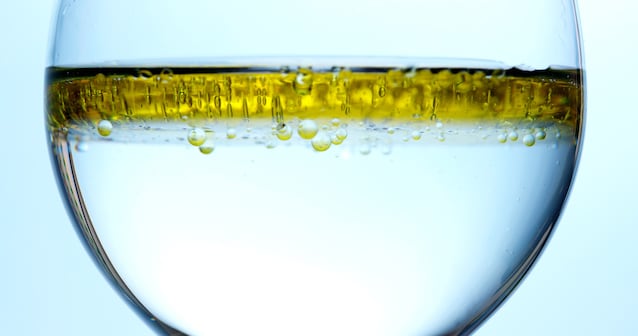
Kitchen oil in the seas also represents a chemical problem: when the kitchen oil is brought to high temperatures (as in the case of frying) the triglycerides that compose it undergo degradation processes, forming new compounds such as theacroleinan irritating and toxic aldehyde for the respiratory tract, and other molecules such as i 4-hydroxyonenal (4-NHE) considered harmful to cells. These chemical pollutants can therefore alter the quality of the water and irreversible water organisms irreversibly.
How to properly dispose of the exhausted oil and where
For a correct disposal of the exhausted oil, the Conoe (National Consortium for the collection and treatment of exhausted oils and fats) which leaves us few and clear indications: let the oil after cooking e Pour it into a containerfor example a plastic bottle, a tank or a glass jar. Once the container is full, you have to close it well with the cap and you can bring to specific collection points, such as the municipal ecological islands.
With these simple gesture we can give one new life to the exhausted oil: among the recycling opportunities, the most widespread and consolidated transformation, through transeterificationis his conversion in biodiesel with renasses that can reach up to 98%. According to an article published on Polymers Other ways to enhance the exhausted oil is to use it to produce solvents, lubricants And components for asphalt.
