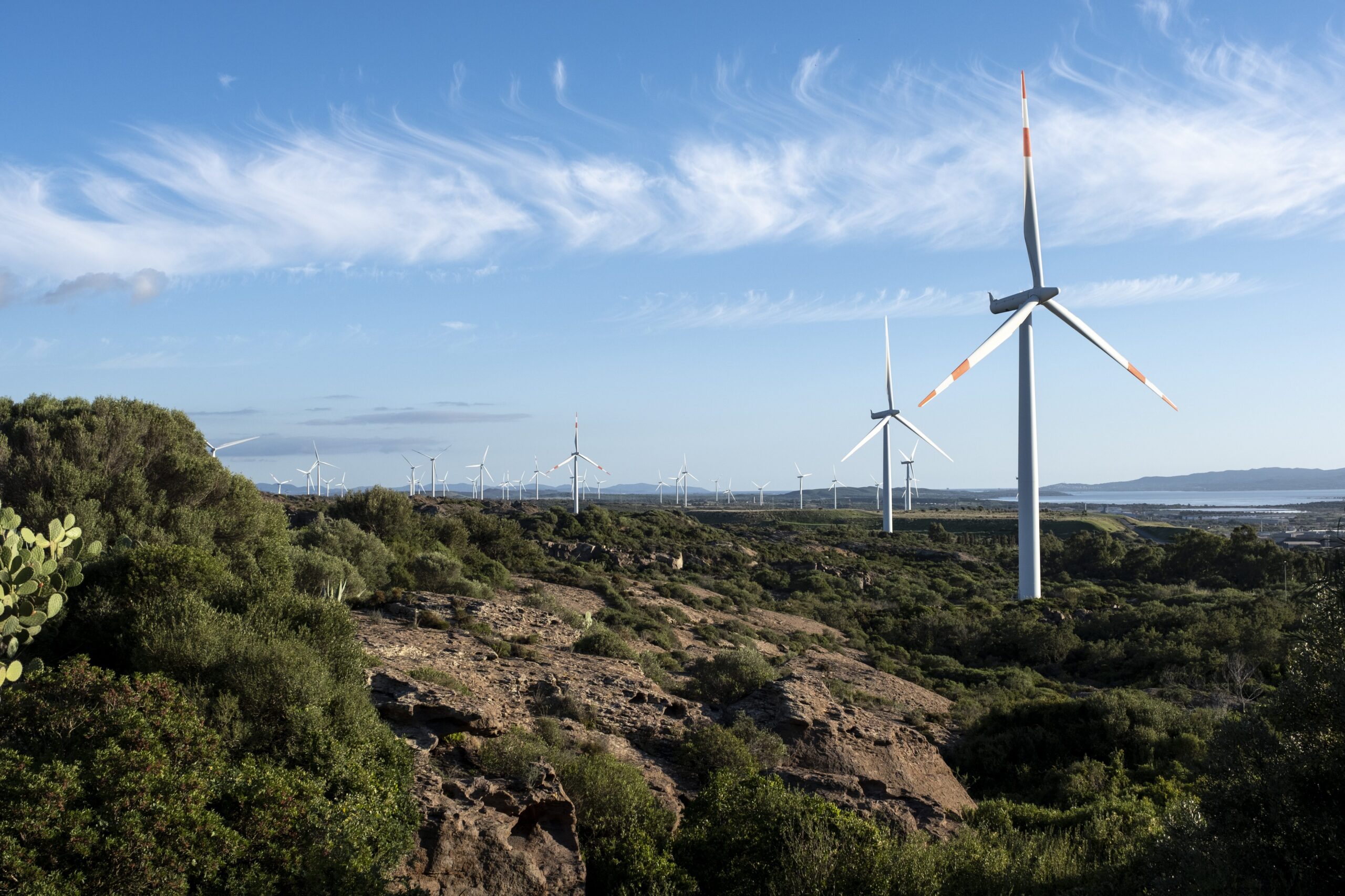
The story of Enel is closely intertwined with that of Italy’s economic and industrial development, and tells how the company has managed to constantly evolve, facing the challenges of every era and preparing the ground for the future of the energy transition. Founded in 1962 as “National Electricity Authority”Enel was born with the aim of unifying dozens of small local operators into a single structure capable of guarantee electricity to the entire national territoryreducing the gap between north and south and between urban and rural areas. This process helped sustain the economic boom of the 60s and 70sbringing Italian electrification to almost total levels. In the following years, the company focused on technological innovation, implementing high-voltage networks, underwater bridges to islands and computerized management systems, laying the foundation for future digitalization.
During the 70s and 80sEnel explored alternative energy sources, from hydroelectric and solar power plants to wind power plants, and developed an increasingly attentive approach to environmental sustainability. With the liberalization of the electricity market in the 90sthe company transformed into a publicly traded company and, in the new millennium, accelerated its technological development. Today, Enel is particularly focused on the development of renewable energy and intelligent distribution networks, developing energy community projects and digital tools for monitoring consumption, with the aim of an increasingly sustainable and participatory future. Let’s look back a little closer the history of Enel.
The origins
Enel was born as a solution to the fragmentation of the Italian electricity sector. Before 1962, energy production and distribution were entrusted to dozens of small local operators, with large differences in coverage and quality between the different regions of Italy. The creation of a single national body made it possible to build a more efficient and widespread networkbringing electricity even to rural and less developed areas. In less than 10 years, the company’s production capacity doubled and high-voltage networks were built connecting the north and south of the country, as well as submarine connections to the islands. The complete electrification of the Italian territory, with one coverage close to 99% in the early 1970srepresented a historic achievement.

In the 70sthe energy crisis pushed Enel to invest in alternative sourcesAnd. The Entracque hydroelectric power plant (Cuneo), the first concentrated solar power plant connected to the grid, the first photovoltaic system and the first wind farm in Italy were built. This period marked the beginning of the search for sustainable solutions, which in the 80s were consolidated thanks to more attentive environmental policies. With the liberalization of the electricity market in the 90san important new chapter began for the group, which went public in 1999.
Innovation
We enter the beginning of the new millennium. The world, and so too our country, are changing: the effects of the climate crisis are starting to be felt, as is an ever-increasing push for digitalisation.
Enel is also adapting to these great challenges, introducing the first smart meterscalled smart meters. These allow customers to monitor consumption in real time and supplier companies to manage services remotely. Another important sign of innovation occurred in 2008when the group entered the renewable energy sector, precisely in response to the ongoing climate crisis.
The present and the future
Today we live in an ever-increasing world globalizedwhere energy markets are also closely interconnected.
In this context, Enel it has become a real one multinational energy companypresent in approx 30 countries and point of reference both in the distribution networks that in the development of renewable energy.

But the energy future of our country is not only measured in kilowatts produced, but also in the ability to build intelligent, resilient and widespread networksfundamental to accompany the energy transition. In fact, network infrastructures represent the beating heart of the modern electricity system: they allow us to integrate renewable sources, efficiently manage energy distribution and guarantee stability and security. The stated objective is the zeroing of direct and indirect net emissions by 2040closing the last coal plants by 2027 subject to authorization from the competent authorities, promoting a sustainable and participatory future in which energy choices are shared between institutions, companies and citizens.
For this reason, Enel has invested in the so-called Smart Gridscapable of integrating widespread production, storage systems and end users who also become producers, or rather prosumer (i.e. consumers and producers at the same time).
In this scenario, Renewable Energy Communities, applications for monitoring consumption and charging points for electric mobility take on a role of growing importance.
And then there are digital tools likeFull Digital App of Enel Energia, monitoring consumption is simple: you can view in real time how much energy is used, identify any waste and optimize daily habits.
Efficiency is not only aimed at reducing costs, but above all at reducing emissions, making families and businesses active protagonists of the transition. According to estimates by international bodies such as the International Energy Agency, targeted efficiency interventions can contribute to over 40% of the necessary reduction in global emissions.
And since domestic consumption in Italy represents around a third of total energy demand, even small daily improvements, such as optimizing the use of household appliances or managing energy loads intelligently, produce tangible benefits for the environment and the family budget.
Alongside efficiency, Enel promotes responsible choices, for example through Renewable Energy Communities (CER), where local groups of condominiums, companies or public bodies can produce and consume energy together from renewable sources, such as photovoltaic panels, creating “zero km” systems. These communities make it possible to reduce energy costs, encourage local production and make energy a shared good. At the same time, electric mobility is integrated into daily life with a widespread network of over 23,000 charging points throughout Italy, supported by digital services that simplify travel and payment management. Thus every citizen can make concrete choices, reducing emissions and actively participating in a more sustainable energy model.
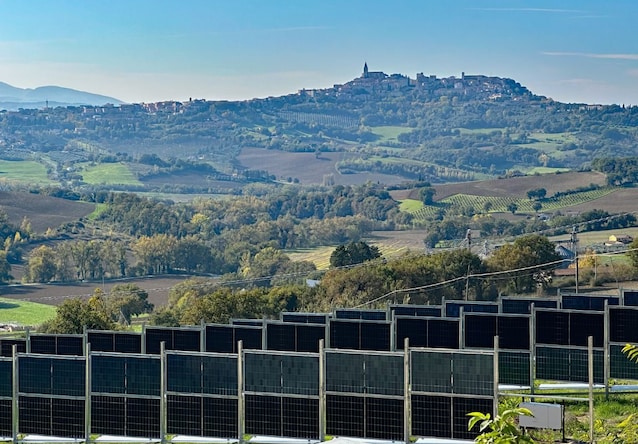
These two fundamental values, efficiency and responsibility, guide Enel’s innovations and express a clear philosophy: energy is not just a service, but a tool for improving people’s lives, protecting the environment and building a more equitable and shared future. Every app, every smart grid, every local community created is a step towards an energy model in which technology, sustainability and co-participation meet, allowing each of us to build a brighter future, literally but also ideally.
