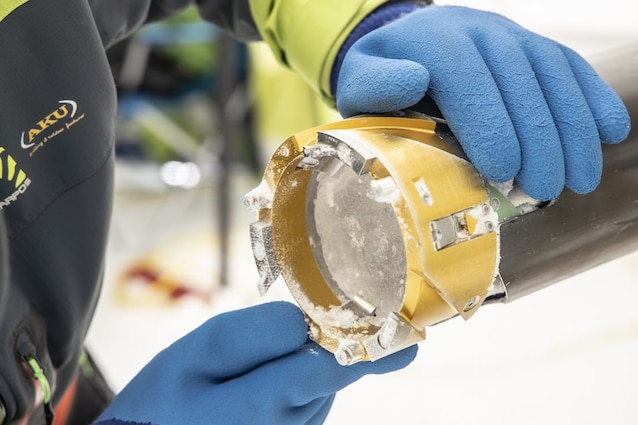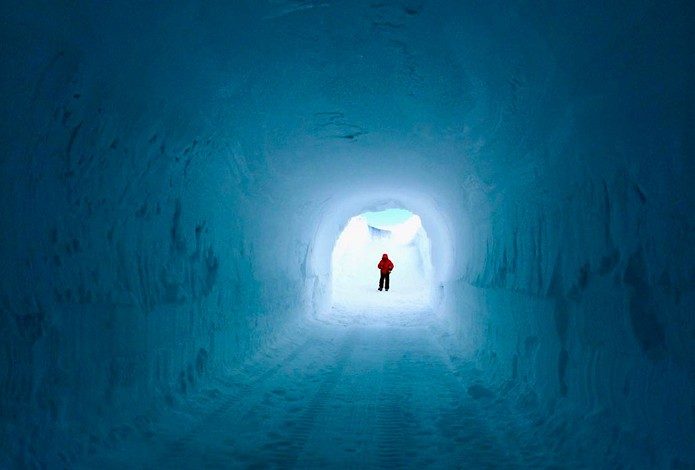
In Antarctica was inaugurated onIce Memory Sanctuarya cavity dug into the ice beneath the Concordia Station where they will be preserved at an average temperature of approx -50°C cores taken from glaciers around the world, including the Alps. These samples preserve the evidence of the composition of the atmosphere of centuries or millennia ago, which tell the evolution of the climate on Earth. The goal is to preserve these important climate archives from the melting of ice, which continues at increasingly higher rates due to global warming, and make them available for future generations of researchers. The creation of this natural “freezer” is part of international research project Ice Memorylaunched in 2015, in which Italy also participates and which involves both the collection and conservation of ice cores. Among the first ice cores to be archived are samples from the Col du Dôme sul Mont Blanc.
What the Ice Memorial Sanctuary of ice in Antarctica is like
The Ice Memory Sanctuary is a cave carved into Southeast Antarctica at Concordia Station, a 3233 m altitude, which hosts technicians and researchers from the Antarctic missions. It is located at a depth of 9 m below the earth’s surface, it is 35 m long and 5 m wide. No building materials were used to build it and, despite this, the mechanical properties of the snow ensure its safety stability. Furthermore, temperatures here remain constant between -50 °C and -54 °C all year roundwithout the need for energy-consuming refrigeration.
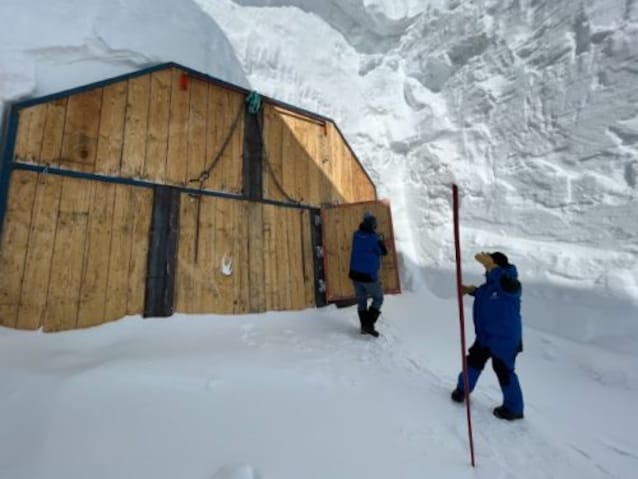
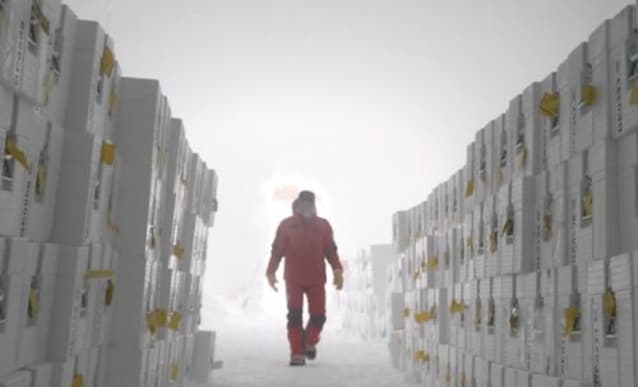
In the cave the cores are arranged along an extension of approximately 300 linear m. The first to be placed inside were the carrots extracted from the Col du Dôme (Mont Blanc) in 2016 and since Grand Combin (Swiss) in 2025. The transportation of the cores to Antarctica took place aboard the Italian icebreaker Laura Bassi to the Mario Zucchelli Station, where they were loaded onto a plane for a flight to the Concordia Station.
Why it is important to conserve Earth’s ice cores for the climate
They are found in cores extracted from ice caps and mountain glaciers air bubbles that have been trapped during the process by which snow, which contains a lot of air, is compacted by the weight of other snow and over time turns into ice. Theirs composition corresponds to that of the atmosphere at the time of snow fallas the flakes act as “scavengers” that clean the air of particles and chemical compounds. By analyzing the carrots we can thus discover what characteristics the atmosphere of the past had. Older information is found in the deep layers, while newer information is found in the superficial layers. Each layer reveals the concentration of greenhouse gases (such as carbon dioxide) present in the relevant time interval, which is related to the temperature of the planet. Additionally, it may contain revealing ashes volcanic eruptions of the past, variations in vegetation which indicate climate change, but also traces of pollution of anthropogenic origin. From each sample it is possible to obtain data on both the causes and consequences of climate change. With the progressive melting of the ice, all the information contained within them they are destined to be lost. This is why the Ice Memory projectwhich aims to conserve the carrots for future researchers, whenever possible analyze them with more advanced technologies compared to those today.