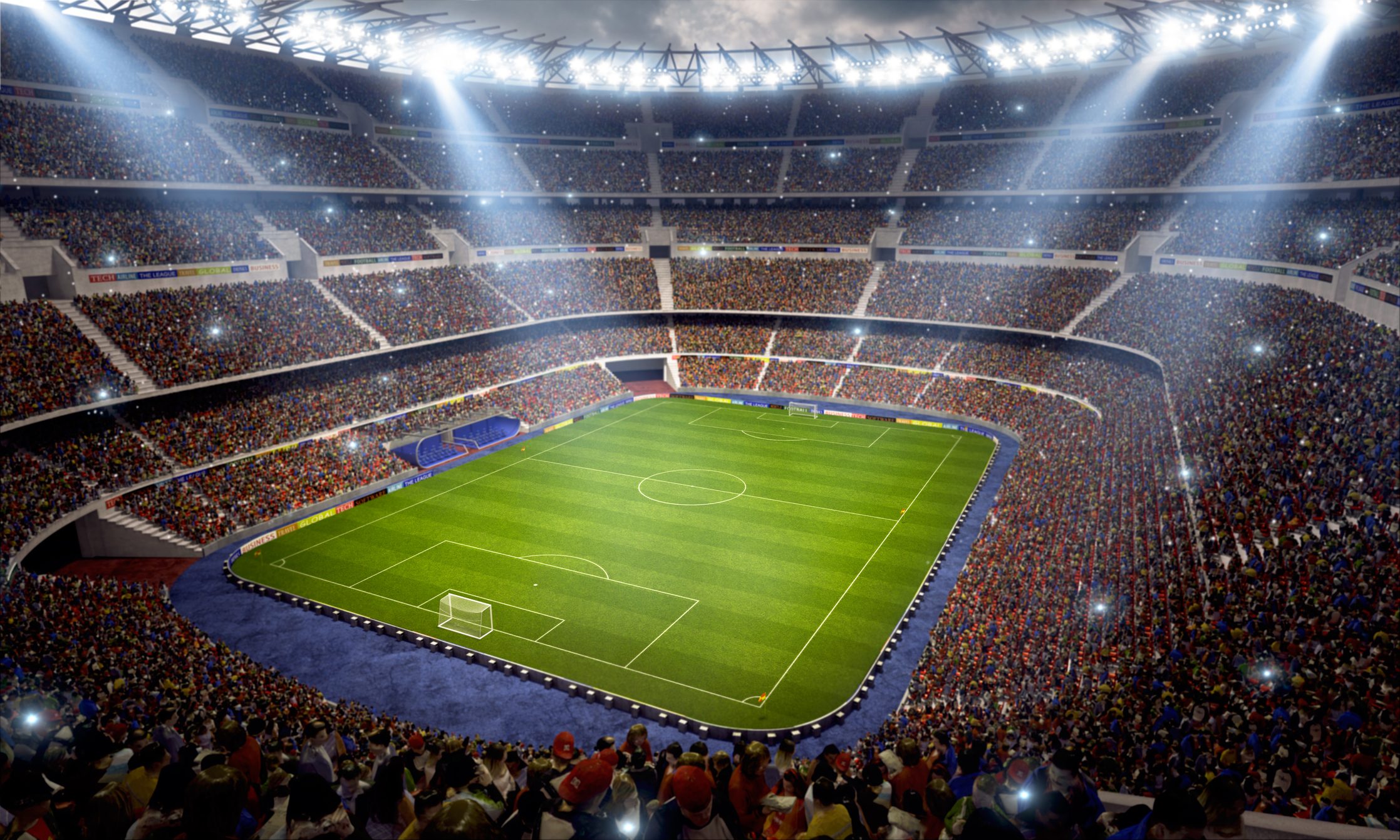
How much the public Do you influence the result of a football match? For decades, the value of “twelfth man in the field“It was a dogma of football that can affect athletes both positively by transmitting cheer And sense of belonging what a negative passing anxiety And pressure. Then, with the pandemic that began in 2020, the world stopped and The stadiums emptied. That circumstance never happened before was transformed into an experiment on field factor. Without the phrasturous, pressure and cheering, what remained of the advantage of playing at home? The data collected at that time provided surprising answers, not only by confirming theImpact of the fans on the performance of the players Through choirs, applause or whistles, but also revealing an incredible influence on arbitral decisions, free from the stresses of the screaming crowd.
The “twelfth man”: the secret of the field factor in football
With field factor We mean the tendency to obtain Better results When playing on your own field (or, in the case of national teams, in your country). This variable is very important in calcium and represents the reason behind many decisions regarding the calendar of the championships, such as the choice of alternation between house and trip. Among the elements for which it is important to consider the field factor carefully there are, for example, the movements of the team (especially in competitions where you travel between different time fuses) and, of course, the presence of public favorable or against.
In this sense, Covid-19 represented an unrepeatable circumstance to better understand the direct effect of the presence of fans on the sporting result: before the pandemic, they almost did not exist in literature analysis of games played in empty stadiums. Thus, there was a clear confirmation of the hypothesis according to which the home teams obtain, on average, More points compared to those away when the public is present. The most logical explanation for these results is to be traced back to the concept of social influence and the consequent changes in the behavior of individuals. Second Émile Durkheim and his social cohesion theoryin fact, cohesion was born from the network of relationships between individuals who share common objectives (in the case of sport, victory). This implies that a truly solidarity community has the ability to encourage the individual to perform better.
There is therefore an evident positive correlation between the presence of the favorable public and the advantage of the relative team, proportionally to the size of the crowd itself. This effect is not, however, absolute and several (sometimes neglected) factors can affect it. Among these: lo playing styleThe team levelthe position in the rankingthe difficulties of matches and the degree of experience of athletes. The latter variable comes into play mainly in relation to the choices and execution of the technical gesture during the race.
Moreover, in competitive sports, environmental sounds can turn into distractions both in relation to high and low -difficult scenarios, interfering with the speed of visual research. In other words, in the case of disturbing elements such as the noise from the stands, a player usually takes more time to identify, for example, a free companion to serve.
The persuasive power of the public: the arbitration bias
Also thearbitrageinevitably, is affected by the presence and behavior of the home public during a match of soccer. It has been shown that in situations of home advantage, they are assigned More minutes of recovery in favor of the home team e More penalties and cards yellow against the guest team.
When, with the advent of pandemic, the main European football championships played behind closed doors, the race directors instead whistled more do them against the hosts and consequently they assigned More yellow cards compared to the pre-covid19 period. The number of goalsContrary to it, it seemed to remain unchanged.
This evidence can also be traced back to social reasons. Social psychology claims, in fact, that humans have the innate tendency to adapt to the opinion of the majority. In the case of football, the pressure exercised by the public, therefore, it can play an important role.
It is interesting to note that the degree of experience of the tender judge is not a sufficient guarantee factor with respect to the absence of this effect on his own decisions. In the presence of highly disturbing noises, the consequences are still present, often even in a consistent way. What has been said also offers multiple ideas for reflection on the methods of using technology Var That, probably, would guarantee a fairer support if it was used away from the acoustic conditioning of the public or in noise -free environments.
Sources
