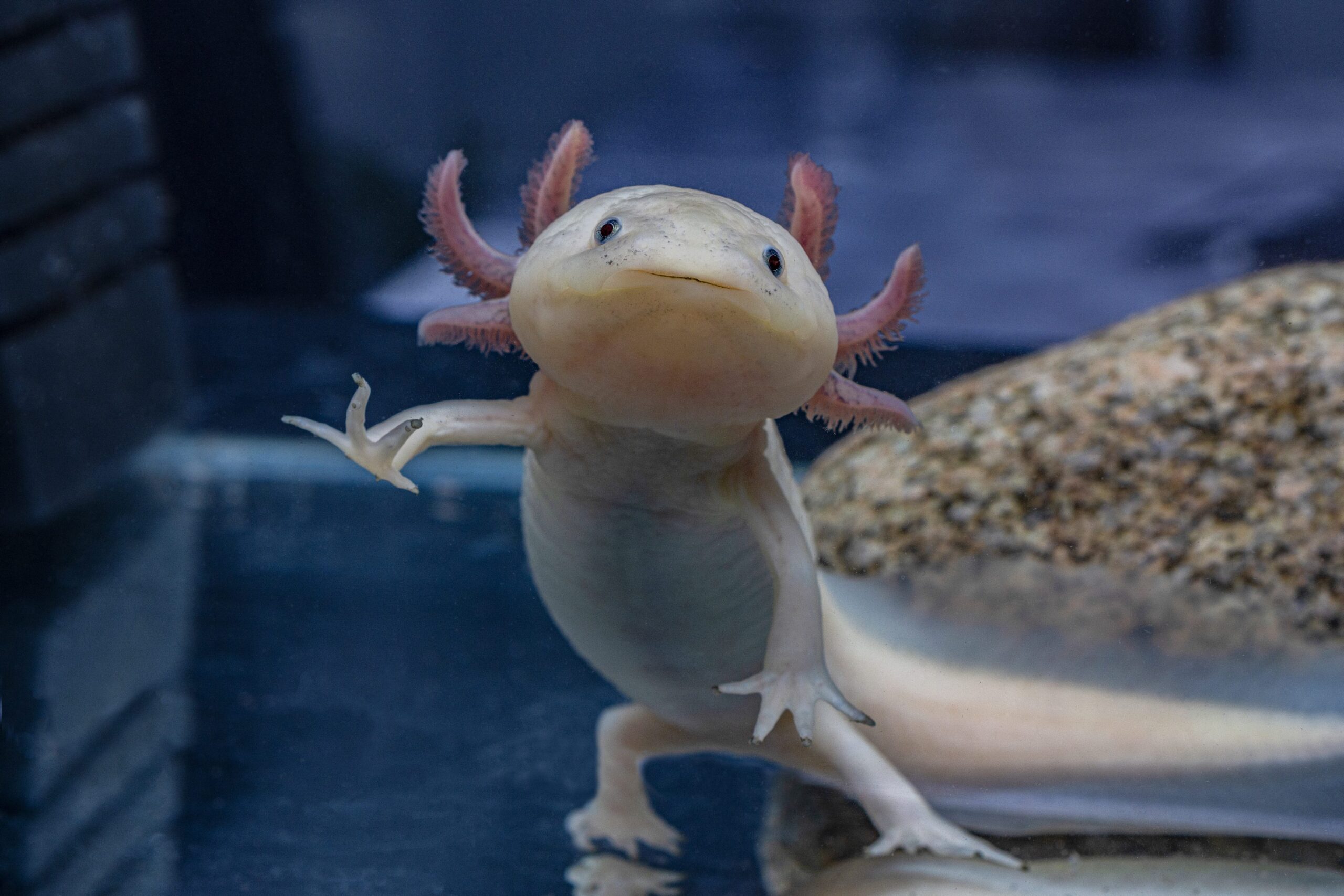
A group of biologists from the department of Harvard he amputated a limb from a axolotlthe Mexican salamander capable of perfectly regenerating legs, tail, heart and even parts of the brain, but what he discovered has pushed the boundaries of what was thought possible further. In the new study published on Cell Just this year, Jessica Whited’s team showed that regeneration is not a phenomenon confined to the site of injury, but a process that involves the entire organism. After amputation, a is activated in the axolotl’s body systemic response driven by the sympathetic nervous system, especially adrenaline and norepinephrine: a wave of adrenergic signals that reaches even distant tissues, awakening dormant stem cells and preparing them for growth.
This discovery opens a broader perspective: the ability to reconstruct parts of the body, in fact, is not an isolated exception of the salamander, but is part of a shared biological languagewhich many species have preserved in different forms. From salamanders to cockroaches, from crickets to lizards to small mammals, regeneration follows a common principle: after a wound, the body does not simply close the lesion, but reactivates ancient development programs, guided by molecules and nervous signals that reorganize growth. In some cases, as in insects, the process accompanies moulting; in others, as in fish or mice, it is only of interest limited portions of the body. Understanding how these mechanisms have been preserved — or attenuated — over the course of evolution could one day bring man and regenerative medicine closer to what remains a spontaneous gesture for salamanders and insects: starting over.
How the axolotl regenerates its limbs: the Harvard study
The principle behind this phenomenon is known as epimorphosis: a process in which, after the wound closes, the blastemaa group of cells that returns to an embryonic state and then differentiates into new tissues.
In this process comes into play a dialogue between nerves and cellscalled the adrenergic–mTOR axis: a sort of communication circuit that pushes cells to divide faster. Research has discovered the fundamental role of the sympathetic system and the norepinephrine in activating the regeneration processes: thanks to this signal, the axolotl rebuilds the new limb approximately 20% faster compared to “naïve” animals that had never been injured. The experiment showed that, 14 days after amputation, the blastema – the mass of undifferentiated cells that gives rise to the new leg – was significantly larger in the “activated” animals (n=15 per group). Around the sixteenth day, a larger number of individuals showed complete digit formation and nearly symmetrical regeneration. The discovery suggests that the ability to rebuild parts of the body does not depend only on the injured tissue, but also on a general preparation of the organism, a sort of “regenerative memory” useful in environments where wounds are frequent, as happens in nature for salamanders subject to predation or cannibalism.
As Davidian and Levin recall in 2022 in Cold Spring Harbor Perspectives in Biology, salamanders are the most efficient vertebrates in this type of regeneration. Within a few hours (less than 12 hours) the stump is covered by a temporary epithelium, the apical epithelial cap, which acts as reporting center. From that area, proteins that act as chemical messengers spread. Some of the factors involved they are: FGF8, which stimulates the multiplication of cells and the lengthening of the new limb, BMP which regulates the formation of bone and supporting tissues, and the factor called Sonic Hedgehog (shh) which directs growth, ensuring that the regenerated leg has the right shape and symmetry. It is precisely these proteins that coordinate the orderly formation of new tissues — from muscle to bone, to nerves and skin. Other amphibians, such as frogs, are able to regenerate limbs only in the early stages of life: after metamorphosis this ability progressively decreases, until it disappears with maturity. It is a sign of how much regeneration, despite sharing mechanisms with embryonic development, is sensitive to age and environment.
Mexican salamanders and limb regeneration: an ancient ability
Regeneration is not a gift granted to all living beings, nor is it always convenient. As Elchaninov and colleagues noted in 2021 in a study published in Frontiers in Ecology and Evolutionthis faculty tends to reduce as organisms become more complex. With the evolution of elaborate anatomical structures and an efficient immune system, many species have lost the ability to reconstruct body parts.
It is not a new idea: already in the nineteenth century August Weismann had understood that regenerating a limb is not always the most advantageous choice from an evolutionary point of view. For some species it is simpler – and less expensive – reproduce frequently or learning to avoid predators, rather than investing energy in a long and expensive process such as regrowth.
Even when regeneration is successful, it comes with a price. Maginnis remembers it in 2006 on Behavioral Ecology: the production of new tissues consumes resources that would otherwise go to growth or reproduction. In crabs, for example, rebuilding a claw can slow development, while in fish the formation of a new fin temporarily reduces fertility. In nature, nothing is truly “free”: not even the power to regenerate.
Mammals and humans: a distant echo
In mammals, regeneration has almost completely disappeared, but some traces remain. In a study published in 2022 on Cold Spring Harbor Perspectives in Biology by Johnson and Lehoczky, it is evidenced that mice and children, in particular conditions, are able to regenerate the tips of their fingers. It is a complex area: it contains bone, nerves, connective tissue and nail matrix.
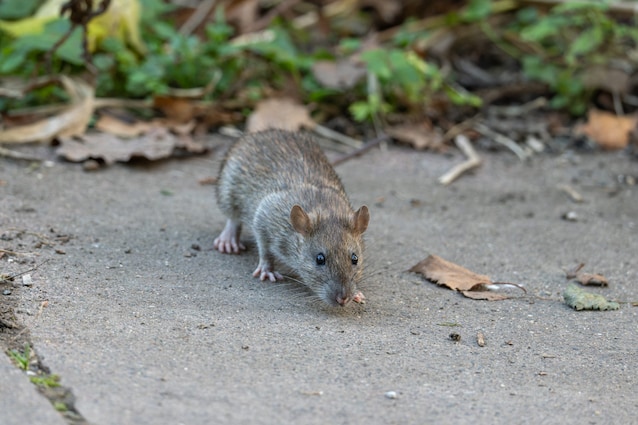
In the mouse, the process is surprisingly precise. If the amputation is limited to the extremity, in about a week a small blastema forms, a mass of cells that reconstructs the missing part. The average time is between 7 and 10 daysand the regeneration is complete only if the cut does not exceed a certain height of the finger.
Even in human children, some documented cases show a spontaneous regrowth of the fingertip, while in adults the capacity is limited to the most superficial tissues. The parallel between the mouse finger and the human finger is one of the most studied models today: understanding how these cells “remember” the original shape could one day pave the way for true regenerative medicine.
Insects and other invertebrates and their natural “regrowth”
Insects have provided some of the most precise models for understanding how a new limb forms. Recent studies, such as that of Zhong in 2023 and Pandita in 2024, describe in detail regeneration in species such as American cockroach (American periplanet) and the cricket (Gryllus bimaculatus), while in fly Drosophila melanogaster the phenomenon is observed only in the larval stages.
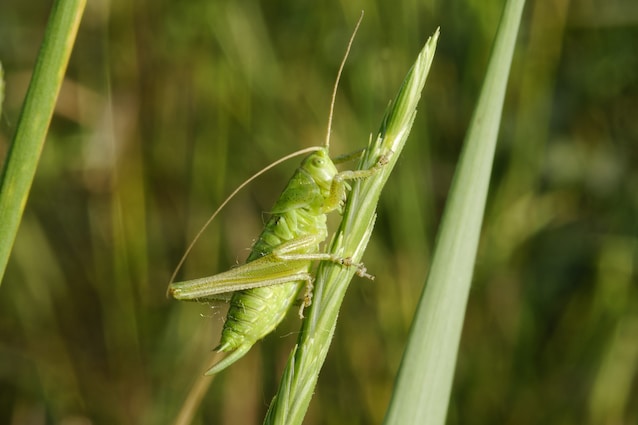
The process is divided into three phases: wound healing, blastema formation and morphogenesis. In the first, the muscles contract to close the stump and a crust of hemolymph forms. Immediately below, epidermal cells dedifferentiate (i.e. lose their specialization as epidermal cells) and begin to proliferate, giving rise to the blastema. In the next phase, genes orchestrate limb growth and symmetry, while epigenetic mechanisms control which genes remain active or silenced.
In insects, however, regeneration is linked to moulting cycles: Without a new exoskeleton, the limb cannot develop. After each molt, the appendix lengthens and, in a few weeks, returns to its original size. It is a perfect example of how regeneration can be integrated into physiological rhythms of the organism.
