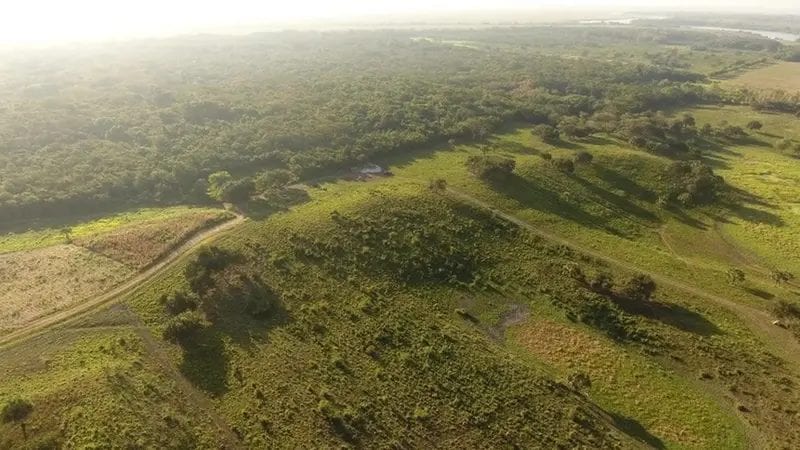
The Mayan monument of Aguada Fénixbuilt about 3 thousand years ago in southeastern Mexico, is at the center of new research from the University of Arizona: it may be the oldest monumental structure known so far of the Mayan civilization (and therefore the oldest monumental site in Central America), dated between 1050 and 700 BC
The discovery, published in Science Advances, is by the US research group led by Takeshi Inomata, who together with his archaeological collaborators used LiDAR (Light Detection and Ranging) surveys and stratigraphic excavations to reconstruct the shape of the site, identifying platforms, raised squares, channels and ritual deposits arranged according to an accurate astronomical alignment. The set of main structures draws a crossin which each arm embodies a direction of the cosmos and translates a true symbolic map of the universe into architecture.
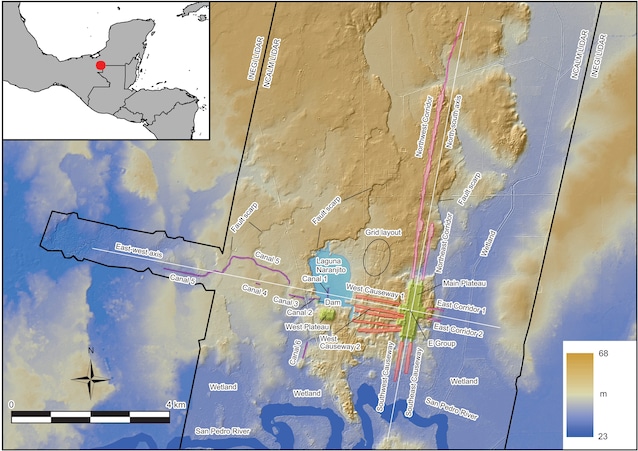
Aguada Fénix is located in the federal state of Tabascoin south-eastern Mexico, on the border with Guatemala. This is an area known as the “Mayan plains“, one of the main epicenters for the development of this ancient Mesoamerican culture. The site was occupied starting from 1200 BC. C. approximatelywith the construction of the main monuments that took place between 1050 and 700 BC. C.in the period that archaeologists define as “Preclassic” (2000 BC – approximately 250 AD), a key moment in the development of the Mayan civilization.
The complex, one of the largest known to dateconsists of a set of causeways and sunken roads, canals, dams and structures with a rigid orientation approximately north-south and east-west, which converge at one point, giving rise to a structure cruciformwhose center was to be the catalyst point of cultic life of Aguada Fénix. In fact, it was most likely a sanctuaryused by the inhabitants of the area for community religious functions.
What is truly astonishing about the complex is not only the way in which the structures are arranged, but also the fact that such a large complex was built in a period of Mayan history in which probably there were still no rigid hierarchical divisions in society. An assumption that is now widely accepted questioned in world archaeology, or the fact that a community could carry out a great work only if directed by aelitethen suffered a further denial.
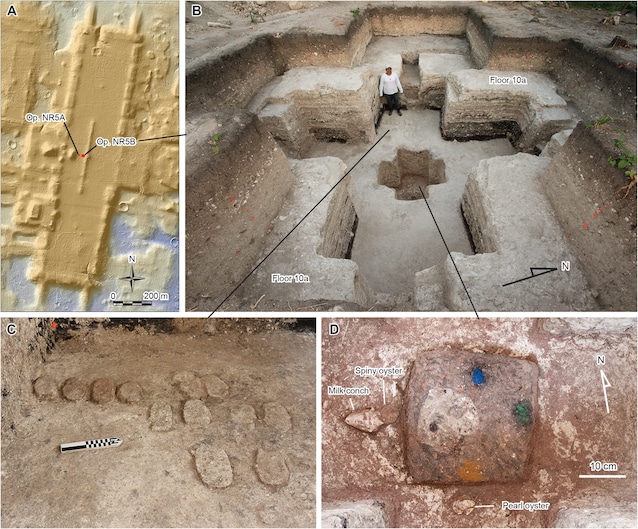
The archaeological research campaign was conducted between 2020 and 2024and used several techniques. Beyond normal archaeological excavation with a stratigraphic method, carried out in the central point of the sanctuary, the scholars also used the LIDAR (Light Detection and Ranging) to locate structures and complexes swallowed by the jungle or buried underground.
The excavation was concentrated in central point of the cruciform implant. In fact, the builders of the complex built a here cross-shaped pitwhere the two main axes of the sanctuary converged, with a north-south and east-west orientation. This last axis appears to be aligned with sun rise on February 24 and October 17, with a time span of 130 daysexactly half of 260 days of the Mesoamerican ritual calendar. Even more surprising is what archaeologists found at the bottom of the central pit.
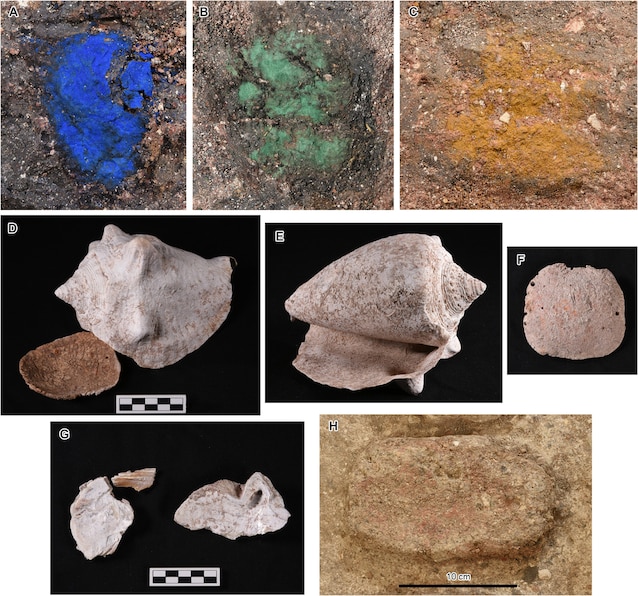
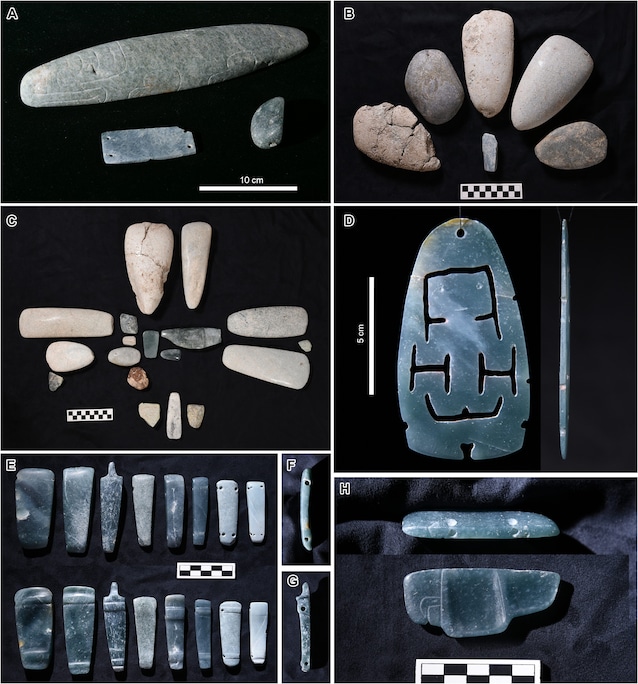
In the northern section there was a blue pigment based on azurite, in the eastern section a green pigment based on malachite and in the southern section one yellow based on goethite. According to the research group, this would be the oldest known attestation of the American directional colorsa color symbolism shared by many other Native American cultures, in which a color is associated with each cardinal point. The missing color, in the western sector, was probably made with some perishable substance, produced from shells as Macrostrombus costatus and of the genre Spondylusand it would perhaps be the red. Using colors to highlight different directions, the ancient builders of Aguada Fénix created one on earth representation of the universe as they knew and perceived him. In addition to pigments, archaeologists have found several materials, such as ceramics and jade ornaments, associated with functions which took place in the center of the sanctuary.
According to Inomata, the builders of Aguada Fénix they did not have a complex hierarchical social organization comparable to that of the contemporary cities of the Olmecs, another Mesoamerican people who at the time had reached an advanced level of development, but despite this they created an enormous monumental complex. Considering the astronomical and cosmological symbolism of the sanctuary, it is likely that the complex was built under the direction of respected religious figureshowever, without the authority that would later characterize the elites of the subsequent Maya cities.
