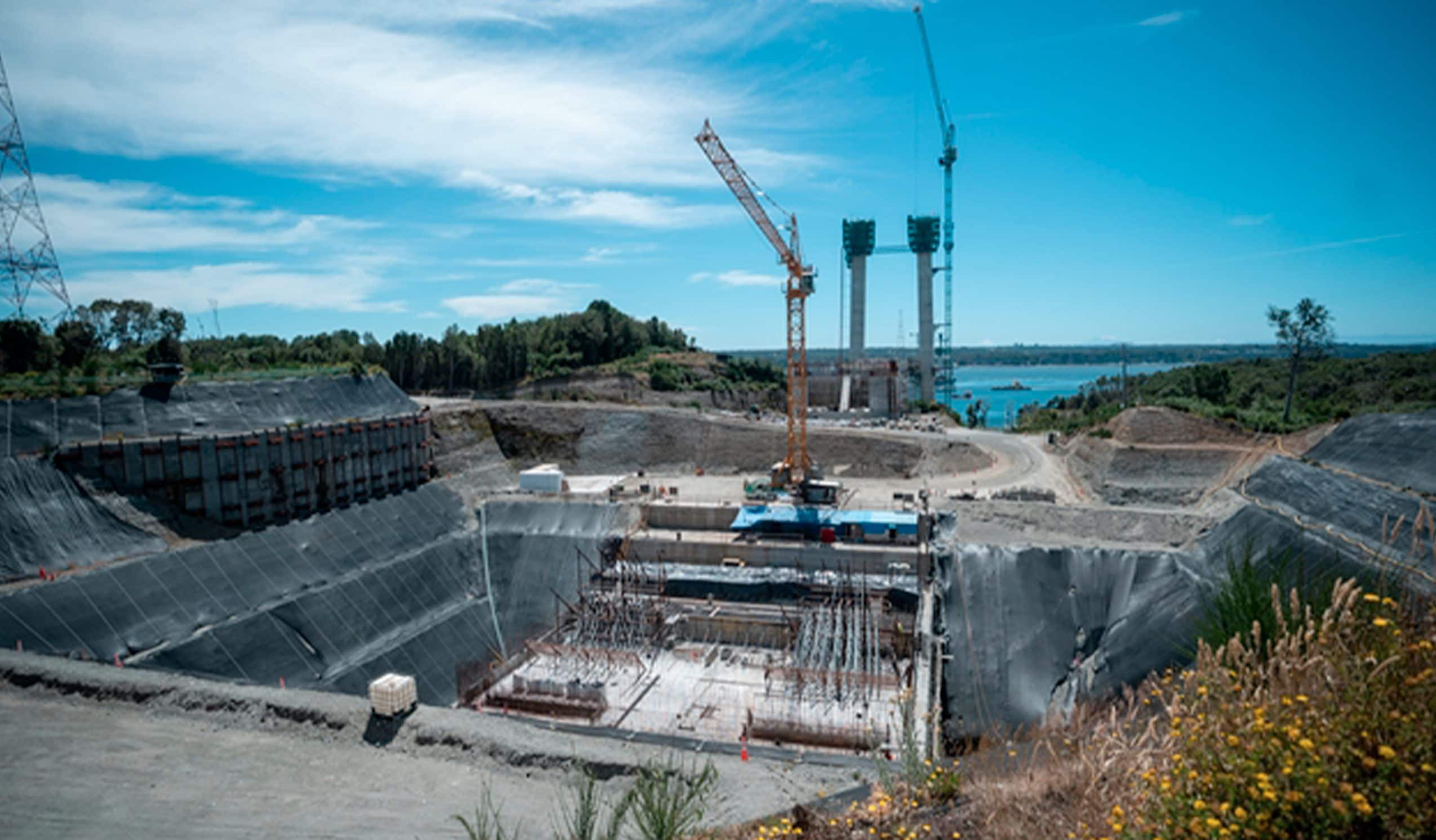
The Chacao bridgecurrently under construction and also known as Chilo Bicentenary Bicentenary, has the aim of overcoming the Chacao channel and joining theChilo island – at about 1,100 km south of Santiago del Chile – with the mainland. The project involves a total length of the bridge of 2,574 m.
The description of the bridge of Chacao
The Chacao bridge is an important infrastructure work that will allow you to connect the island of Chilé with the mainland. The structure of the bridge involves the construction of Three main batteriesone in the middle of the canal and one on the sides, thus allowing the construction of two spans, the north with a total length of 1.155 meters and the south one, with a total length of 1,055 m.

In particular, the North Pila rests on the continental side, then on the mainland, the one in the south on the island. The description of the central pile is the particular interest, the one that is in fact found in the middle of the channel. This pile has been designed with an inverted Y form, in order to increase the resistance to load and increase the resilience of the materials that are however exposed to aggressive agents. The foundations of this central pile consist of 36 reinforced concrete poles, with a total diameter of 2.5 m and a depth that reaches up to 56 m.
Engineering challenges
When you realize such an imposing work, the engineering challenges are certainly not lacking. Note, in fact, how the area on which the bridge insists is characterized by a high seismicity, given the proximity to an active fault.
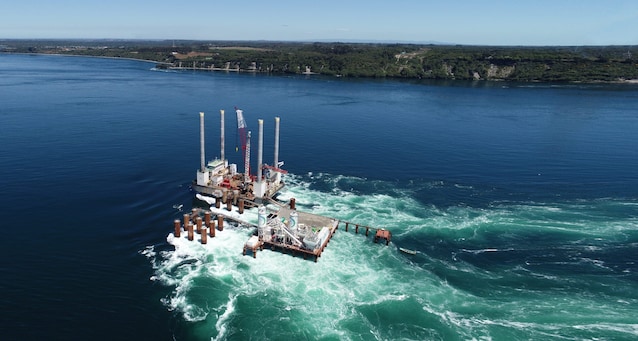
Another challenge for designers was that relating to having to face the strong marine currents, which characterize the Chacao channel, which can reach remarkable speeds, increasing the loads with difficulty. The same goes for the wind, which in the area reaches, and exceeds without problems, i 200 km/h.
Social and economic impact
Each mega project that is self -respecting has consequences from a primarily economic and social point of view. In fact, the realization of the work will lead to a remarkable advantage, in terms of territorial continuity along the Route 5which represents the main Chilean motorway, thus allowing to eliminate the interruption represented by the channel. To date, in fact, to cross the channel it is necessary to take advantage of a ferry, which it takes 45 minutes to get to the other side of the channel. With the creation of the bridge, men and goods will be able to cross the channel in just 3 minutes.
Increase the travel speed logically involves an increase in people who will cross the channel for the most varied reasons. In fact, it is estimated that, on an annual basis, it will pass from the current 1.5 million people, to more than 3 million people. This dizzying increase will undoubtedly represent a big advantage in economic terms, especially for people who live on the island.
To represent an advantage, for the local population, is not only the bridge itself, but also, and above all, the realization of the same. In this sense, in fact, many jobs will be created, able to give employment and create opportunities for those who live near the work.
The Chacao bridge project has a certainly long history, which began starting from 60swhen the executive project is approved and contracted to an international consortium (led by Hyundai) between 2012 and 2013. Between the 2017 and 2018, The first phase of construction of the work is started, starting from the foundations of the three batteries. To date, the realization of the pylons is in the progress phase, with about 50% of the works completed. It is estimated that the bridge will be finished in 2028.
