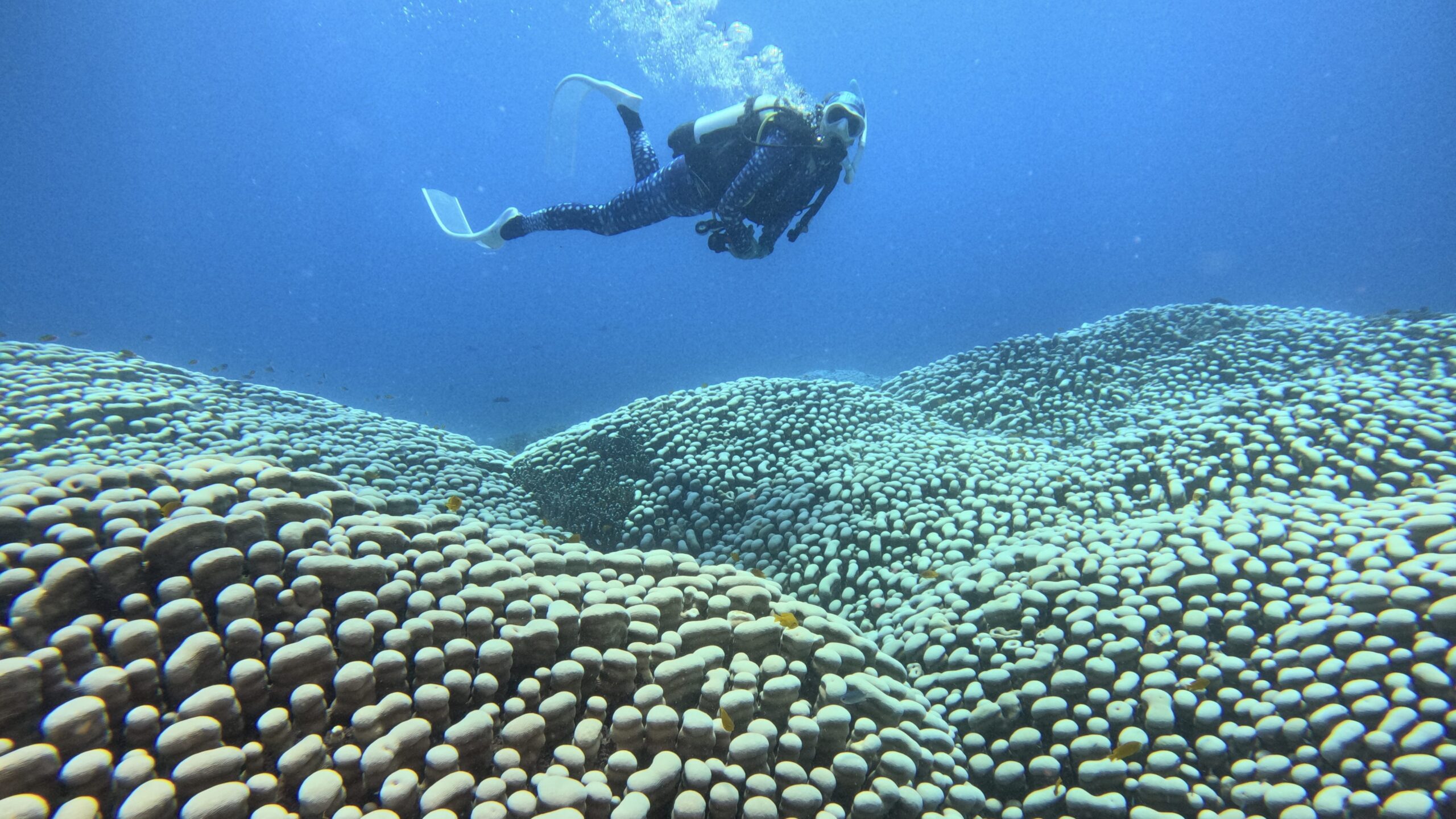
A mother and daughter, both Australian citizens and scientists, have discovered what could be the largest coral colony in the world. About 111 meters long And 60 wide and an estimated surface area of 3,973 square metersthis is the estimated extent of the underwater structure of the Great Barrier Reef. The discovery occurred within the Great Reef Censusa coral reef census project led and carried out by citizen scientistscientists or citizen volunteers. Sophie Kalkowski-Popemarine operations coordinator at Citizens of the Reef, and her mother, Jan Popeduring a dive they found themselves faced with what looked like a “wavy meadow”, which turned out to be an enormous colony of Pavona clavusa rare, slow-growing coral known to form large colonies. Precisely this species forms what was probably until now the largest colony with a size of 32 by 34 meters (1088 m²) found in 2024 in the Solomon Islands.
The discovery of the enormous colony of Pavona Clavus
While diving from their family boat off Cairns in the Far North of QueenslandSophie Kalkowski-Pope and her mother Jan Pope came across this wonder that was home to unique biodiversity: «Participating in the Great Reef Census gave us the opportunity to really explore the full extent of what was there», they said. The area where the colony was found is usually difficult to explore because it is subject to strong sea currents.
The organisms that form this colony almost the size of a football field (3,973 m2), belong to the species Pavona clavuscommonly known as “scapula coral” or shoulder blade coral due to the shape that resembles that of the shoulders. The colony mainly has a brown color, enriched by scattered patches of yellow, red, pink and blue. Corals tend to grow vertically, with individual polyps rising from the skeleton and depositing new calcium carbonate underneath, creating a new base on which to rest. The growth rate of corals varies depending on the species and environmental conditions.
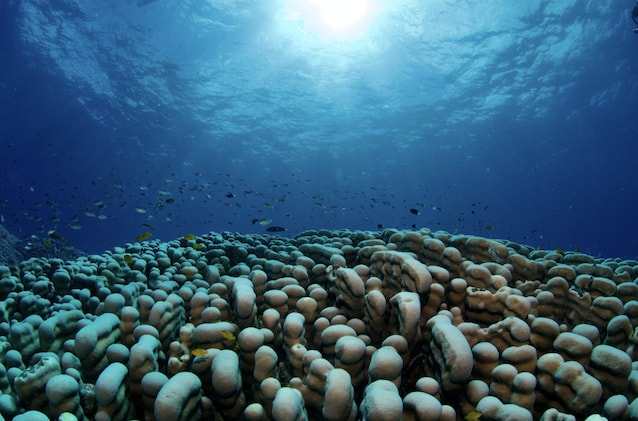
Most of the structures we call “coral” are actually colonies composed of hundreds or thousands of small, soft-bodied organisms, called polypsoften as large as a 5-cent coin. Each polyp secretes an external skeleton of hard limestone, called corallitewhich attaches itself to bedrock or the dead skeletons of other polyps. Numerous nearby colonies form coral reefs or reef.
How they measured the size of the colony
But how did we go from a simple sighting to a scientific discovery of this magnitude? Thanks to the mix between citizen participation and advanced technology. The Citizens of the Reef organization, in fact, combined photographs taken by volunteers in the water with sophisticated systems artificial intelligence. Immediately after the report, a team of experts set to work to measure the true size of the colony using different methods. Manual measurements taken by divers were supplemented with very high resolution surface images. Thanks to the collaboration with Biopixel and the Center for Robotics at the Queensland University of Technology (QUT)all this data was merged to generate a 3D model of the structure.
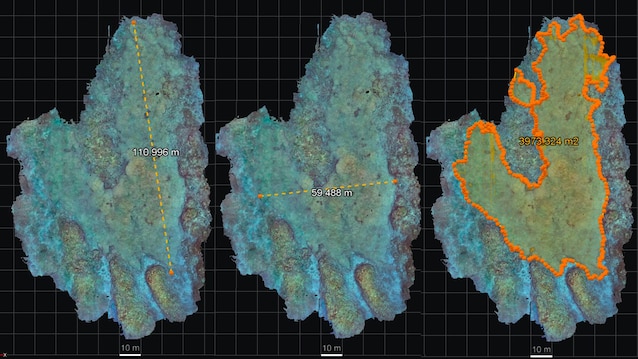
This mapping will allow scholars to return to the site in the coming years and understand how and how much the coral changes over time.
Why the discovery is important: it is not synonymous with the well-being of the Reef
Corals, belonging to the phylum Cnidaria and relatives of anemones and jellyfish, are fundamental for underwater life, offering habitat and refuge for fish and marine organisms, coastal protection and biodiversity. Coral reefs are in fact one of the places with the greatest biodiversity on the planet, hosting 25% of existing marine species. Unfortunately, due to a variety of human-related reasons, this habitat is deteriorating: increased CO2water pollution, overfishing and changes in coastal morphology represent the major threats.
The researchers point out that the discovery of an exceptionally large coral colony it shouldn’t be interpreted as evidence that coral reefs are recovering or that climate impacts are decreasing. This discovery rather teaches us that corals do not all respond in the same way to climate change, making it essential to be able to identify, study and protect these precious places still intact within the ocean ecosystem.
Discoveries like this are significant because the reef still holds so many unknowns, and we don’t know what we risk losing. I think this shows why conservation efforts like the Great Reef Census matter now more than ever
Sophie Kalkowski-Pope
The Great Reef Census in Australia brings together tourism operators, research teams, divers and snorkelers to collect images across large areas of the Great Barrier Reef. More than 100 vessels participate, generating large-scale data. In the case of the huge colony, to reduce the risk of accidental impacts, the exact location details have not been made public and the relevant authorities have been informed to support the long-term protection of the area.
The projects of citizen science they are also countless in Italy and Europe, where the European Citizen Science Association (ECSA) is present. A perfect example of this is the reporting campaigns for the sighting of rare animals or alien species in our seas, such as the yellowfin surgeonfish.
