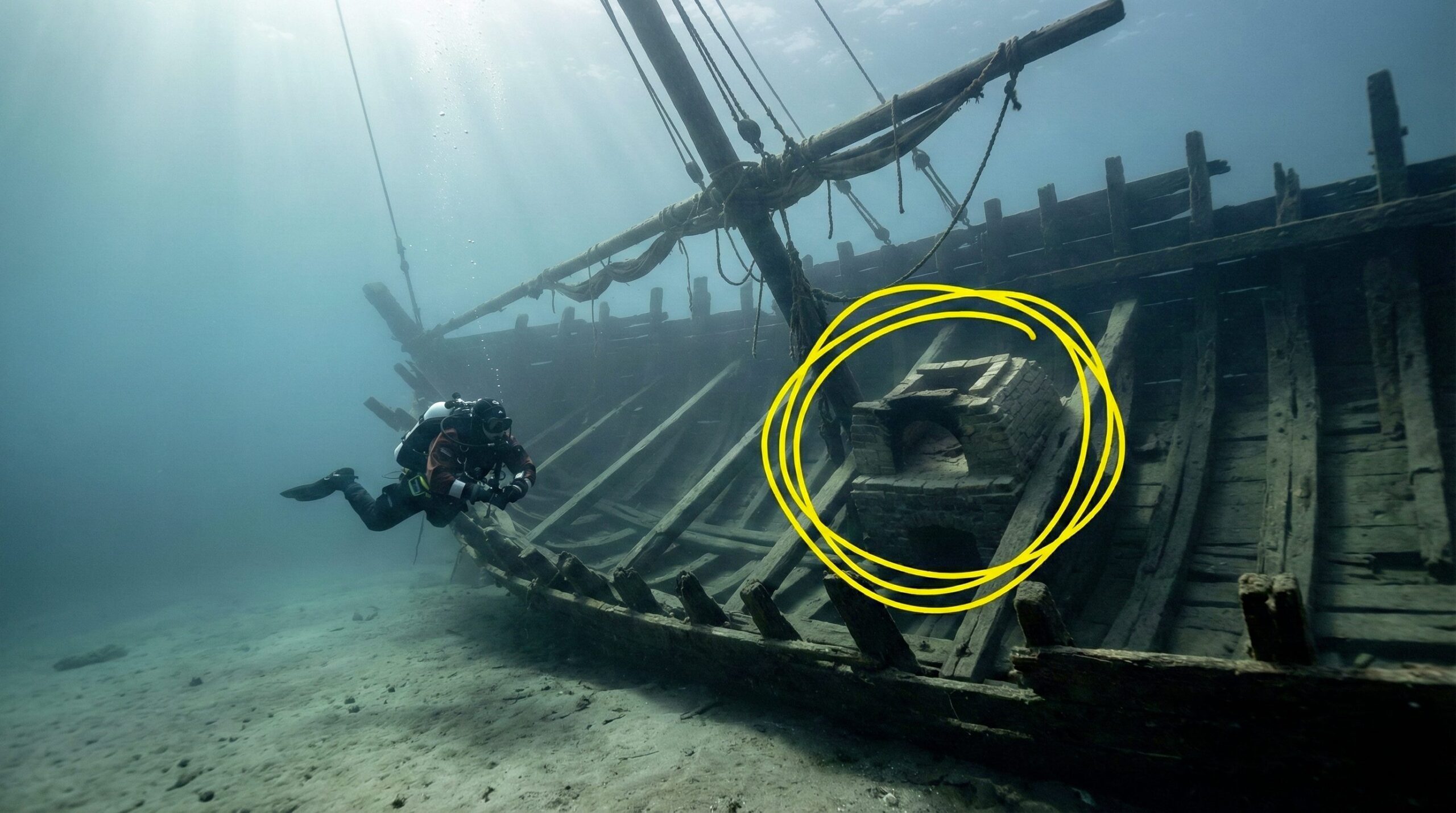
It was found off the coast of Denmark the largest medieval wreck ever found in history, located in the waters of the Strait of Øresundwhich separates Denmark from Sweden. The wreck, named Svaelget 2lies 13 meters deep and dates back to 15th century: measures 28 meters long, 9 meters wide and 6 meters high.
The ship was a “nock” (cog in English, kogge in Dutch) a typology of flat-bottomed cargo vesselwidespread in the late Middle Ages Baltic Sea and in North Sea. Today it is the largest nock ever foundwith an estimated load capacity of 300 tons. The ship’s timbers are found in one exceptional state of conservationhaving been preserved under the sand of the seabed for six hundred years: archaeologists have even found parts of the riggingor nautical cordage, a more unique than rare case in the context of underwater archaeology.
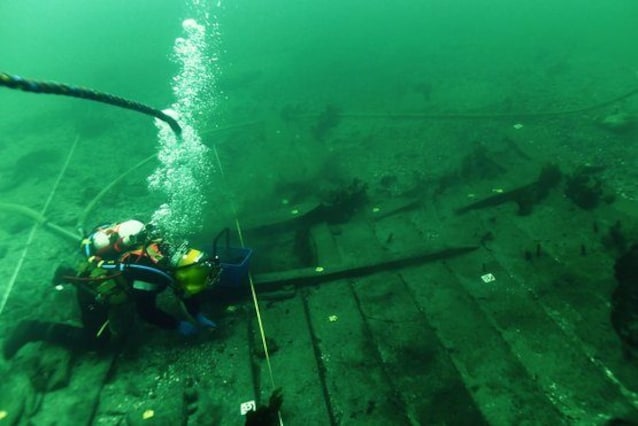
To trace the period of construction of the ship, very particular analyzes were carried out, called “dendrochronological“. The dendrochronological analysis, which is performed on ancient woodsallows through the comparison of growth rings to estimate with a good degree of approximation When the tree from which the wooden elements were obtained has been cut down. The trees with which Svælget 2 was built were cut down around the 1410 d. C. and come from two different areas of Europe: theHollandfrom which the material for the load-bearing structures of the ship came, such as the keel and the frames, and the Pomeranian (historical region corresponding today to the north-east of Germany and the north-west of Poland), from which the wood to make the planking came.
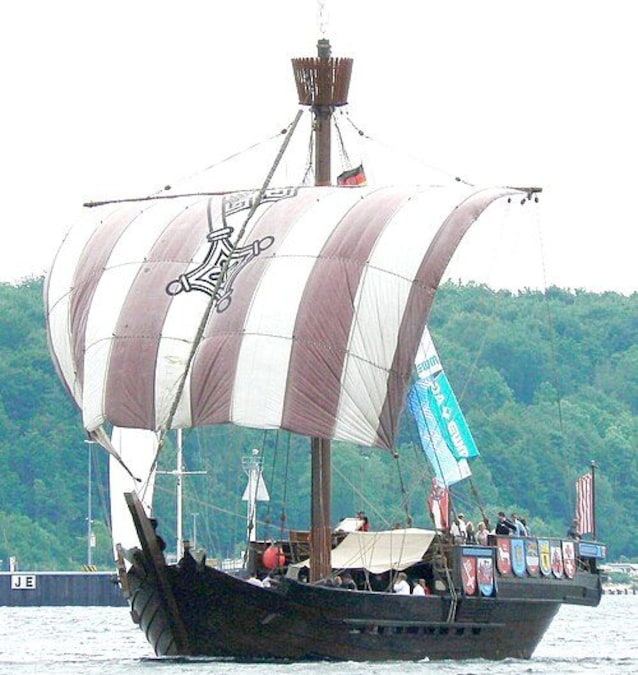
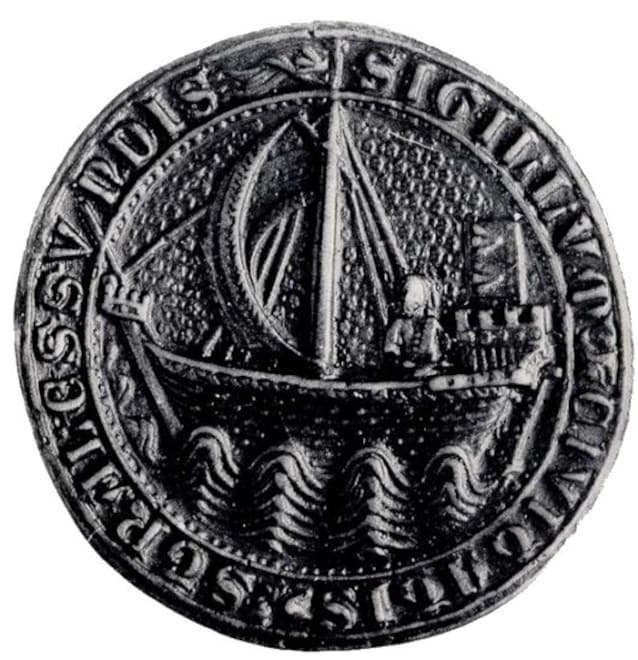
The Svælget 2 find has a exceptional importance in naval archaeological research. It is in fact the first archaeological evidence of construction solutions that until now were only known from period illustrations, such as the presence of bow and stern “castles”, or rather raised structures useful for making the nocks effective also formilitary use. Furthermore, archaeologists have found several objects related to daily life of sailorssuch as meal remains, crockery, combs and rosaries. Particularly exceptional was the discovery of a real one oven made in brickswhich would have allowed the crew to cook over an open flame while minimizing the risk of fire.
Although many objects related to life on board were found, strangely, there is no trace of the cargo. This is no small problem, because the corks were the commercial ships par excellence of the Hanseatic Leaguea commercial union that made the fortune of many cities in late medieval northern Europe. Danish archaeologists tried to explain the absence of cargo in the wreck by postulating that it may have been composed of goods left afloat after the shipwrecksuch as cloth (one of the most trafficked goods within the Hanseatic League) or uninsured wooden barrels. In any case, it is an exceptional discovery, destined to update our knowledge of medieval navigation.
