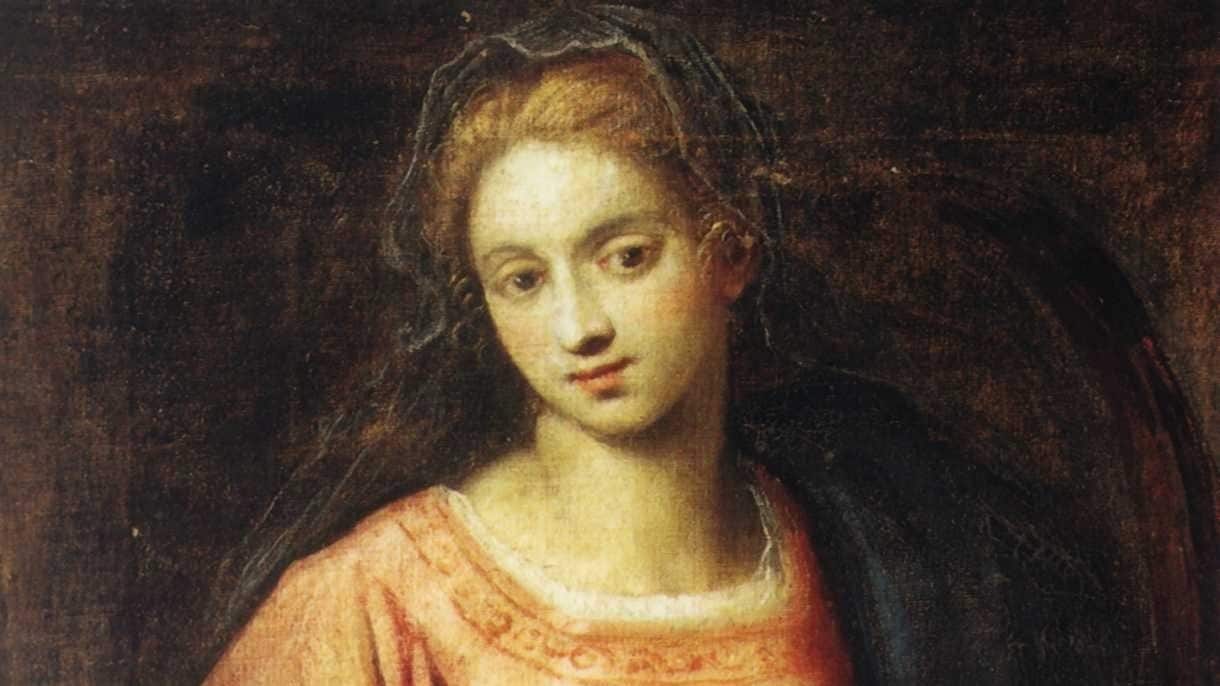
Saint Luciaa Christian martyr, is remembered today as the protector of sight and the blind. It is celebrated on December 13tha day which in the ancient Julian calendar coincided with winter solsticeor the day after which the hours of light increase and the hours of darkness decrease, a sign that we are moving towards spring. Precisely for this reason the cult of the Saint – also because of the name Lucia which means precisely “light” – merges with the traditions pagans who celebrate the victory of light over darkness.
Much loved in northern Italyit is said that Saint Lucia healed children from an eye disease and brought supplies during a famine: precisely for this reason, even today, in many provinces of Lombardy, Emilia Romagna, Veneto and Trentino, she is tradition that Saint Lucia brings gifts to children on the night between 12 and 13 December.
The true story of Saint Lucia, martyr and protector of sight
According to tradition Lucia she was born in Sicily, in Syracuse – the city of which she is the patron saint and where the cult is still deeply felt today – around 280 AD into a noble family. She was fatherless, and her mother was seriously ill: Lucia, betrothed to a noble patrician of pagan cult, in the midst of the persecutions of the emperor Diocletian went on a pilgrimage to the tomb of Saint Agatha, to ask for her mother’s recovery. Here the Saint appeared to her, asking her to consecrate her life to the Christian faith. Lucia’s mother recovered and the girl began to profess Christianity to the point of canceling the wedding. The betrothed became furious and denounced her: she was captured and tried as a traitor and unbeliever, but Lucia did not deny her faith in God. She was tortured, but did not give in, and was then burned at the stake: legend has it that not even the flames were able to kill her and, precisely for this reason, after being accused of being a witch, Lucia was beheaded.
It thus became to all intents and purposes one Christian martyr: he died in 304 AD on December 13th, the day on which he is still celebrated today. His remains are today kept in the Sanctuary of Santa Lucia in Venice, where they were brought by the Venetian Doge at the beginning of the 1200s after the Crusades.
The legend, also present in numerous iconographies, according to which Saint Lucia tore out – or had her eyes torn out – has no accredited sources: it is probably a tradition due to the name Lucia itself, which derives from the Latin Luxthat is to say “lightThe reference to light has created an association with sight, making Saint Lucia the protector of eyesfrom the view and even gods blind.
Where Saint Lucia’s night is celebrated and why presents are brought before Christmas
The cult of Saint Lucia linked to the Christmas period follows the martyrdom of the Saint: the December 13thin ancient times, in the Julian calendar, coincided with winter solsticewhich in the Gregorian calendar has been moved to December 21st. December 13th was therefore the darkest day of the year, hence the saying: “Santa Lucia, the shortest day there is”. When the cult of Saint Lucia began to spread, the two holidays overlapped, given the link between the Saint’s evocative name.
This is also where the traditionwidespread especially in northern Italy, which sees Saint Lucia as the figure who brings light and gifts during the Christmas season, during the night between 12 and 13 December. This belief seems to have originated in the 13th century, when in Verona area an epidemic spread which affected children’s eyes: the community invoked the Saint, protectress of sight and, once a grace had been received, the custom of going on pilgrimage and paying homage to Saint Lucia who, in turn, brought gifts and sweets remained.
In the Brescia area instead, it is said that, during a winter famine, Saint Lucia left sacks full of wheat on the doors of houses: today the legend has evolved by identifying the Saint as the one who, like Baby Jesus and Santa Claus, brings salvation and gifts.
So where is Saint Lucia celebrated today? Mainly in Sweden and Italy, with particularly heartfelt celebrations in Syracuse (Sicily) and in some provinces of Northern Italy such as Bergamo, Brescia, Cremona and Verona.
Saint Lucia celebrated in Northern Europe: the winter festival of Light
From Sicily to northern Italy, and then towards northern Europe: the cult of Saint Lucia it spreads, over the centuries, in areas where the winter days are longer and darker.
Today, the Saint is also celebrated in Denmark, Finland, Poland and Russiabut the cult is widespread especially in Sweden where, every December 13th, the girls parade dressed in white and one of them wears a crown of lit candles on her head to symbolize the Saint.
In the Scandinavian countries, the Christian tradition of Saint Lucia merges with the pagan cult of Germanic origin Festival of Lightsalso called Yule. The pagan festival took place in the period between the winter solstice and the first days of January in which the hours of light begin to increase again.
