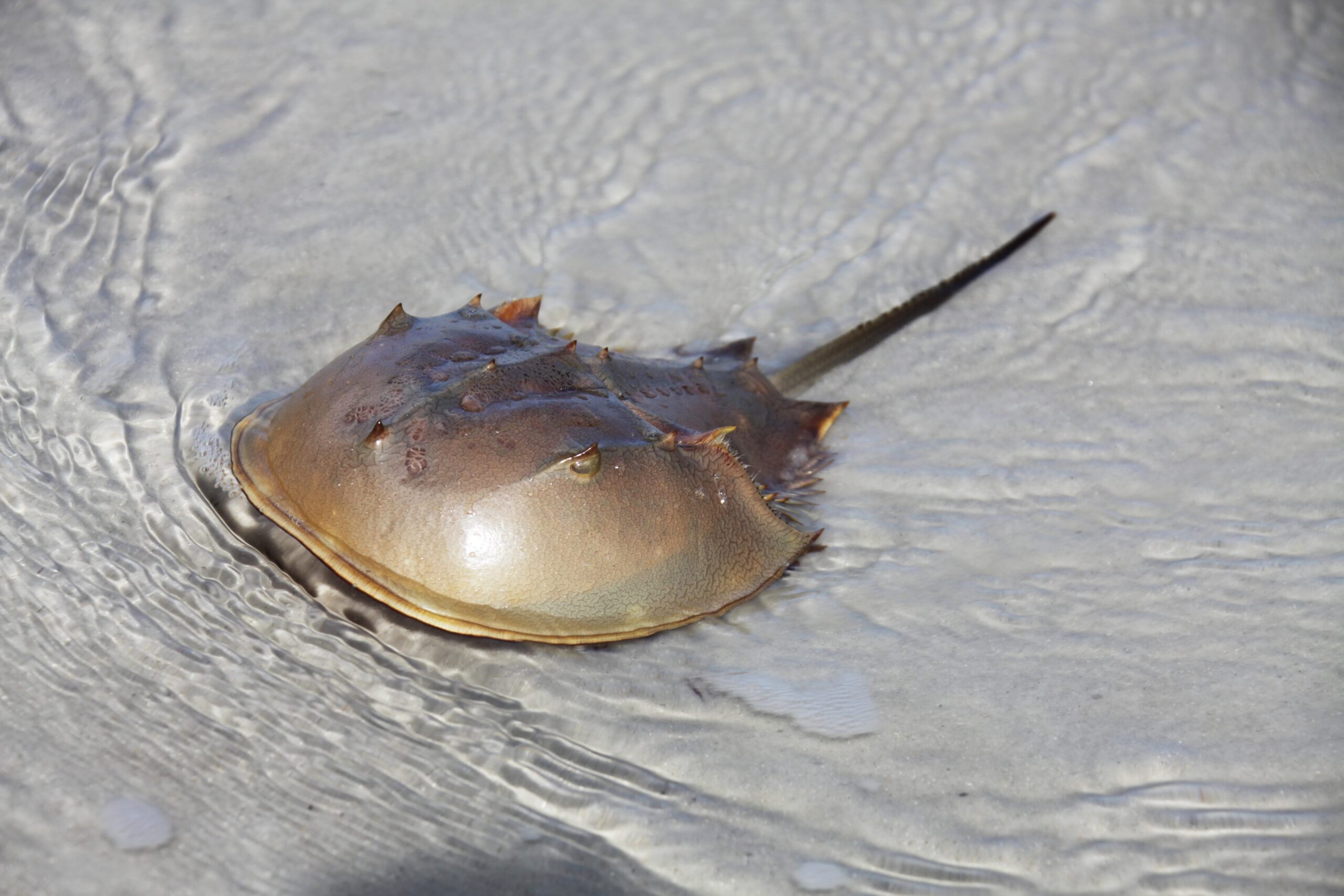
Cross millions of yearssurviving a mass extinctions without great evolutionary variations, it is certainly a great success for an animal species: even for this reason, the Limululus (called in English Horseshoe Crabhorse iron crab) arouses great interest in the scientific field. To intrigue the general public, however, it is his particular “jurssical” aspectso different from that of more widespread marine species such as crabs or other crustaceans, of which relatives are however distant as they belong to the same phylum of arthropods, a taxonomic category that includes land forms of life such as spidersbut also aquatic as precisely crabs and lobsters. From his “Nobile” Blue Blood A protein is extracted, called “Coagulogen”, able to form a gel when she meets bacteria. For this it is used in anti-batteric tests To detect its presence in intravenous medicinal solutions, such as vaccines, and thus guarantee sterility e safety.
The limululus in the geological eras
Although they are often combined with the crabs, as the English name demonstrates, they are actually part of a different and older group, with Ancestors appeared already 480 million years ago and that already 200 million years ago, in the period Jurassichad reached the structure and size of the “modern” specimens. Since then, they have survived the glaciations, the insurance of the dinosaurs and the spread of mammals, remaining practically unchanged.
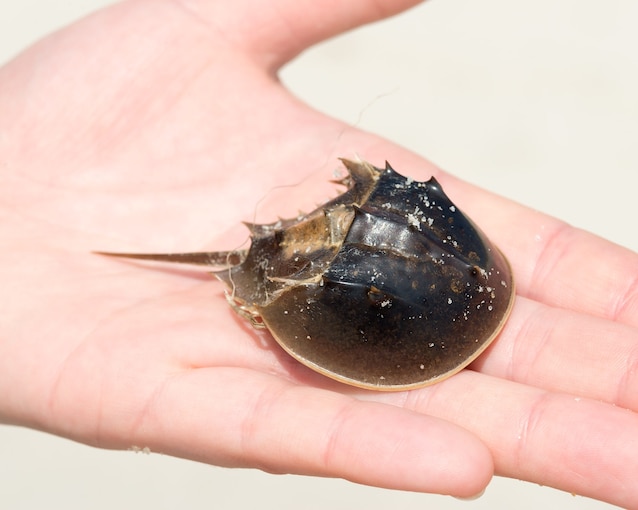
Today we know 4 living species: the most famous is Limulus Polyphemus, widespread on the North American coasts, while the remaining 3 species (Tachypleus Tridentus, Tachypleus Gigas and carcinoscorpius RotunDicauda) are widespread in Coste of Asia, from Japan to India.
How it is done and where it lives
The limululus body is divided into three parts: the cephalotorace, with the characteristic horseshoea smaller abdomen and a rigid tail, used above all for the movement on the ground and to direct in swimming. They also have Two pairs of eyes On the upper part of the Cefalotorace, of which a couple also sensitive to UV rays, and 6 pairs of legs on the lower one.
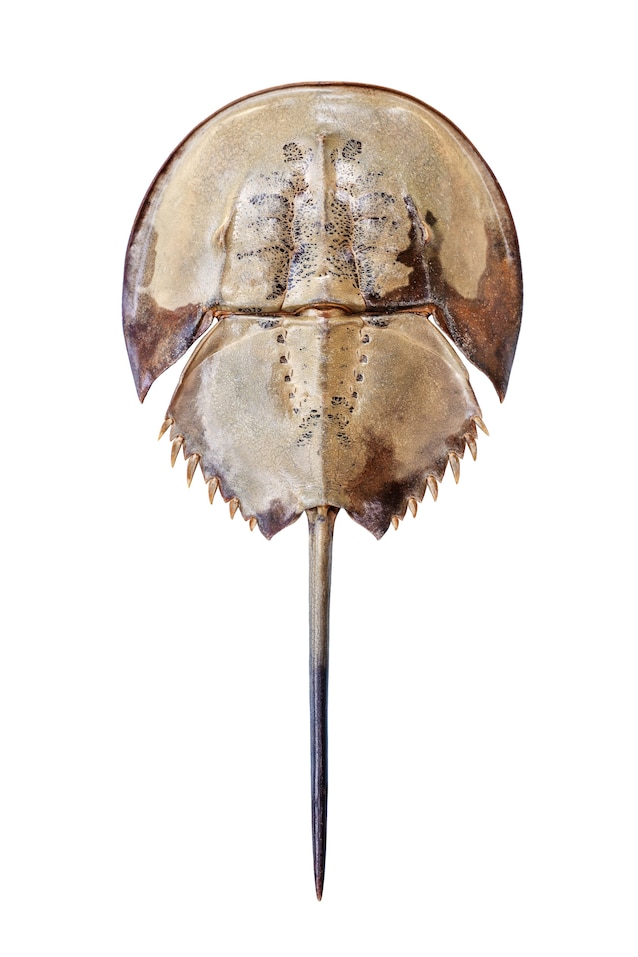
These animals can reach a size of 60 cm, even if they generally stand out on 30-40 cm with larger female specimens. They typically live on seabed at depth between 30 and 200 meters, but they move to the coasts to lay the eggsand the larval and young specimens tend to live in low coasts.
How the blue blood blood is used: medical applications
Limulo blood is certainly one of its most surprising characteristics. The blue/blue color It is due to a protein called Emocianinanecessary for the transport of oxygen just like the hemoglobin present in the blood of animals and man, but differs from this because copper -based (and not on iron).
In contact with oxygen, The copper oxidizesgiving the protein the characteristic color: a property common to other crustaceans, even if the structures of the proteins differ between the species.

However, the importance of limululus lies in a second component of his blood: the protein Coagulogenable to provide one primitive but effective defense against bacterial infections. The protein is in fact able to attach bacteria Gram negative (a “family” that can have resistance to antibiotics) recognizing its cellular structure and in particular the so -called “endotoxin”part of the membrane of the bacterium responsible for the toxic effects.
Also at very low concentrations of bacterial endotoxins, the Coagulogen protein triggers one coagulation reaction which leads to geling of the blood of the limululus. The reaction was discovered in 1953 by the researcher Frederick Bang, who only ten years later with his colleague Jack Levi developed A bacterial test based precisely on Coagulogen, called Lal test (Limulus Amebocyte Lysate).
The test is still used today To check the sterility of intravenous solutionsvaccines, such as the one against Covid-19, and other drugs, and is characterized by very high sensitivity (a part for trillion, that is, it manages to detect 0.000001 milligrams of endotoxins per liter) and Short response times (about 45 minutes). If bacteria are present in the solution, the addition of the LAL quickly leads to the formation of the gel, highlighting the non -sterility of the preparation.
For this reason, it quickly supplanted other methods, which needed living and anticipated guinea pigs of several hours.
A species in danger of extinction
Limuli survive in samples of across 400 grams of blood and they can then be issued in naturebut the entire procedure (from capture to release) can still be lethal For an important percentage of animals: different sources indicate mortality Between 10 and 30%.
His reproductive habits also make it one easy prey For birds and terrestrial animals such as foxes and procones, and for fishing by humans, who often use it as bait for other marine species (North America) or as dish (South-East Asia). I am especially these problems, more than medical use, to have caused a decline of the species already found since 1850.
The American species is now classified as “vulnerable” and the Japanese one “at risk”therefore with greater possibility of extinction; of the other species spread in Southeast Asia you have, instead, minors newseven if the degradation of natural habitats has also been highlighted due also to intensive pollution and fishing, and in some areas the limuli are already considered “locally extinct”.
