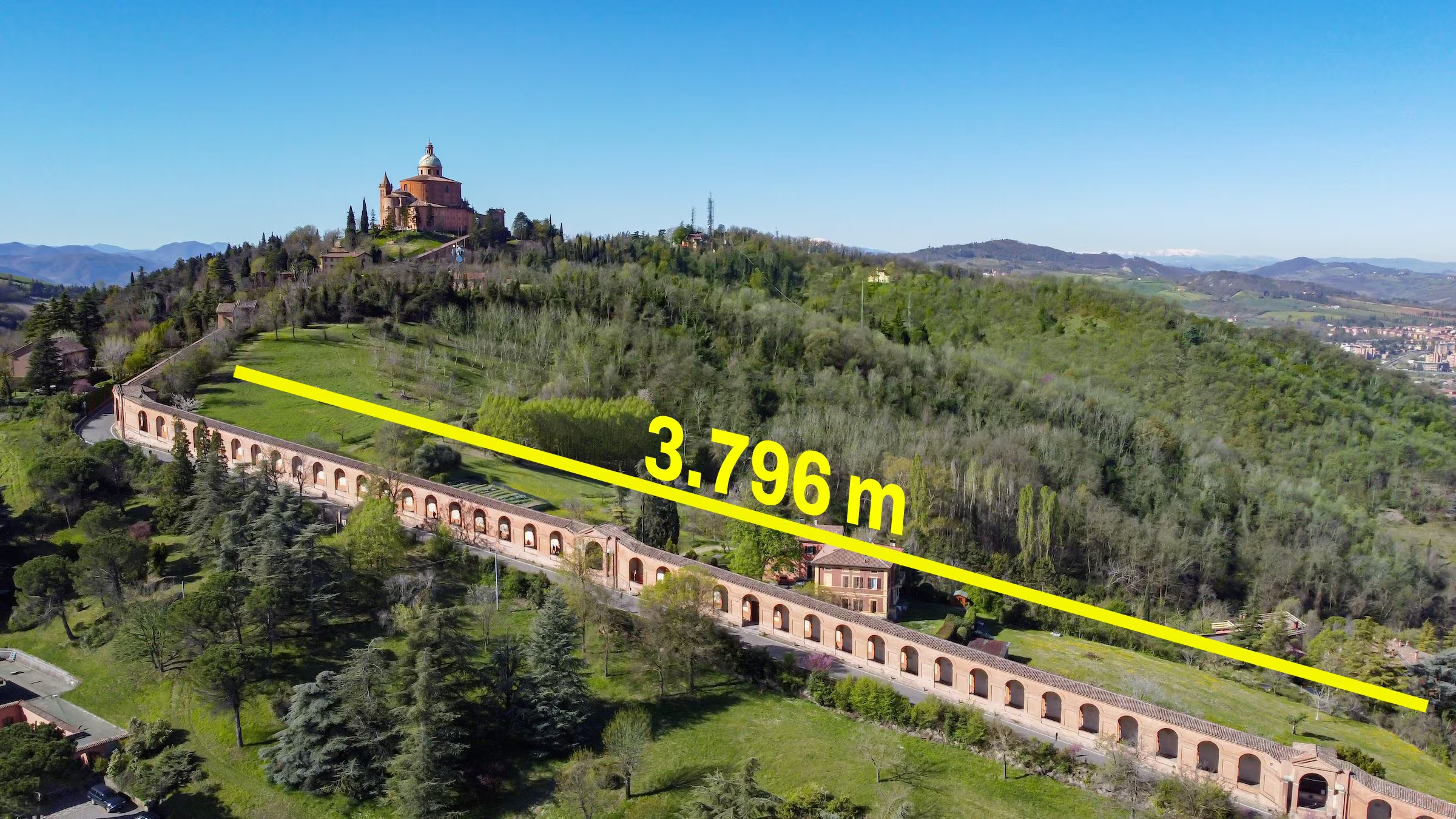
The Portico of San Luca, in Bologna, it is the longest portico in Italy and the whole world: with almost 4 km in length, for a total of 666 archesthis extraordinary covered tunnel connects the city center to Sanctuary of the Madonna di San Luca, which is located on the top of Colle della Guardia.
Officially finished in 1721the portico was designed and built to welcome thousands of pilgrims heading towards the Sanctuary itself: even today it represents a triumph of civil engineering and religious devotion. Since 2021, the Portico di San Luca has been recognized as World Heritage Site by UNESCO.
Engineering, architecture and religion
From an engineering point of view, the Portico of San Luca represents an optimal solution in order to manage a altitude difference important over a length of almost 4 kilometers. The structure is articulated through a rhythmic sequence of 666 archesa technical and symbolic choice that allows us to overcome the slope of the hill ensuring a walk protected from atmospheric agents.
During its construction, the main challenge was the continuity: the architects of the time had to design foundations able to adapt to a hilly terrain unstable and irregularusing a system of round arches which distribute the load evenly. The harmony between the geometric rigor of the portico and the natural shape of the land is an expression of skill conception of architectural elementsrestoring an exceptional integration between the work of man in the geological context without distorting it.
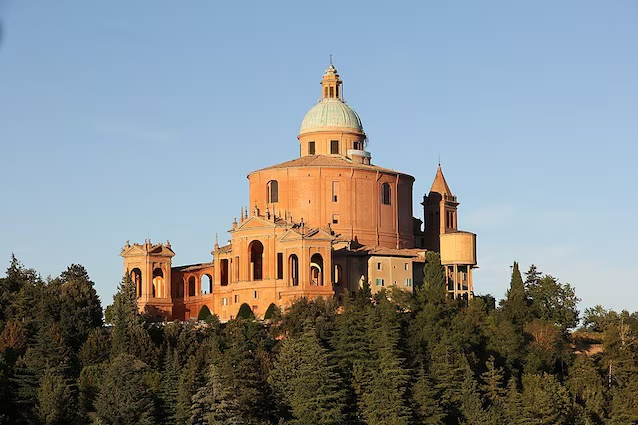
The history of the portico of San Luca
There construction of the portico has a centuries-old history that begins in 1674: the project was conceived and implemented with the aim of providing a shelter for pilgrims who went in procession to the Sanctuary to venerate the Byzantine image of Madonna of San Luca.
The financing of the work was a rare case of popular and noble participation: entire corporations, wealthy families and common citizens contributed to the costs, so much so that each arch was numbered and sponsored. The work, completed in 1721 under the guidance of architects such as Gian Giacomo Monti, transformed the path to the Sanctuary into a monumental road axis that forever defined the urban face of Bologna.
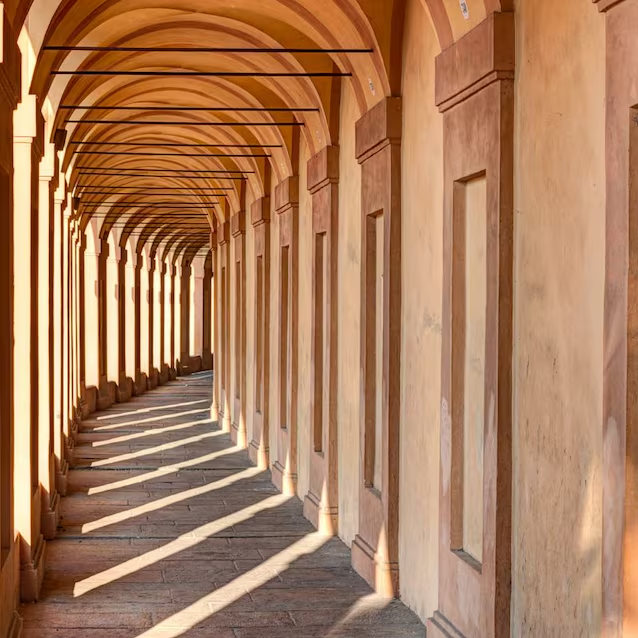
Some curiosities: the arches and their function as the lungs of the city
The number of arcs, 666is often associated with a religious symbolism that would have the portico as a representative symbol of snake defeated by the Madonnawhose head would ideally be found near the Sanctuary.
Another curious aspect concerns his function as the “lung” of the city: for centuries it has been the way of main communication which linked urban life to spiritual retreat, making the journey a rite of passage. Furthermore, the precision with which the intermediate ramps were built still allows for one today smooth ridea detail that makes this site not only a place of worship, but a pioneering example of “movement architecture” applied to public space.
