How many times, during the winter, did we complain about the bitter cold as soon as the thermometer touched 0°C? Yet, in Antarcticatemperatures well below zero are everyday life: but have you ever wondered what the lowest temperature ever recorded on Earth?
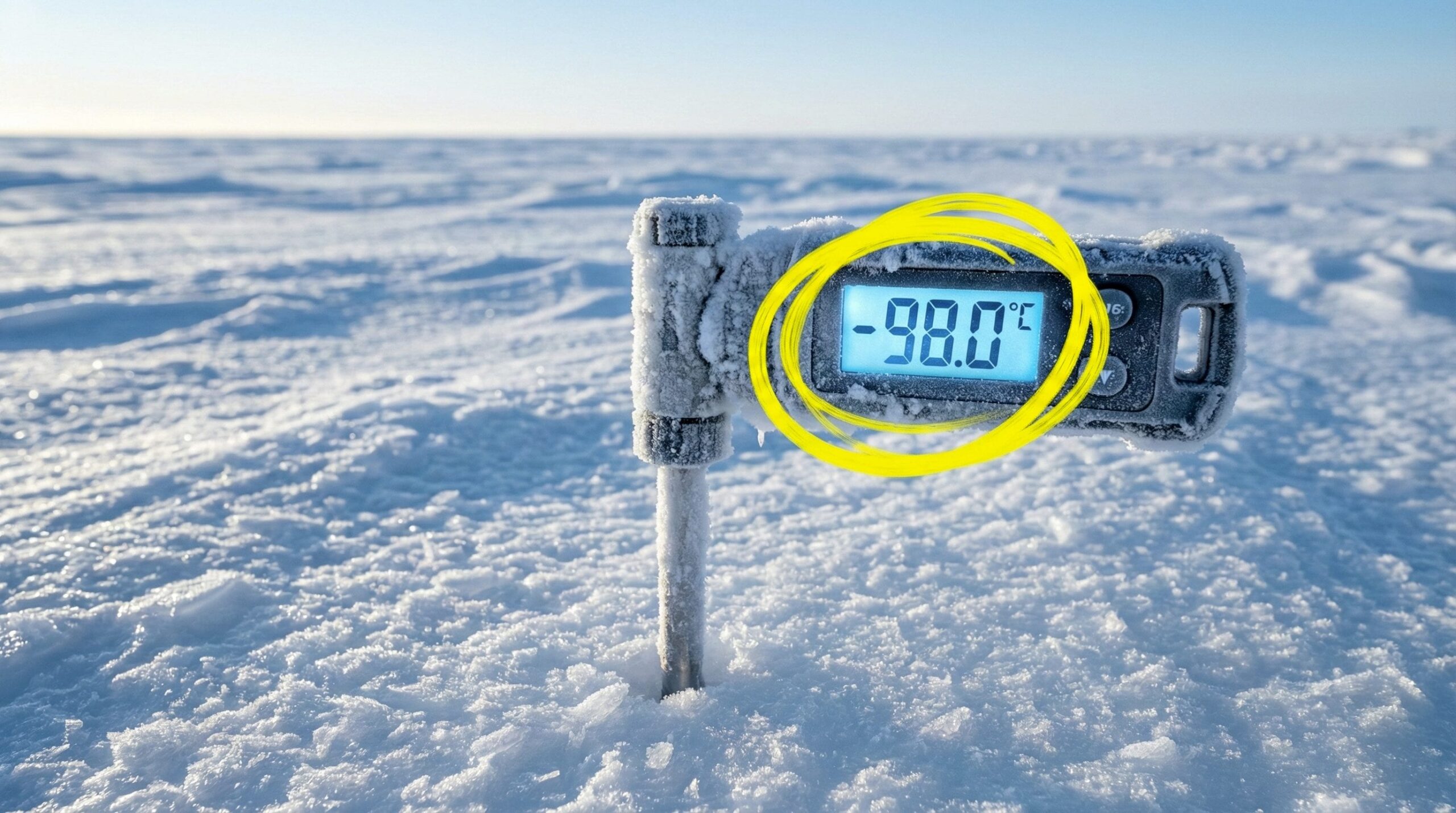
Until a few years ago, the record was –89.2 °Creached on 23 July 1983 at the Russian base in Vostokright in Antarctica. But a study published in 2018 in the journal Geophysical Research Letters has updated this record: researchers have in fact demonstrated that between 2004 and 2016 the surface temperatures detected by satellites reached –98° Cmeasured at approximately 100 sites on the Antarctic continent, with a minimum of –98.6 °C on July 23, 2004.
More specifically, as reported in the study, the region of East Antarctica that lies above the base of Vostok extends for approximately 900 km (per 100 km wide) and regularly reaches surface temperatures of –90 °C (or lower), which occur in shallow depressions near the highest part of the ice capto aaltitude between 3,800 and 4,050 metres.
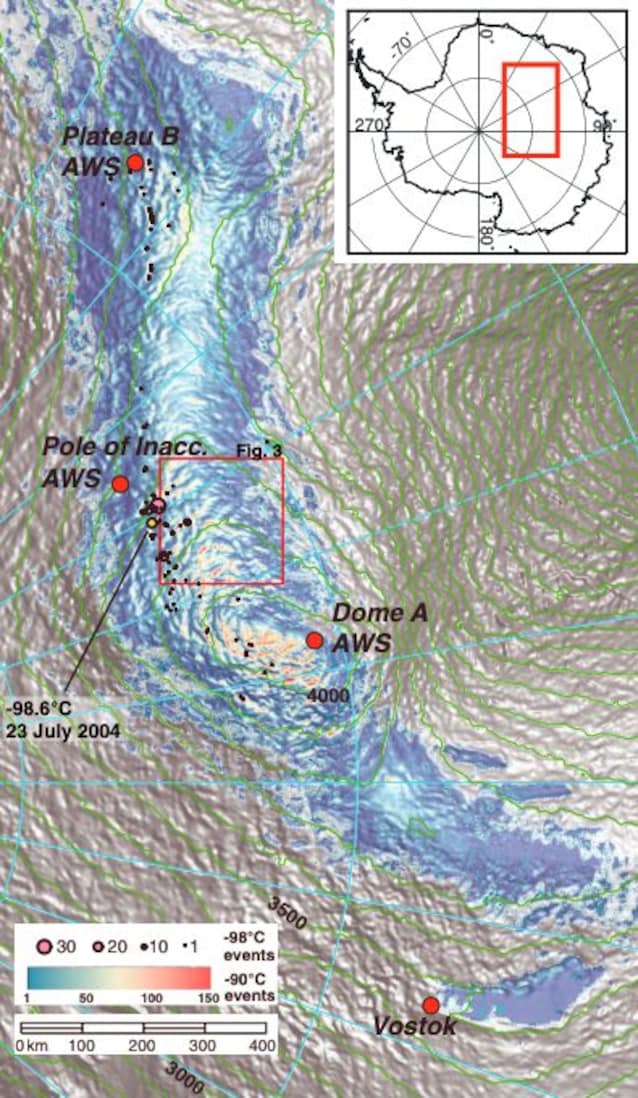
In general, extreme cold conditions (below –90°C) occur more frequently when the Antarctic polar vortex is strong. As you can imagine, these are uninhabited areas: the coldest city in the world instead Yakutskin Siberia (Russia), where temperatures reach –60 °C during the winter season.
But how was it possible to reach such an extreme temperature? It is the result of a series of atmospheric and topographic dynamicsfirst of all thealtitude which, as we mentioned, is around 3,800 meters above sea level. The study then highlights how the absolute coldest points are found within topographic depressions, i.e small basins or depressions very large (up to 200 km²) but shallow (only about 2 metres). Cold air then collects in these depressions and thus allows the surface snow to cool further. The researchers finally confirmed that cooling surface temperatures to –98°C requires light winds, clear skies and very low atmospheric water vapor to persist for several days.
