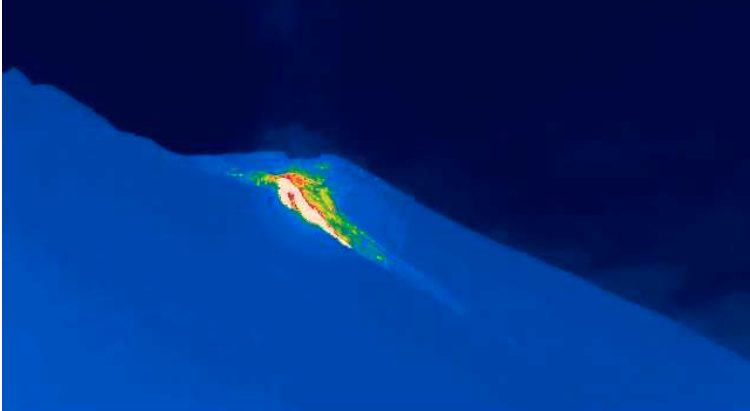
The Stromboli continue recordingmore intense volcanic activity than usual: as confirmed by the latest bulletin of the INGV Etna Observatory, the surveillance cameras observed a modest effusive activity from overflow from the North crater area, which produced a lava flow in the upper part of the Sciara del Fuoco, clearly visible in the video below.
In particular, lava overflow occurs when the magma, accumulated inside a crater, exceeds the edge of the latter and overflows, pouring along the sides of the volcano. From a seismic point of view, however, the average amplitude of the volcanic tremor currently stands within the range of average values.
In the last week, INGV had already recorded several more intense than normal episodes of volcanic activity. In its statement of February 28, the Etna Observatory confirmed the end of the effusive activity from lava overflow started on 02/27/2026 around 4.07 pm: just 24 hours later, however, the Institute again detected more modest volcanic activity than usual.
At the moment, however, the Civil Protection has kept thealert at a yellow level (second on a 4 color scale that includes green, yellow, orange and red).
As highlighted by experts, episodes of this intensity occur periodically: Stromboli, in fact, it is one of the most active volcanoes in the worldcharacterized by persistent activity – not surprisingly defined as “Strombolian” activity – which consists of small explosions at short intervals (from a few minutes to a couple of hours), with launches of fragments of incandescent lava up to a few tens or hundreds of meters above the crater. The last significant eruption dates back to July 2024, when a 2 km high ash cloud triggered a red alert.
There history of the Aeolian volcano, however, is a lot more complex than it might seem: the oldest visible activity, represented by Strombolicchio, dates back to 200,000 years ago, while the shape of what is defined as the “Current Stromboli” it is the result of the last eruptive cycle, which occurred approximately 5,000 years agowhich gave rise to the Sciara del Fuoco, together with the three summit craters.
