
The opening of the Grand Egyptian Museum in Giza has reignited calls for return of the famous Rosetta Stone, one of the main finds stolen in the colonial era, now preserved in the British Museum in London. The stele, discovered by the French during the Napoleonic Wars and given to the English in the 19th century, is probably the most famous archaeological artefact ever taken from an invaded country, thanks to its fundamental role in deciphering hieroglyphics. Yet, this is but one of many precious, sacred and culturally relevant objects stolen over the centuries especially by European powers in Asia, Africa (probably the most plundered continent of all), Oceania and the Americas, and even in Europe itself: a famous example of intra-European thefts are the Parthenon marblesalways brought to the United Kingdom during the domination of Greece, but Italy itself has also seen many works of art stolen and redistributed in museums around the world.
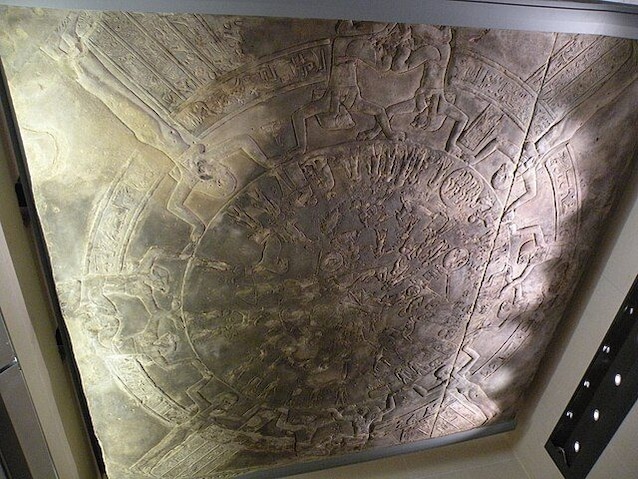
The former Egyptian minister of tourism and antiquities, Zaha Hawass, said in recent days that the time has come for Western European museums to “make amends” by asking for the return of three priceless pieces in particular: the Rosetta Stone in the British Museumit Louvre Zodiac and the Bust of Nefertiti from Berlinall stolen during the colonial period.
There need for the return of artefacts stolen in the colonial era has been one of the central topics in the global cultural field for years: another very famous case is that of bronzes from Beninstolen in Africa and “distributed” in various European museums, including the British itself. To give an idea of the scale of the phenomenon, the British Museum alone has something like 70,000 artefacts looted from the African continent.
But why is it that in cases where it is certain that the artefacts have been stolen there is no obligation to return them? There are different justifications that different countries give as reasons: for example, the British Museum is bound by the British Museum Act 1963which imposes strict limitations on the return of items. This same act has often been cited in discussions of the Parthenon Marbles, taken from the Acropolis in the early 19th century.

Other countries instead choose to stall, periodically postponing discussions on restitution or contesting some thefts as “not clearly demonstrable”. More often, long-term loans are arranged (such as for example the forty artefacts loaned in 2024 to the government of Uganda by the University of Cambridge) in the hope on the one hand that the artefacts will then remain at home, and on the other to formalize their possession through the loan. For this second reason, the Parthenon categorically rejects what it defines as “loans of its assets”.
In other cases, the stolen precious objects cannot be returned because they have been incorporated or transformed into other artefacts at a later time: this is the case of the precious materials set in the royal jewels of half of Europe. For example, in the jewels stolen from the Louvre there were sapphires from Ceylon (Sri Lanka), diamonds from India and Brazil, pearls from the Persian Gulf and the Indian Ocean, and emeralds from Colombia.
However, not all European countries refuse to meet the requests of theft victims: in 2021 the Netherlands government agreed to develop “guidelines” on restitution of objects from the colonial eraand over the years there have been small but significant examples in this direction. However, the slowness and partiality of these interventions remains at the center of the debate, even becoming a video game (called Relootedi.e. “re-looted”) which allows its players to carry out missions that consist of breaking into museums around the world and recover stolen objects in Africa and then bring them back.
