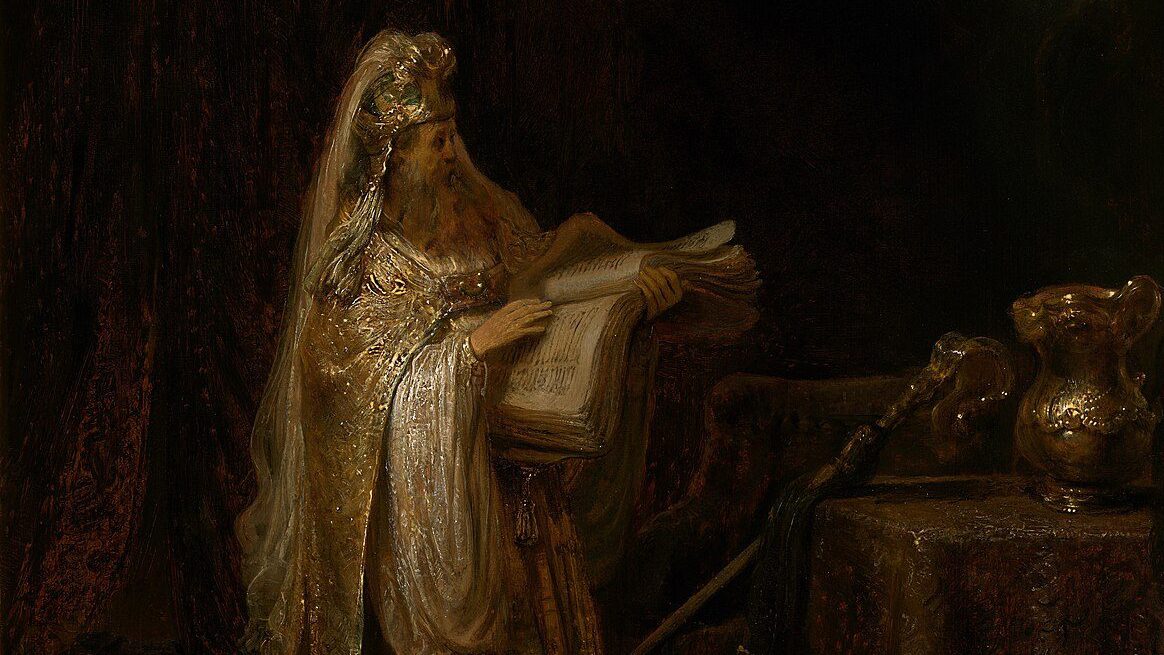
A new painting officially enters the production of one of the most important painters in the history of art. We are talking about the great Dutch artist Rembrandt Harmenszoon van Rijn, more commonly known as Rembrandt: researchers from the great art museum of Amsterdam, the Rijksmuseum, they discovered after new analyzes that the Vision of Zechariah in the Temple (1633) is truly a youthful work of the painter, after the authenticity of the painting had been excluded since 1960.
There Vision of Zechariah in Rembrandt’s Temple
The painting, now on display at the museum, depicts a biblical scene: we see the high priest Zechariah in the temple with an incredulous expression. The presence of the archangel Gabriel is just suggested in front of him, who announces that he and his wife, despite their advanced age, will have a son: John the Baptist.
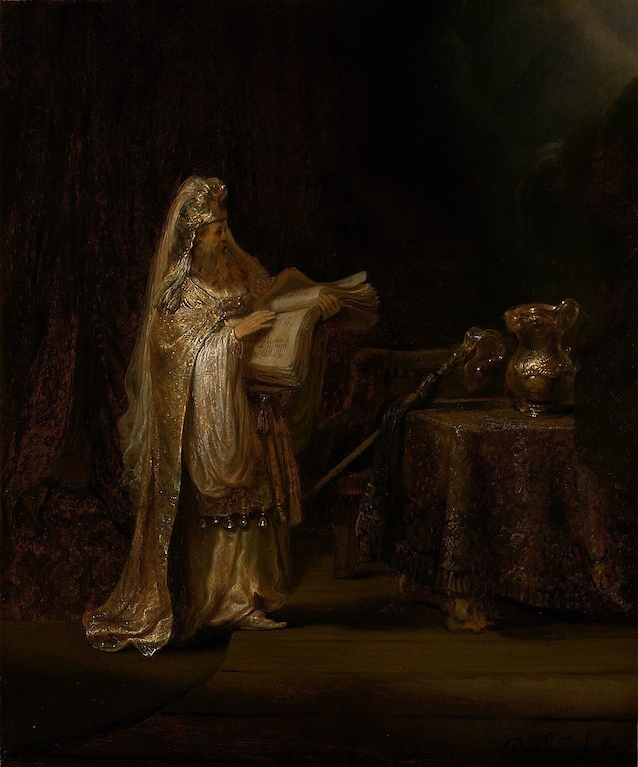
The work had been potentially attributable to Rembrandt already in the nineteenth century, which is why it was exhibited in the great Rembrandt exhibition at the Stedelijk Museum in Amsterdam in 1898. In 1960, however, the hypothesis of authenticity had been excluded.
The following year a private collector he bought the painting, which thus disappeared from circulation. The current owner, however, contacted the Rijksmuseum, allowing a new analysis of the painting.
The rediscovery of a work by Rembrandt
The large painting by the Dutch painter, engraver and designer of the Golden Age was then subjected to latest research techniquesalso used for the restoration of the famous painting The Night Watch.
But what emerged from this new investigation, which lasted two years? The analysis showed that all the pigments used are also present in other Rembrandt paintings from the same period. Also the drafting of the pictorial layers and the execution technique are consistent with his early works.
To analyze the pigments were used advanced X-ray techniques (MA-XRF), with which the presence of the same materials used by Rembrandt in his other works was ascertained, such as lead white, ocher, bone black and lead-tin yellow. They were also examined signature and date: the inscription “Rembrandt f. 1633” has the same letterform and pictorial technique as other recognized works from this period, and the microscopic and infrared searches they show that the signature was applied to wet paint and partially integrated into the background, demonstrating its originality.
The support of the work was also the subject of study: the painting was executed on two oak panels from trees grown in south-eastern Lithuaniaa fairly common source of wood in the 17th century. The dimensions and construction also correspond to the panels frequently used by Rembrandt, while dating based on tree rings (called dendrochronology) confirms the plausibility of the engraved date, that “1633”.
From the authorial point of view, then, the changes made during the painting process. For example, the censer (also called censer, i.e. the vessel where incense is burned) placed on the altar was originally larger. As they recall from the Rijksmuseum, this type of modification belongs to an artist who perfects his own work, and not to a copyist, who would have simply reproduced the model without altering it.
An analysis was also made of expressions of the subjects and of theuse of light within the work: there is a strong resemblance to Jeremiah who laments the destruction of Jerusalem (1630). Also the application of colourincluding the small highlights in lead yellow and the loose brushwork on the fabrics, corresponds to Rembrandt’s youthful manner.
And the theme? It is one of the few historical paintings created by Rembrandt in this period. At the time, he mainly made portraits, which were very profitable. A final clue is revealed to us the specific choice of the moment representedthe one immediately preceding the revelation of Gabriele’s identity. A dramatic turning point, and a sudden reversal of situation and mood: the choice to represent this moment was a common device of its time — known as staetveranderinge — which Rembrandt often used in his early paintings. The result? More touching and engaging works.
