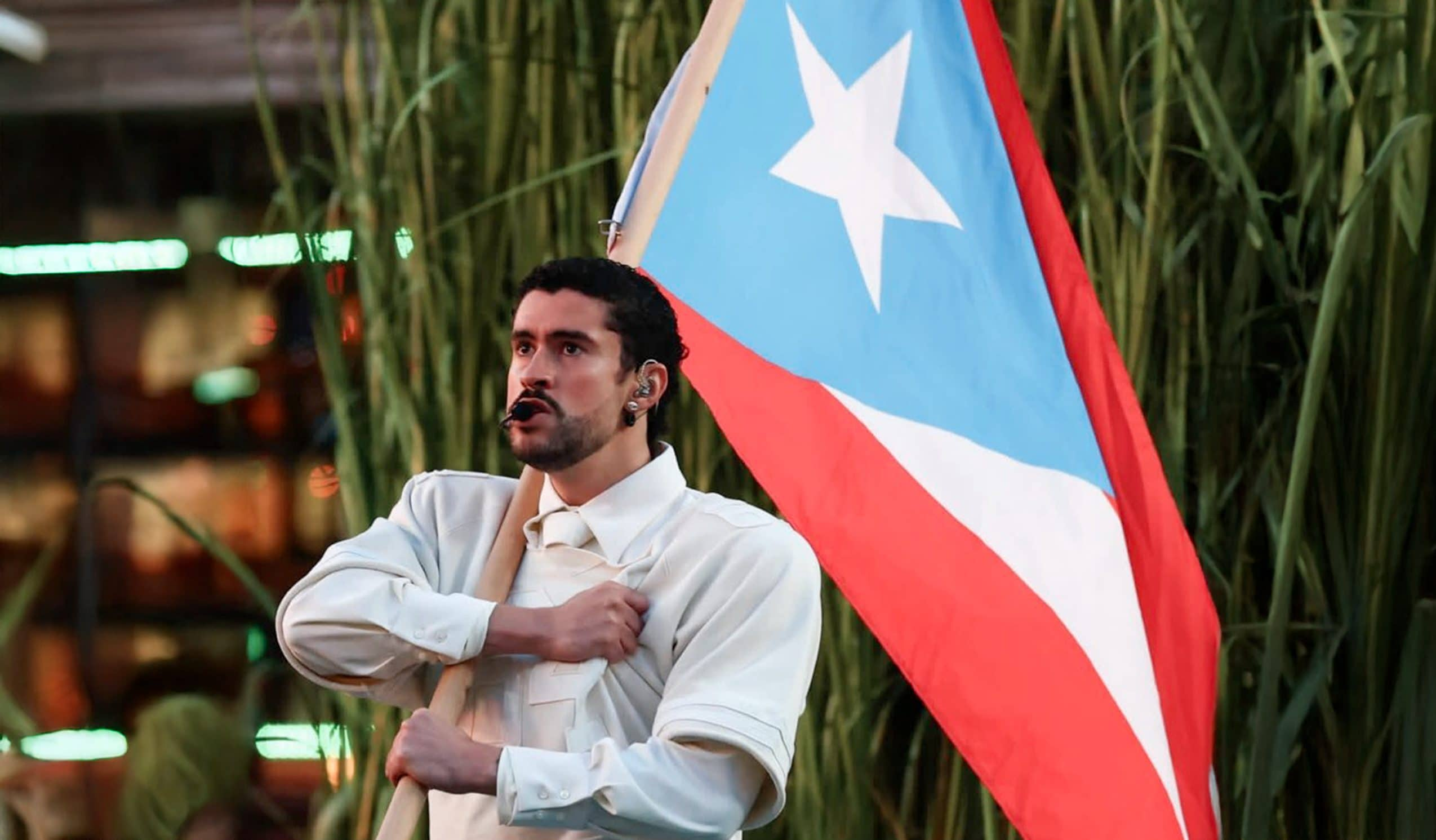
In the last few hours the whole world is discussing the performance of Bad Bunny al Super Bowl. The young Puerto Rican artist – as well as one of the most listened to singers in the world – gave life to an event that split the United States in two and placed emphasis on the identity of Puerto Rican people And South American in general. Among all the symbols included in the performance, however, there is one that in the eyes of many has gone unnoticed, that is, the flag held by the artist. That, in fact it is not the flag of Puerto Rico – or rather, it is not the one currently in use, but an older version associated with independence and anti-USA movements. But to better understand all the symbolism linked to this choice, it is good to take an overview of the history of this flag.
The history of the Puerto Rican flag under Spanish rule
Puerto Rico has a long colonial past: the Spanish settled here in 1493 and at the time – for the next four centuries – the crusader flag of Burgundy to represent Spanish military rule in the country.
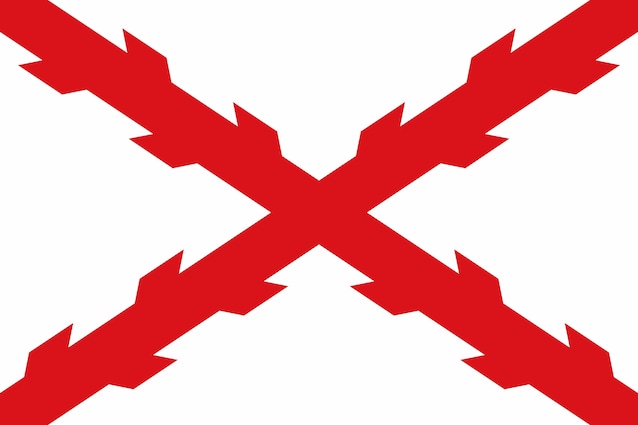
In the 1868 the independence movements began to make their voices heard, giving rise to revolts and proposing a new flag inspired by Dominican Republic. Spain, however, quelled the revolts and proposed one inspired by its own, but with the Puerto Rican coat of arms in the center. This, at least, until 1898, when the Treaty of Paris officially passed Puerto Rico in the hands of the United States.
The birth of the new flag and the differences between the versions
With the entry of the USA onto the scene, the country’s official flag, at first, was the stars and stripes one that we all know. But not all Puerto Ricans appreciated the choice.
The Puerto Rican flag that we know today was created in 1892 by some members of Cuban Revolutionary Party who took the Cuban one as inspiration, inverting the colors. Thus, in 1895, the three red stripes alternating with white stripes were born next to a white star in a blue triangle. This very blue was (and still is) at the center of the debate.
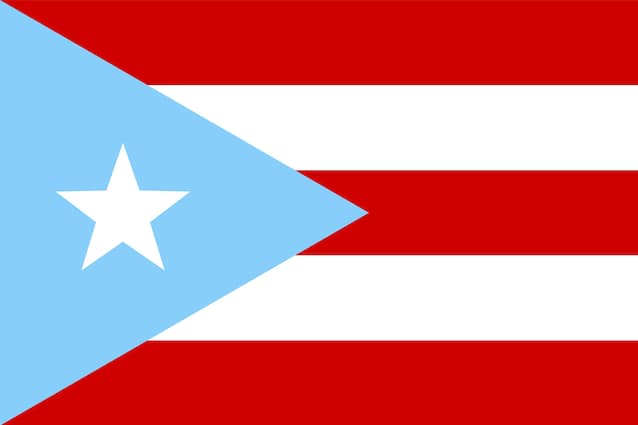
Consider that at the time the authorities effectively prohibited citizens from displaying these flags because they were associated with independence movements, to the point of even making them illegal.
In the 1948 though Luis Muñoz Marín he was elected the first governor of Puerto Rico and in 1952 he managed to get a new official flag approved – alongside that of the USA. This was actually identical to the independence one, but with a substantial difference: the blue initial had to be replaced with the Navy blue already present in the US one, so as to underline the power of the country in Puerto Rico.
In the end, already around the middle of the last century, a compromise was found and the official flag (still) uses an intermediate shade of blue between the two, as clearly visible in the image below.

The symbolism of the flag
To date, it is not unusual to see one of the two colors preceding the “standard” one in Puerto Rico: the light color embodies independence and anti-USA ideals; the dark color expresses support for the bond between Puerto Rico and the United States. Bad Bunny’s choice to hold the blue flag during the performance of El Apagon, therefore, it is ideological even before it is artistic.
To be fair, it is fair to point out that in reality at the end of Bad Bunny’s performance the flag official of the country. In this case, however, it is not contested directly by the artist but by one of the many flag bearers who marched representing each American country.
