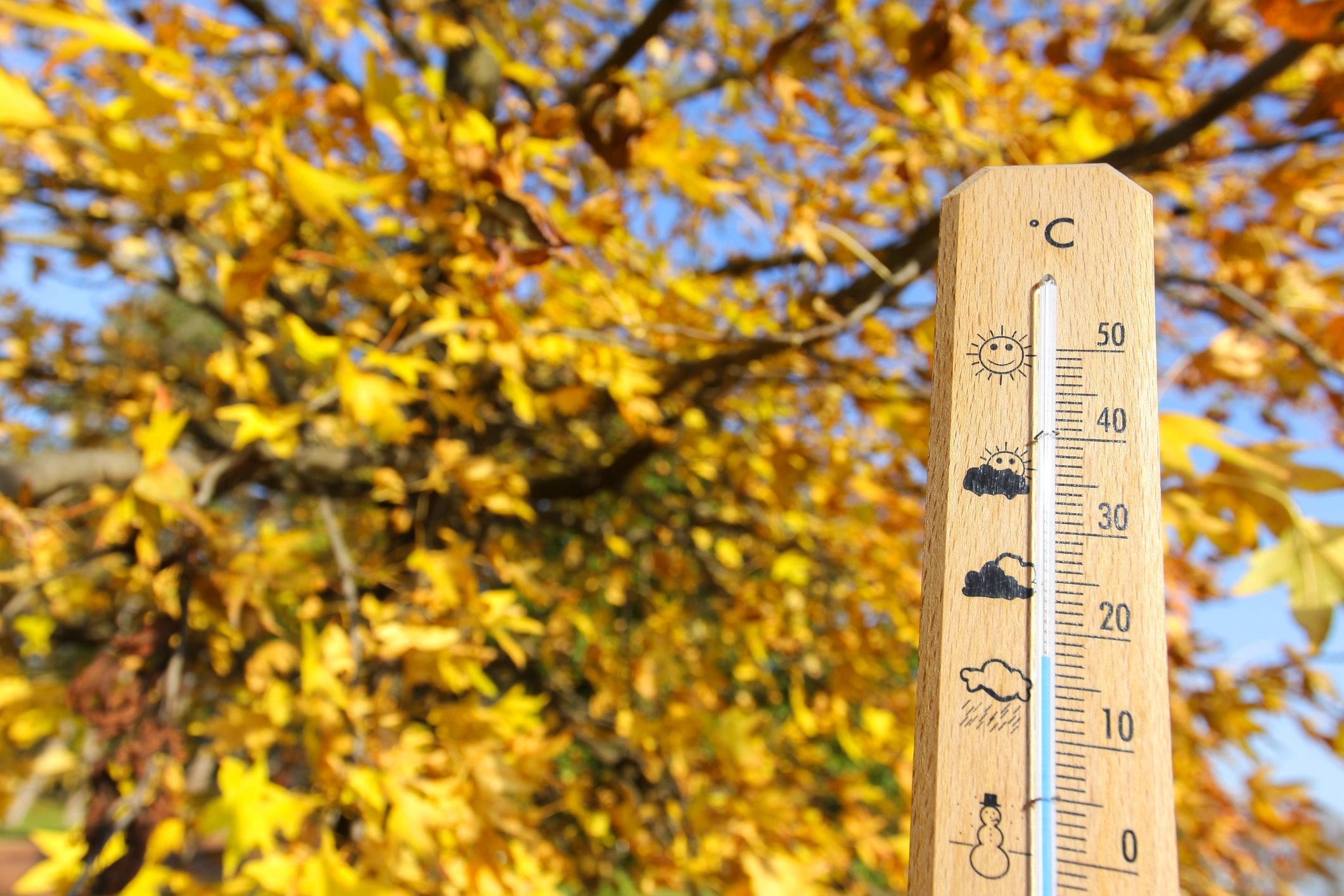
Today, November 11ththe so-called “San Martino summer” begins, which has always been associated with sunny days and milder temperatures in autumn period: the popular saying «the summer of San Martino lasts three days and a little” is based on a Christian legend – which has as its protagonist Martin of Tours and his charitable gesture towards a beggar – but behind the proverb lies a grain of truth.
From a meteorological point of view, in fact, during the first half of November there is often a comeback of the anticyclone – that is, an area of high atmospheric pressure – which, from the Azores or North Africa, extends overSouthern Europebringing with it stable weather and higher temperatures. For this year, the person responsible for the break from the autumn cold will be theAfrican subtropical anticyclone: in almost all of Italy there will be sunny weather until the weekend, with peak temperatures in the Islands that could reach 23 °C and zero temperatures above 3,500 metres.
What is St. Martin’s summer from a meteorological point of view and why does it occur
At the basis of the popular saying about the St. Martin’s summer, there are actually weather conditions that often recur in the first half of November. In particular, the expression refers to a period – of at least three days – during which stable weather and mild temperatures are recorded across much of Italy.
The cause of this phenomenon can often be traced back to presenceon the Mediterranean basin, of an anticyclonic area, or of high pressure, which from the Azores or North Africa expands towards southern Europe, bringing to our country a break from the colder temperatures of the autumn period.
In general, “St. Martin’s summer” does not actually happen every year and its duration can vary from a single day to entire weeks: it must be said, however, that in recent times, also thanks to global warming, the phenomenon has manifested itself with greater frequency and intensity. Among other things this phenomenon that you can also register at other times of the year: however, when it occurs in November, the “respite” from the cold is perceived moregiven that autumn has just begun.
How long will the San Martino summer last: the forecasts for the next groups
This year too, the San Martino summer will bring stable weather and mild temperatures to much of Italy, in some cases even above the seasonal average. What is happening meteorologically is a rapid comeback of the anticyclone subtropicalwhich from North Africa will rapidly extend to Mediterranean and central-western Europe, involving our country from North to South.
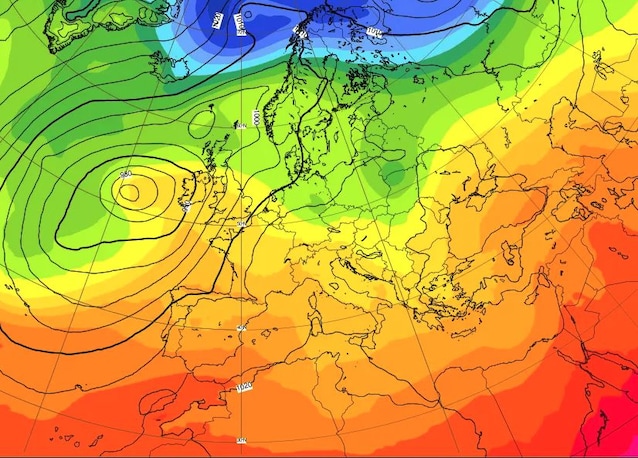
According to forecasts, high pressure will bring good weather to almost all of the Peninsula until next weekend, with the exception of some clouds on the Tyrrhenian area and of scattered densities in part of the North. Major temperature anomalies will occur in mountain, with them thermal zeros on the Alps that will be recorded over 3,500 metresi, while between Thursday and Friday temperatures above the seasonal average are expected in much of the Centre-North, with peaks of 15/17 °C in Lombardy, Piedmont and Emilia-Romagna. In the Islands, however, temperatures of up to 24°C in Sardinia and 23°C in Sicily are expected on Saturday.
History and legend about the summer of San Martino
The legend about St. Martin’s summer is linked to the life of Martin of Toursa soldier of the 4th century AD who, during his stay in Gaul, met a beggar on the street during a heavy storm. Driven by pity for the man’s condition, the soldier divided his cloak, offering him part of the fabric as shelter from the rain.
According to legend, that act of altruism caused the storm to calm down. That night Jesus revealed to Martin in a dream that he was the beggar to whom he had given the cloak: the dream convinced Martin to lay down his weapons and convert to Christianity, until he became the bishop of Tours in 371 AD From this story emerges the link between the legend of the summer of San Martino and the mild atmospheric conditions found statistically over the years during this period.
