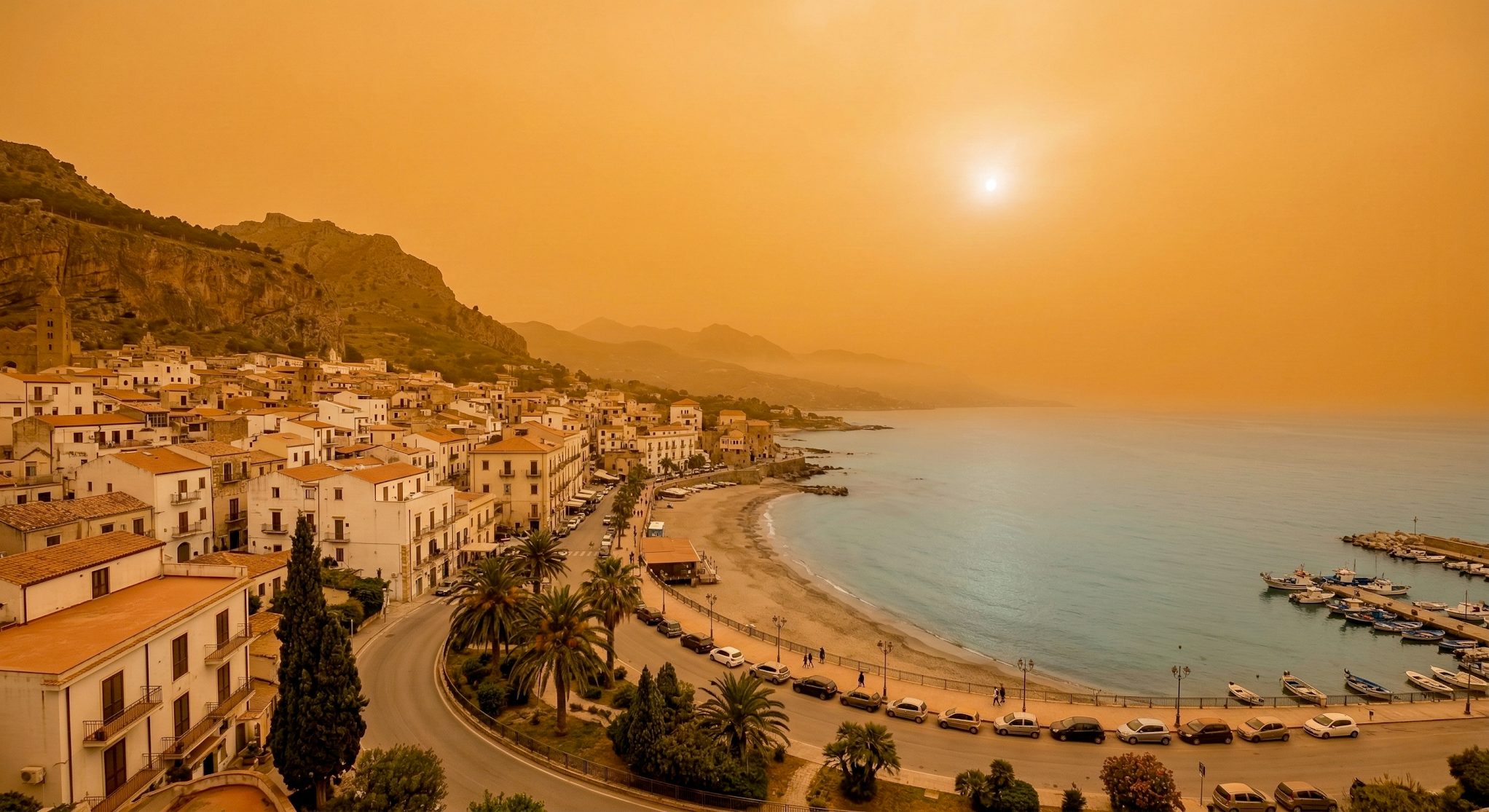
In these hours the “sand” of Sahara desert has arrived in the skies ofWestern Europerecall of the currents at high altitude due to the Storm Queen: precisely the combination between the Saharan dust and this Atlantic disturbance could lead to the so-called “red rain” or skies dyed orange especially in Spain and France, and with much lower probability also in some areas of Italy.
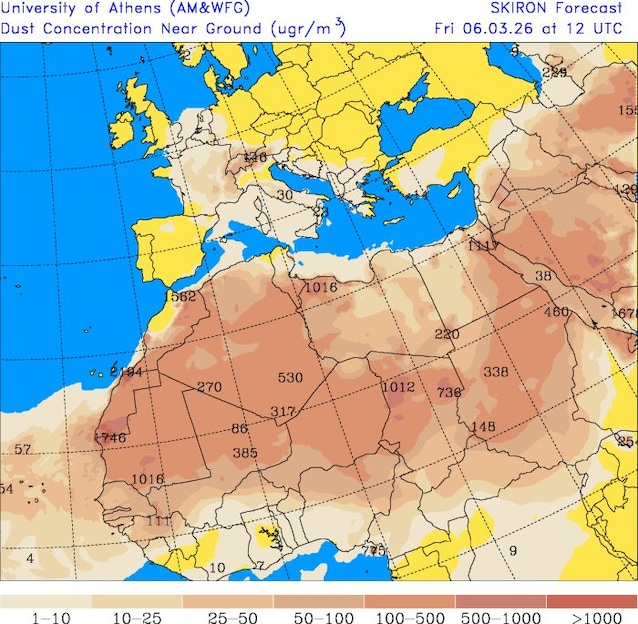
The Saharan dust cloud should only reach Italy some areas of central-southern Italyaccording to data provided by Copernicus Atmosphere Monitoring Service (CAMS) and the University of Athens. The latter predict that by tomorrow 6 March dust concentrations in Italy will reach a maximum of 30 micrograms per cubic metertherefore a modest value, moreover only on Sardinia and along the Tyrrhenian side.
In the next few days, however, the dust cloud will reach up to United Kingdom And Scandinaviawith the possibility of orange-tinged skies.
The map of dust concentrations and forecasts for Italy
According to data reported by the University of Athens, the dust of Saharan origin will mainly reach the Spain (with concentrations of approx 210 micrograms per cubic meter in the center of the Iberian Peninsula) and the south-east of France (119 micrograms per cubic meter). As regards theItalyhowever, the greatest concentrations will be recorded in the Tyrrhenian regions (Tuscany, Lazio and Campania) and in Sardinia, but they will not exceed 30 micrograms per cubic meterscheduled for tomorrow, March 6.
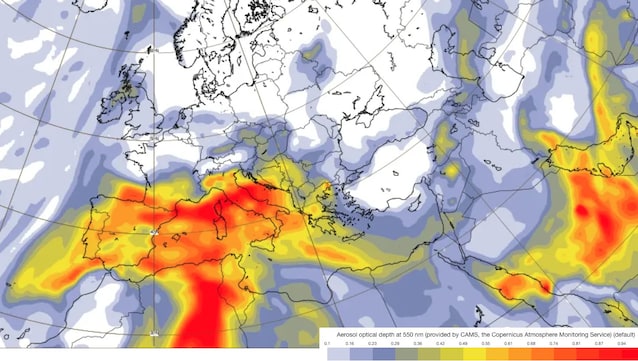
These dust concentrations are also confirmed by the forecasts of Copernicus Atmosphere Monitoring Service (CAMS) which, as shown in the image below, detected a particularly high concentration of aerosols in the atmospherei.e. small particles or liquid droplets suspended in the atmosphere which can come, among other things, from desert dust (but also from volcanic eruptions or forest fires).
In case of precipitation it is possible that the so-called “sand showers”which are easily recognized by the characteristic “halos” they leave on cars and which, as the 3BMeteo experts specify, can also lead to a increase local concentrations of PM10 in the lower atmospheric layers.
At the moment, however, the weather forecast for Italy indicates the possibility of rain for tomorrow, March 6, only on Sardinia and Sicily: in Spain, on the contrary, the national Meteorological Agency (AEMET) has issued a warning for intense rainfall until March 8 due to storm Regina, alerting the population of the possibility of mud rain due to the dust arriving from the Sahara desert.
How does the dust from the Sahara reach Europe?
But how is it possible that the “sand” of the Sahara desert manages to reach Europe?
First of all, we must make a clarification: what reaches our continent it’s not really sand, but dust. Sand, in fact, is composed of particles with dimensions ranging between approximately 0.1 millimeters and 2 millimetres, while the material that falls with the rain is much thinner: we are talking about particles around 20 thousandths of a millimetre (or even less), which can therefore be classified as dust. Precisely because they are so thin, these powders manage to travel even for thousands of kilometers carried by the wind.
Returning to our question, this phenomenon needs two elements to occur: low pressure in the North Atlantic Ocean e high pressure in the central-eastern Mediterranean or south-eastern Europe. In this way, currents are formed that proceed counterclockwise from high to low pressure, passing over the Sahara and then moving up the Mediterranean, carrying with them the dust collected in the North African desert.
In general, however, the arrival of Sahara dust is not at all a phenomenon anomalous and, on the contrary, it is quite common especially in the south of the European continent: even in March 2025 the sky was tinged yellow in some parts of Italy, bringing with it sporadic “red rain”.
