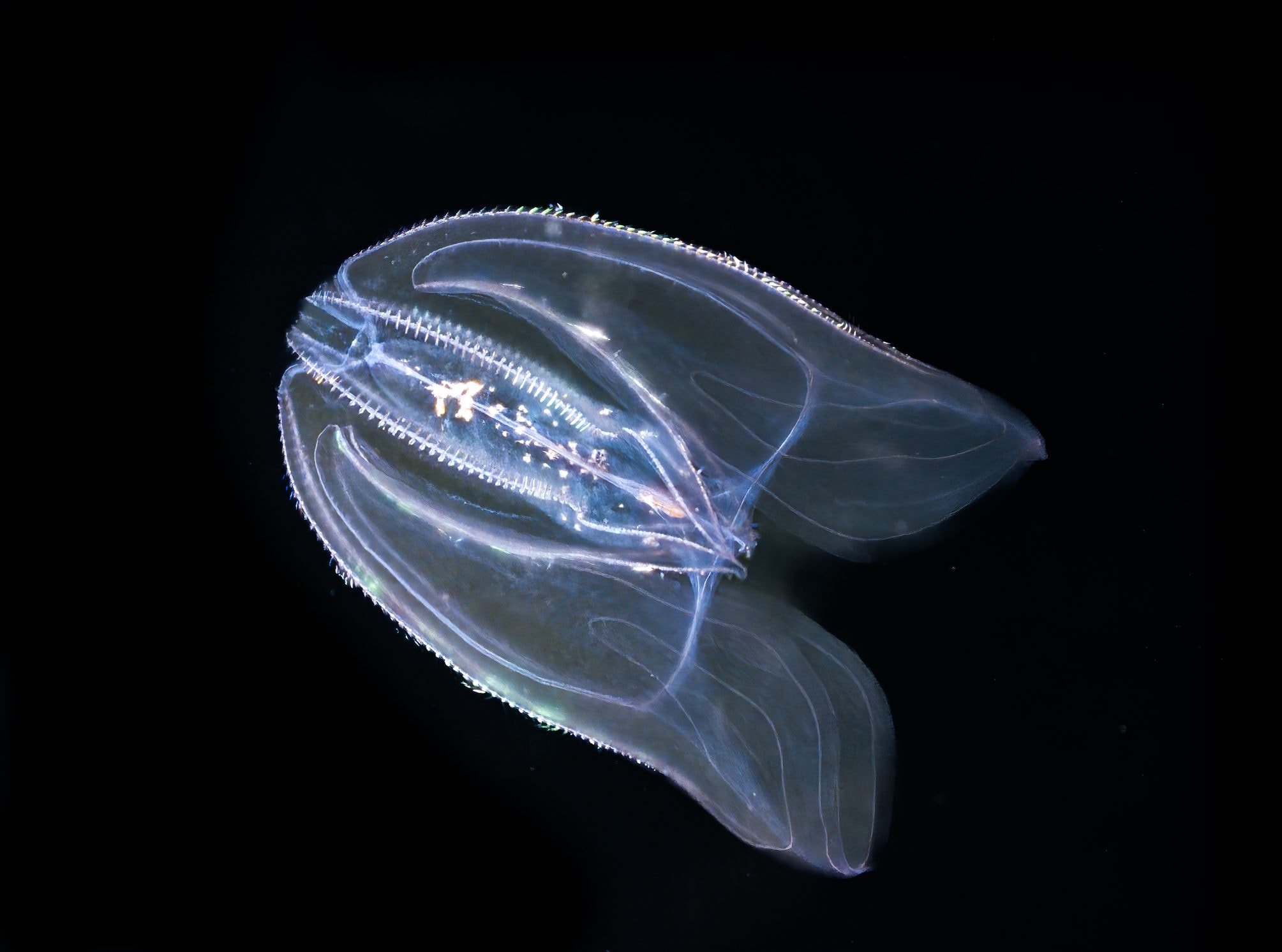
It is one of the 100 most harmful invasive species in the world and now represents a real threat to the ecosystem of the Venice lagoon. Let’s talk about the ctenophore Mnemiopsis leidyibetter known as sea nuta transparent gelatinous organism with a lobed body of about 10 cm. The problem is raised by a new study conducted byUniversity of Padua and fromNational Institute of Oceanography and Experimental Geophysics (OGS), published in the scientific journal Estuarine, Coastal and Shelf Science. The research, led by Filippo Piccardimonitored the “alien” species for two years, highlighting how its extraordinary ability to adaptation at different temperatures and salinity combined with one proliferation uncontrolled and to voracity by feeding on zooplankton you risk putting local biodiversity in more serious difficulty than another Adriatic alien, the blue crab (Callinectes sapidus).
What is sea walnut: characteristics
Originally fromEastern Atlantic Oceanthe sea walnut – so called due to its oval and compact shape – is a small invertebrate of about 10cm. It is often confused with jellyfish due to its transparent and gelatinous appearance, but it belongs to a different phylum (Ctenophora, not Cnidaria) and it’s not stinging. It has 8 rows of called ciliated bands cteni (4 long and 4 short), which allow him to move and which shine brightly in the dark green light. Just like the “immortal jellyfish” (Turritopsis dohrnii), the sea walnut is also able to “rejuvenate” under stress, regressing from the adult stage to the larval stage in order to survive.
The reasons for the uncontrolled spread and the impact on the ecosystem
Its global expansion, which began in the 1980s probably through the ballast water of ships (ballast water) which are used to keep the vessel in trim and safe during navigation, is supported by two key factors:
- A explosive reproduction. Sea nuts are organisms hermaphrodites (they have male and female organs) and self-fertilize. A single specimen can drop up to 14,000 eggs per day. This causes “blooms” (bloom) summer, that is enormous gelatinous masses that clog fishermen’s nets.
- THE’toextreme adaptability. Being organisms eurythermals and eurialini they are capable of living in a large range temperatures and salt concentrations. The study by the University of Padua has demonstrated, through laboratory and field tests, that they survive temperatures between 10 °C and 32 °C and at salinity levels between 10 and 34 (grams per liter).
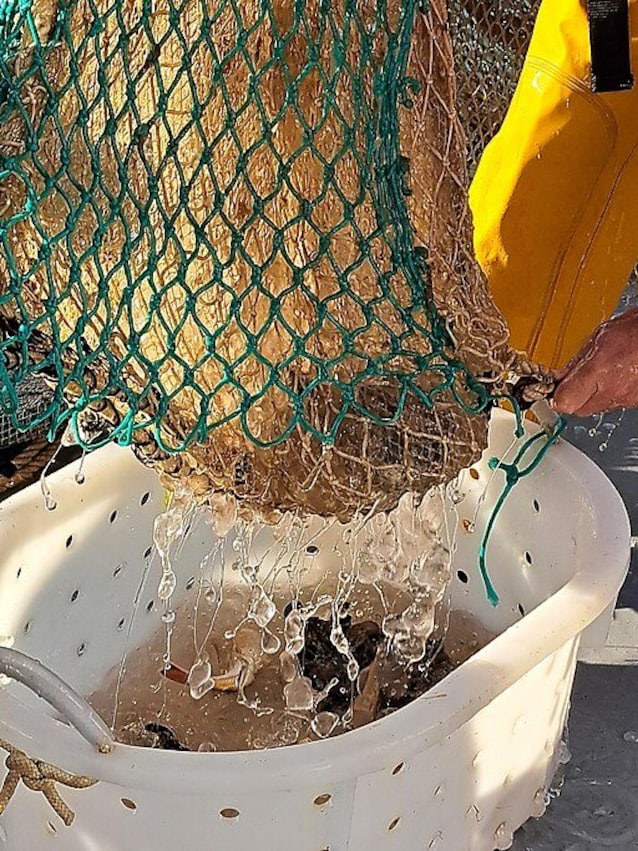
These features add to the voracity of sea walnut. Feeding on zooplanktonenters into direct competition with small fish that eat the same food, such as anchovies (Engraulis encrasicolus). To demonstrate this there is a historical case which concerns the Black Sea and dates back to 1989. They estimated themselves 840 million tons of biomass Of Mnemiopsis which caused ecological damage with the collapse of fishing and serious socio-economic damage. For these reasons theInternational Union for Conservation of Nature (IUCN) places it among the 100 most harmful invasive species in the world.
The alien species in Italy: why it is dangerous
In the Adriatic, the species was first observed in the Gulf of Trieste in 2005 and, after a 10-year hiatus, has reappeared periodically since 2016. Today, in the Venice Lagoon, there is a decrease in local fish – by almost 40% in the years (2014-19) – coinciding with the warming of the waters and the increase in these organisms.
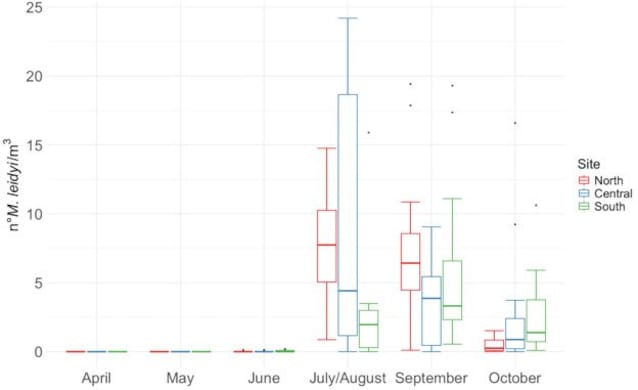
The Italian study highlights a link between the spread of the species and climate changes. Sea nuts in the Venice Lagoon show peaks in presence late spring, summer And early autumnrelated to increased temperatures and salinity (often due to drought).
Valentina TirelliOGS researcher and co-author of the study, said:
The results suggest that ongoing climate changes could favor increasingly suitable environmental conditions for this ctenophore, increasing its presence in large aggregates and, consequently, increasing the risk of severe repercussions on the functioning of the entire lagoon ecosystem.
The climate risks shifting the balance of the lagoon towards an ideal state for the sea nut. This scenario makes constant monitoring and management urgent to protect local species.
Sources
F. Piccardi, S. Girardello, SM Bussard, V. Tirelli, D. Borme, A. Barausse, C. Mazzoldi, An invader chronicles: local ecological niche of Mnemiopsis leidyi in the Venice Lagoon, Estuarine, Coastal and Shelf Science, 2026, https://doi.org/10.1016/j.ecss.2025.109678. University of Padua CSMON-LIFE (Citizen Science MONitoring)
